
































|
Getting your Trinity Audio player ready...
|
New AI Hardware Breakthrough Could Reshape Data Center Systems
(TJV NEWS) A new wave of AI hardware innovation is drawing attention across the technology sector, as Silicon Valley-based Cerebras Systems continues to position its wafer-scale computing technology as a potential alternative to traditional artificial intelligence data center systems. Industry analysts suggest that the company’s specialized chip architecture could significantly alter how AI workloads, machine learning models, and large-scale data processing systems are built and deployed in the coming years.
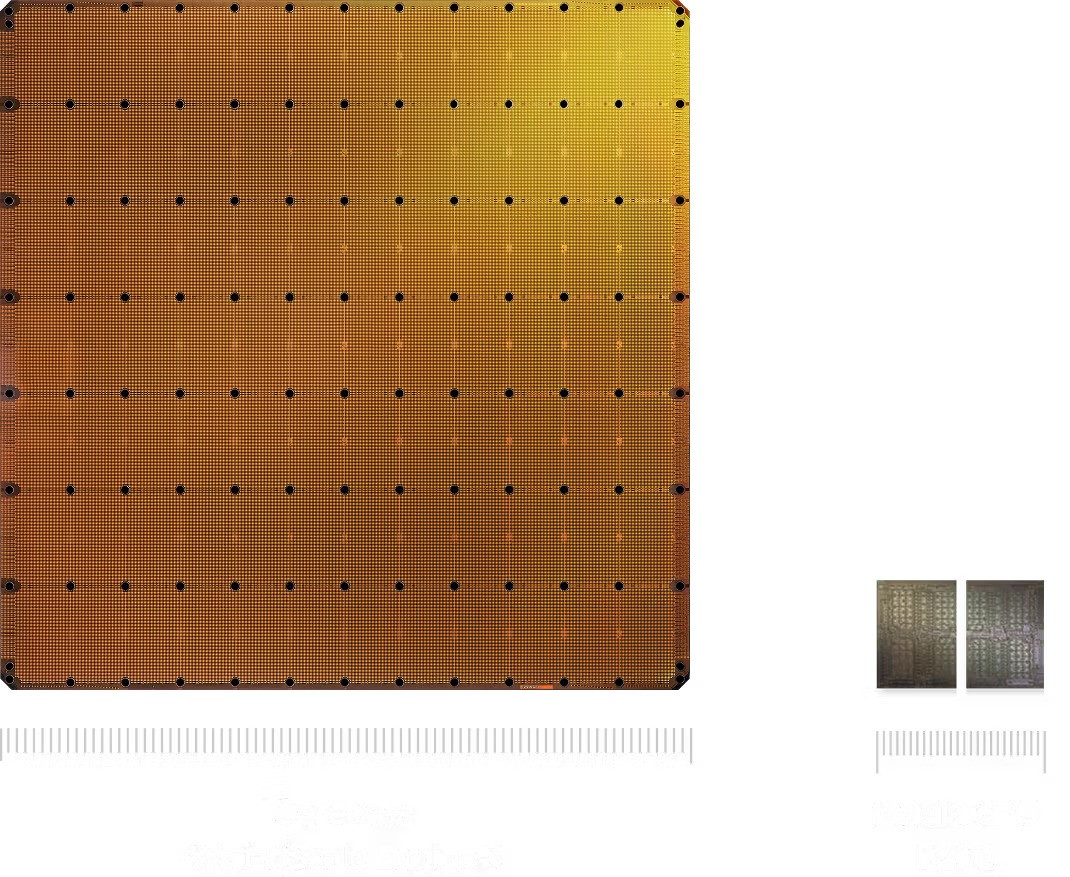
Wafer-Scale Chip Design Challenges Traditional GPU Models
At the center of Cerebras’ technology is its wafer-scale engine (WSE), a massive AI chip designed to replace clusters of traditional processors by integrating computing power onto a single silicon wafer. Unlike conventional systems that rely heavily on distributed graphics processing units (GPUs), Cerebras’ approach aims to reduce communication delays between chips, potentially increasing efficiency in AI training models, neural networks, and high-performance computing tasks.
Potential to Replace Conventional AI Data Center Infrastructure
The rise of large-scale generative AI systems has placed enormous pressure on existing AI data center infrastructure, which relies on energy-intensive GPU clusters to process massive datasets. Cerebras Systems argues that its architecture could reduce complexity by consolidating computing power, potentially lowering latency and improving performance for deep learning applications, scientific computing, and enterprise AI systems.
Competition With Nvidia and Established AI Hardware Leaders
The AI hardware market is currently dominated by companies such as NVIDIA Corporation, whose GPUs power a large share of global AI workloads. However, Cerebras is positioning itself as a disruptive alternative, targeting workloads where traditional GPU-based systems face scaling limitations. The competition highlights a broader race in the tech industry to build faster and more efficient AI training infrastructure.
Growing Demand for AI Compute Power Drives Innovation
The rapid expansion of artificial intelligence applications—from chatbots to autonomous systems—has created unprecedented demand for high-performance computing capacity. Tech firms, cloud providers, and research institutions are increasingly seeking alternatives to conventional architectures due to rising energy costs and hardware shortages.
AI Data Center Bottlenecks Fuel Search for New Solutions
As AI models become larger and more complex, existing data center systems are encountering bottlenecks in processing speed, interconnect communication, and energy consumption. Cerebras claims its wafer-scale approach directly addresses these limitations by eliminating the need for multi-chip coordination, potentially streamlining AI model training and inference operations.
Industry Analysts Cautious but Watching Closely
While the technology is still in a competitive early-stage market, analysts note that adoption of wafer-scale computing could depend on cost efficiency, software compatibility, and integration with existing cloud ecosystems. Major cloud providers and AI developers are closely evaluating whether next-generation hardware can deliver measurable advantages over current GPU-based systems.
Conclusion: A Possible Shift in the Future of AI Infrastructure
As artificial intelligence continues to expand globally, the competition over AI computing infrastructure is intensifying. Cerebras Systems’ wafer-scale chip represents one of the most ambitious attempts to rethink how AI data centers are built. Whether it can ultimately replace or significantly disrupt traditional AI systems remains to be seen—but the race to define the future of AI hardware is clearly accelerating.