






























|
Getting your Trinity Audio player ready...
|
By: Fern Sidman
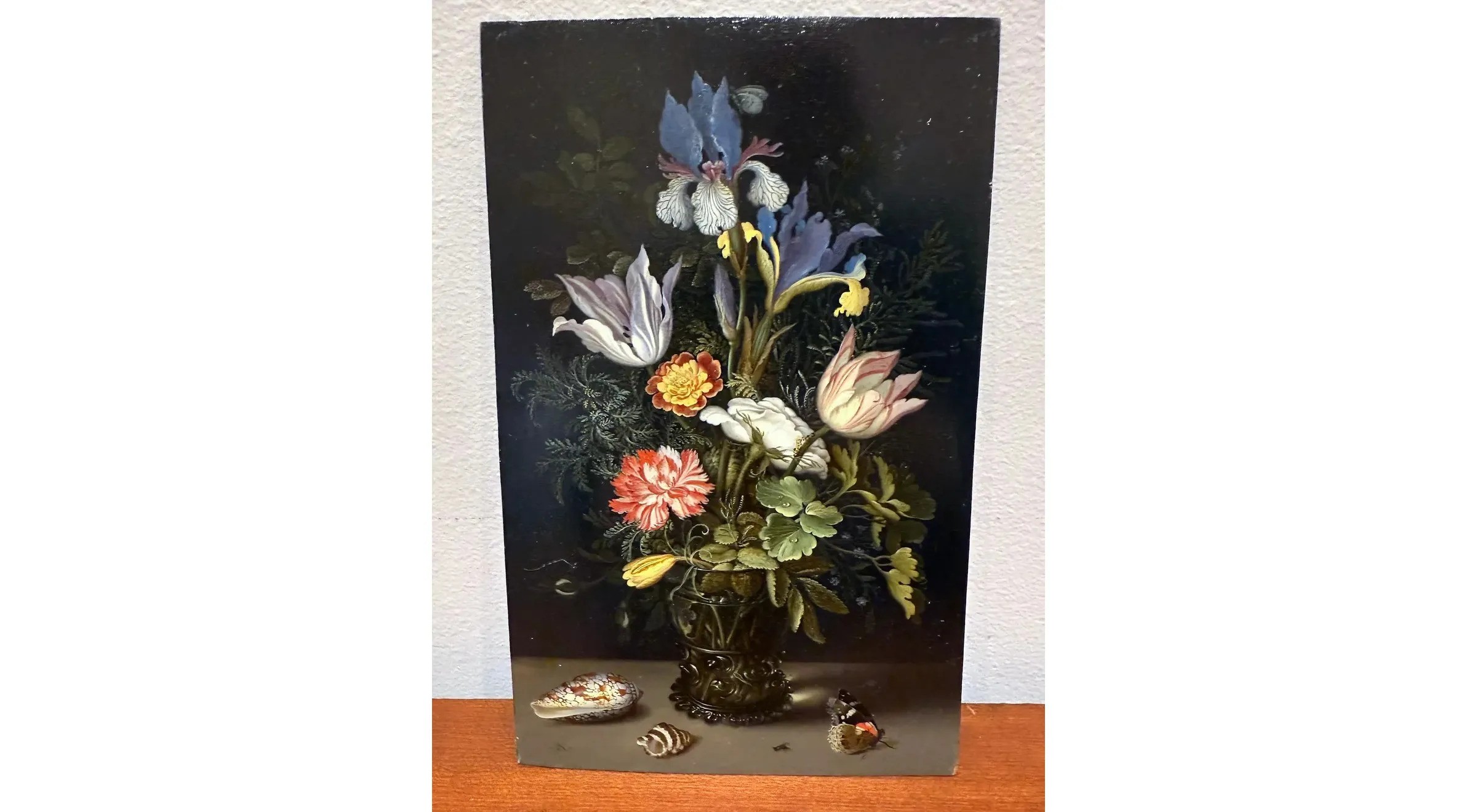
Two still-life paintings dating back to the 17th century have been abruptly pulled from the auction block in Newark, Ohio, after research determined they were looted from a German Jewish collection during the Holocaust. The revelation, brought to light by the Monuments Men and Women Foundation, once again underscores how the theft of Jewish cultural property during World War II continues to reverberate nearly eight decades after the war’s end.
According to a report on Tuesday that appeared on the Jewish Telegraphic Agency (JTA), the two floral still-life paintings, attributed to Dutch Golden Age artist Ambrosius Bosschaert, were slated for sale this month at the Apple Tree Auction Center. The works had been listed online as unclaimed property, with bidding prices at a modest $3,250 and $225, when an anonymous tip alerted the Foundation to their questionable provenance.
The investigation traced the paintings back to the famed collection of Adolphe Schloss, a German Jewish art collector whose family fled to France before the Second World War. As the JTA report noted, Schloss’s collection comprised 333 works, making it one of the most significant private troves of Dutch and Flemish masters in pre-war Europe.
When the Nazis swept through France, Schloss’s collection became a target. The entire ensemble was seized, divided, and sent to Germany, with many works ending up at Adolf Hitler’s Munich headquarters. In the chaotic final days of the war, as Allied troops closed in, much of the collection vanished into the fog of looting, smuggling, and opportunistic plundering.
The two Bosschaert works discovered in Ohio are believed to have been among those lost during this turbulent period. While the Schloss heirs have spent decades reclaiming fragments of their family’s patrimony, the majority of the collection remains unaccounted for.
The Monuments Men and Women Foundation — named for the Allied unit that famously recovered thousands of artworks stolen during the war — responded within 48 hours of receiving the tip. Robert Edsel, the foundation’s founder and chairman, personally traveled to Newark to meet with the Apple Tree Auction Center’s owners and present the documented history of the paintings.
“Within 48 hours of receiving this lead, the Foundation documented the provenance of the works that supports the Schloss ownership, inspected the two paintings in person, attained the cooperation of the auction house to remove the pictures from their sale, and reached out to the attorney for the Schloss heirs,” Edsel said in a statement cited by the JTA.
Edsel expressed hope that the collaborative approach would expedite the paintings’ eventual restitution. “We look forward to completing this collaborative approach to resolving this matter and we hope they will return to the Schloss family soon,” he added.
The question of how Nazi-looted art surfaces in an auction house in the American Midwest is itself part of the broader, tangled story of Holocaust restitution. As the JTA report explained, looted works reached the United States through multiple channels: some arrived with Nazis who fled Europe and resettled in American communities — John Demjanjuk, a convicted war criminal tied to Sobibor, lived for decades in Ohio. Others came with returning U.S. soldiers who, in the confusion of liberation, brought home cultural artifacts as souvenirs.
In this case, the two Bosschaert still-lifes were listed as property from a bank safety deposit box. The consignor’s identity has not yet been revealed, but the Foundation is working to obtain the name of the bank involved so that custody can be transferred to the Schloss heirs.
Anna Bottinelli, president of the Foundation, emphasized the randomness of such recoveries. “These two paintings surfaced at a small auction house in the Midwest, but it could have happened anywhere,” she said. “Hundreds of thousands of cultural objects looted during WWII are still missing. Some are in the United States, tucked away in attics, hanging on walls, and stuffed in unopened boxes, passed down through generations.”
While the Apple Tree Auction Center’s bidding platform listed the paintings at a few thousand dollars, art market specialists believe their real value is vastly higher. According to estimates reported by the JTA, Edsel suggested the works could be worth in excess of $500,000.
This discrepancy illustrates the inherent challenge of Holocaust restitution cases: priceless artworks often remain hidden in plain sight, unrecognized for their true provenance and value until a vigilant researcher, heir, or organization intervenes.
The Ohio case follows other notable discoveries of Nazi-looted art in recent months. As the JTA report highlighted, Argentine police recently recovered a portrait by Italian painter Giuseppe Ghislandi, “Portrait of a Lady,” stolen from a Dutch Jewish dealer during the Holocaust. That painting was uncovered in the most unlikely of ways — spotted in photos from a real estate listing tied to the daughter of a Nazi finance official who fled to Argentina after the war.
These discoveries, spaced continents apart, emphasize the global scope of the Nazi art theft and the unpredictable ways in which restitution cases unfold. Each recovery also reignites attention to the scale of the theft: millions of cultural objects, from world-renowned masterpieces to family heirlooms, were taken from Jews across Europe between 1933 and 1945.
For the Schloss family, the recovery of even a small portion of their lost collection carries immense symbolic weight. While Adolphe Schloss himself died decades ago, his descendants have fought persistently for justice and remembrance. As the JTA report noted, the family has been reunited with only a fraction of their pre-war holdings, and each recovered work represents both a victory over Nazi theft and a tangible reconnection to their heritage.
The story is also part of a broader moral reckoning with the Holocaust. “Every painting recovered is a reminder not only of the crimes of the past but of the continuing responsibility to seek justice,” observed one scholar cited in the JTA report. “Restitution is not only about returning objects. It is about restoring dignity to families who were systematically stripped of everything, including their cultural and spiritual identity.”
While the paintings’ removal from auction is an important first step, the legal and logistical journey to their restitution is ongoing. The Foundation must still secure custody, clarify ownership chains, and coordinate with the Schloss heirs’ legal representatives.
Yet the cooperative stance of the Apple Tree Auction Center offers a hopeful precedent. Too often, restitution efforts are hampered by resistance from current possessors or opaque provenance records. In this case, auctioneers acted swiftly once presented with the evidence.
The JTA report observed that this spirit of cooperation reflects a broader cultural shift: awareness of Holocaust art restitution has grown substantially in the past two decades, thanks to both high-profile cases and increasing public pressure on museums, galleries, and private collectors to confront the origins of their holdings.
The discovery of two Ambrosius Bosschaert still-lifes in Ohio is more than a story of art recovery; it is a reminder of the unfinished work of justice. While the paintings’ removal from auction represents progress, the broader reality — as pointed out in the JTA report — is that hundreds of thousands of looted works remain unaccounted for.
Each recovery effort shines a light on both the resilience of Jewish families such as the Schloss heirs and the enduring scars of the Holocaust. The fact that such works continue to surface in unexpected corners of the globe is a testament to the scale of Nazi theft and the need for ongoing vigilance.
As Anna Bottinelli aptly put it, “Hundreds of thousands of cultural objects looted during WWII are still missing. Some are in the United States, tucked away in attics, hanging on walls, and stuffed in unopened boxes, passed down through generations.”
Until those objects are found and returned, the restitution movement will remain an essential endeavor — not only to restore what was stolen, but to reaffirm a moral truth: that even decades later, justice for Holocaust victims and their descendants must still be pursued.
The Fate of the Schloss Collection
Pre-War Years
Late 19th–Early 20th Century: German Jewish art collector Adolphe Schloss amasses one of Europe’s largest private collections of Dutch and Flemish Old Masters, totaling 333 works.
The collection becomes widely known for its breadth and significance, rivaling holdings in major European museums.
World War II and Nazi Looting
1940: After the Nazi occupation of France, the Schloss family’s collection is seized.
1943–1944: The artworks are divided, with many pieces transported to Adolf Hitler’s Munich headquarters.
1945: As Allied forces approach Munich, large portions of the collection vanish in the chaos of war, through theft, smuggling, and opportunistic looting.
Post-War Efforts
1940s–2000s: The Schloss heirs reclaim only a fraction of the collection, while many works remain missing or surface sporadically in private collections and auctions worldwide.
Recent Restitution Cases
August 2024: Argentine police recover “Portrait of a Lady” by Giuseppe Ghislandi, looted from a Dutch Jewish dealer, highlighting the persistence of Nazi-looted art.
October 2024: Two 17th-century still-life paintings attributed to Ambrosius Bosschaert appear at Apple Tree Auction Center in Newark, Ohio.
Monuments Men and Women Foundation intervenes within 48 hours after a tip, documenting the paintings’ provenance and halting their sale.
Current Status
The Foundation is working to identify the consignor and secure custody of the paintings, aiming to return them to the Schloss family heirs.
Experts estimate the two works could be worth over $500,000, far above their listed auction prices.
Ongoing Challenge
As the JTA has frequently reported, hundreds of thousands of Nazi-looted artworks remain unaccounted for, hidden in museums, attics, safety deposit boxes, and private collections worldwide.



