


















|
Getting your Trinity Audio player ready...
|
At moments of profound geopolitical consequence, when nations commit to military action and the stakes encompass global stability, one expects clarity, sobriety, and intellectual honesty from those who shape public discourse. Instead, what has emerged in the wake of the United States’ confrontation with Iran is a deeply troubling spectacle: a rush by prominent media personalities and political figures to assign blame not based on evidence, but on impulse—impulse that converges, once again, on a familiar and all-too-convenient target: Israel.
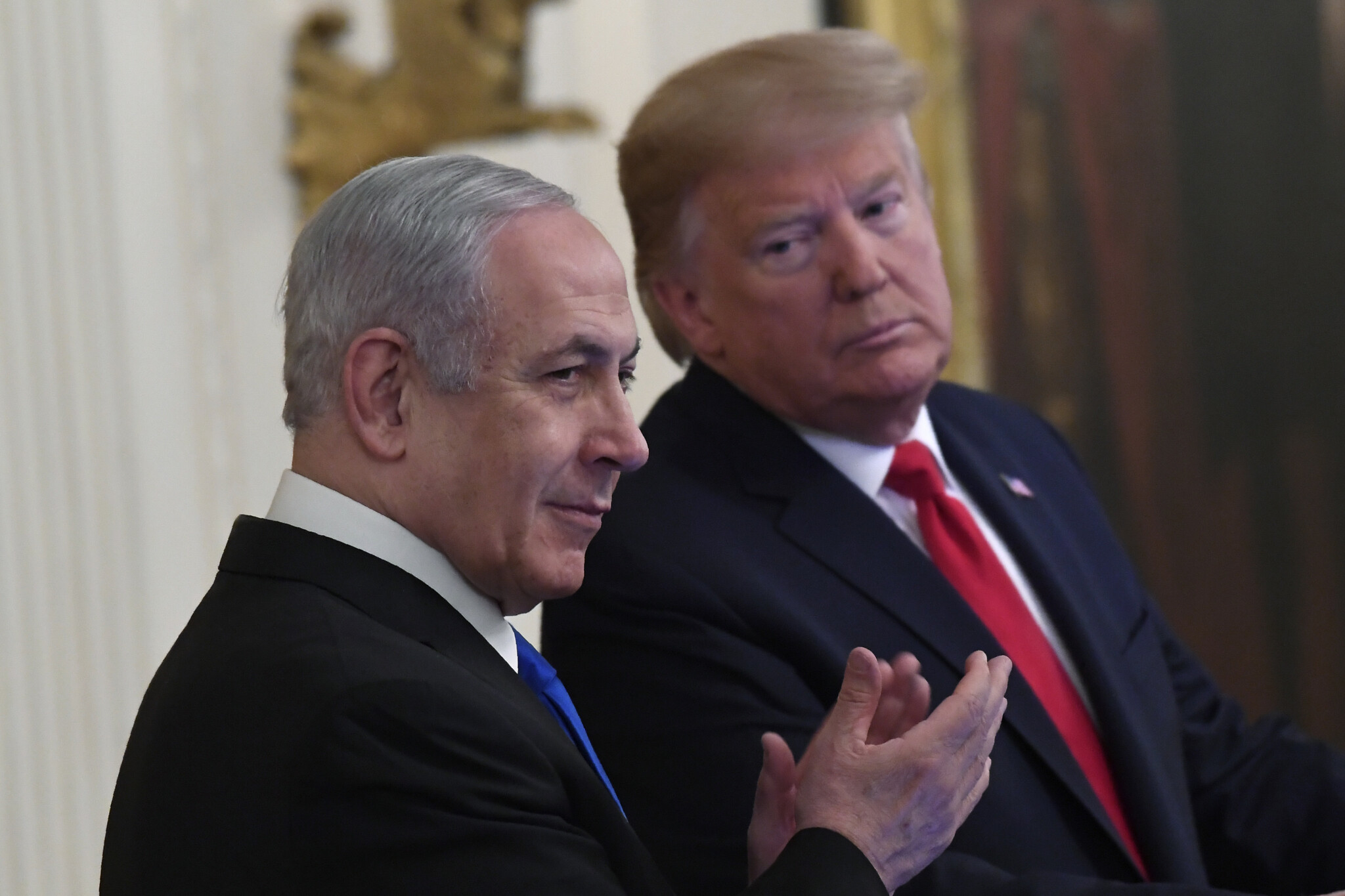
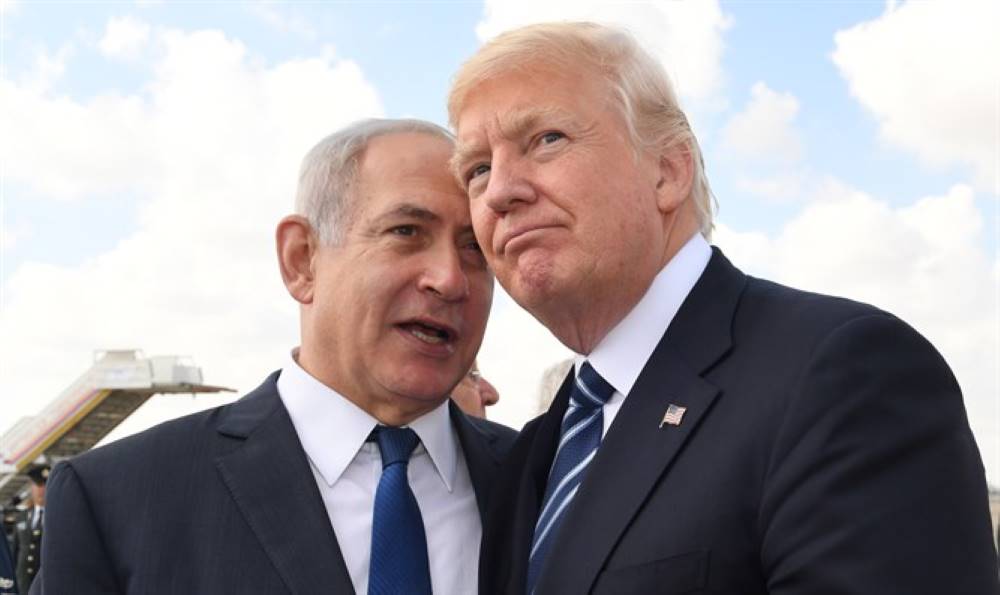
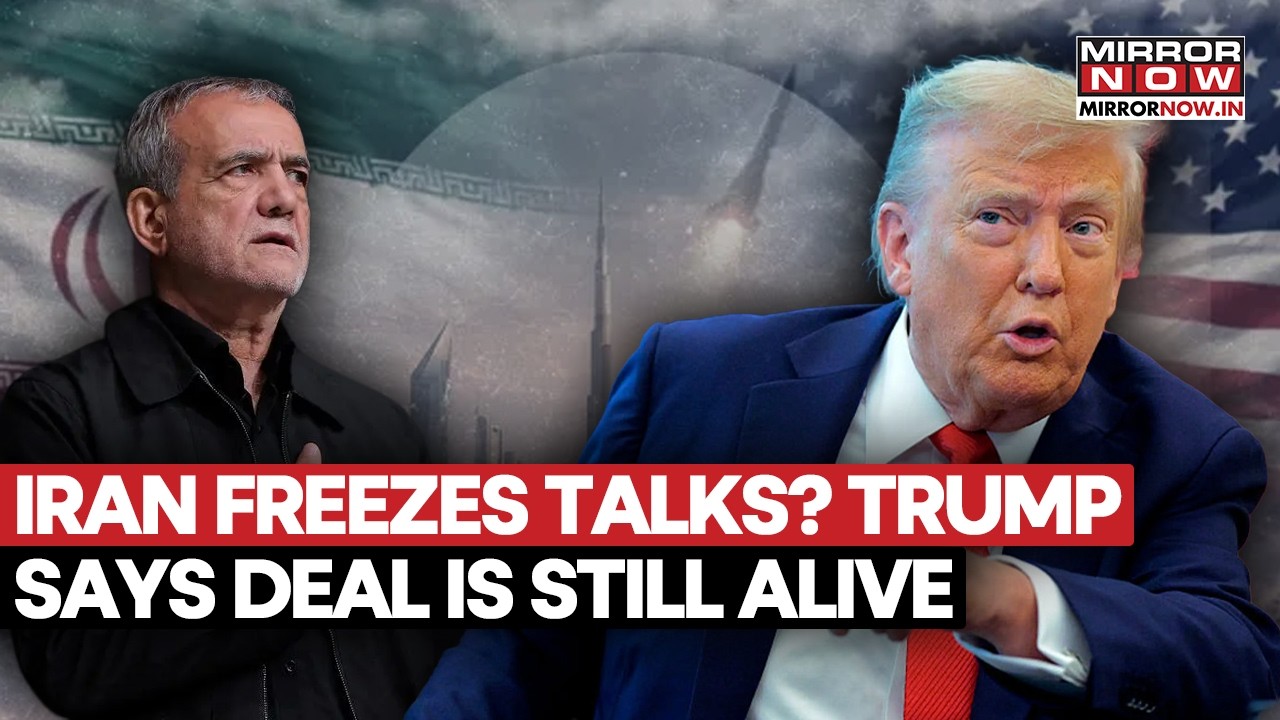
President Donald Trump has stated in unmistakable terms that Israel did not persuade, pressure, or otherwise “talk” him into entering the war with Iran. As reported on Monday by Fox News Digital, his declaration was categorical: the decision was rooted in his own long-held conviction that Iran must never obtain a nuclear weapon, reinforced by the seismic shock of the October 7 attacks and the broader threat posed by the Iranian regime. That statement should have, in any rational discourse, settled the question of causality.
And yet, it has not.
Instead, a cadre of media pundits—among them Tucker Carlson, Megyn Kelly, Steve Bannon, and Candace Owens—have advanced a narrative that flagrantly contradicts the president’s own account. More troubling still, voices within the political arena, including a figure as prominent as Kamala Harris, have lent credence to this insinuation, suggesting in varying degrees that Israeli Prime Minister Benjamin Netanyahu maneuvered the United States into war for his own purposes.
Such claims are not merely speculative; they are profoundly irresponsible.
They disregard the explicit testimony of the individual who made the decision. They flatten complex strategic realities into simplistic accusations. And most perniciously, they perpetuate a pattern of discourse in which Israel is reflexively cast as the manipulative force behind global events—a trope that has deep and troubling historical antecedents.
Let us be unequivocal: disagreement with policy is not only permissible but essential in a democratic society. Criticism of military action, of strategic judgment, or of alliance dynamics is entirely legitimate. But what is unfolding here is not criticism grounded in evidence; it is accusation untethered from fact.
When the President of the United States declares, in clear and unambiguous language, that Israel did not influence his decision, continuing to assert the contrary is not analysis—it is narrative construction. It is the willful imposition of a storyline that aligns with preconceived notions rather than observable reality.
And why this storyline? Why this insistence on placing Israel at the center of a decision that, by all available evidence, originated within the strategic calculus of the United States itself?
The answer, uncomfortable as it may be, lies in a broader and deeply ingrained tendency within segments of the media and political commentary to treat Israel not as a sovereign nation among others, but as a symbolic entity—an embodiment onto which wider anxieties and grievances are projected. In this distorted framework, Israel becomes the “world’s Jew”: a singular, conspicuous, and therefore convenient locus for blame.
This phenomenon is not new. It echoes centuries-old patterns in which Jewish communities were accused of wielding disproportionate influence, of orchestrating events from behind the scenes, of being the hidden hand in crises both local and global. Today, those patterns are repackaged in the language of geopolitics, but their underlying structure remains disturbingly familiar.
To suggest that Israel “dragged” the United States into war is to invoke, whether consciously or not, the notion of undue influence—of a smaller actor compelling a larger power to act against its own interests. It is a claim that demands extraordinary evidence. Yet no such evidence has been presented. Instead, we are offered conjecture, insinuation, and the repetition of talking points that gain traction not through substantiation but through sheer frequency.
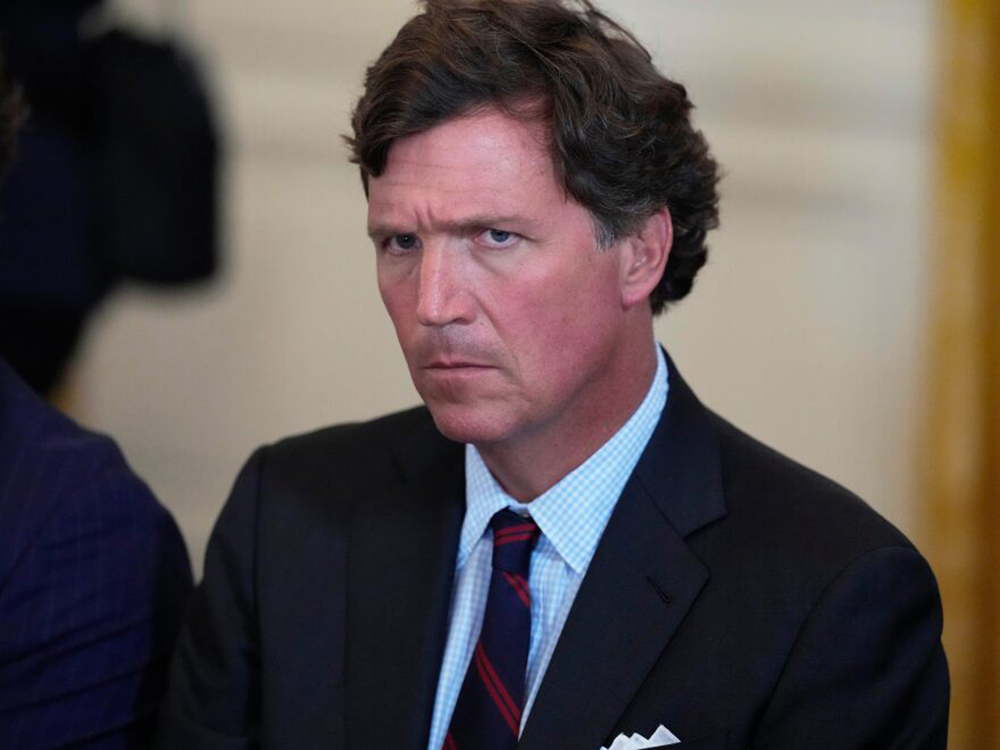
The role of media in amplifying these narratives cannot be overstated. In an era defined by instantaneous communication and algorithm-driven visibility, the statements of high-profile commentators carry immense weight. When those statements are careless, or worse, deliberately provocative, they do not merely reflect public sentiment—they shape it.
And in shaping it, they risk inflaming an already volatile environment.
Across the United States and beyond, incidents of hostility directed at Jewish individuals and institutions have been on the rise. While the causes of such phenomena are multifaceted, the language used in public discourse plays a significant role in either mitigating or exacerbating them. When influential voices repeatedly frame Israel as the architect of conflict, as the instigator of war, as the entity pulling unseen strings, they contribute—intentionally or not—to a climate in which suspicion and resentment toward Jews can flourish.
This is not a matter of abstract concern. It is a tangible and pressing reality.
To be clear, the responsibility for acts of hatred lies with those who commit them. But the environment in which such acts occur is shaped by the narratives that circulate within society. When those narratives are infused with insinuations of manipulation and control, they create a fertile ground for prejudice to take root.
The invocation of Israel as a scapegoat in the context of the Iran war is therefore not merely a misrepresentation of policy—it is a distortion with consequences.
It also represents a profound disservice to public understanding of international affairs. The decision to engage militarily with Iran was, by the President’s own account, the culmination of years of strategic thinking, informed by assessments of nuclear proliferation, regional stability, and national security. To reduce that decision to the influence of a foreign leader is to ignore the complexity of the factors involved and to underestimate the agency of American policymakers.
It is, in effect, to infantilize the decision-making process of the United States while simultaneously exaggerating the power of its ally.
Such a perspective is not only inaccurate; it is intellectually unserious.
The responsibility of journalists and commentators is not to craft narratives that align with their preferences, but to interrogate reality with rigor and integrity. This requires a willingness to confront inconvenient facts, to revise assumptions in light of new information, and to resist the allure of explanations that are compelling but unsubstantiated.
In this instance, the inconvenient fact is clear: the President has denied that Israel influenced his decision. That denial should serve as the starting point for analysis, not an obstacle to be circumvented.



