


























|
Getting your Trinity Audio player ready...
|
Yale U Survey Indicates Social Media Consumption Tied to Higher Antisemitic Sentiment Among Young Adults
By: Fern Sidman
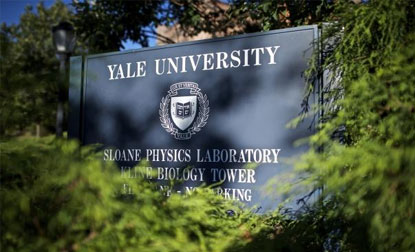
A newly released survey conducted by researchers affiliated with Yale University has ignited profound concern among scholars, policymakers, and community leaders, revealing a troubling correlation between social media consumption and the persistence—and in some cases normalization—of antisemitic attitudes among younger Americans. As reported on Wednesday by The Algemeiner, the findings of the Spring 2026 Yale Youth Poll paint a complex yet deeply unsettling portrait of generational divergence in perceptions of Jews, Israel, and the very definition of antisemitism itself.
The survey, which examined attitudes across multiple age cohorts, found that individuals between the ages of 18 and 34 are significantly more likely than their older counterparts to express agreement with statements widely recognized as antisemitic. While these views are not held by a majority, their prevalence—ranging from roughly one-quarter to one-third of respondents depending on the specific trope—has been described by experts as alarmingly high.
Among the most concerning findings is the persistence of longstanding conspiracy theories, including the belief that Jews wield disproportionate influence or maintain divided loyalties between the United States and Israel. Such narratives, long relegated to the margins of public discourse, appear to have regained a measure of traction within certain segments of the younger population.
Particularly striking is the data indicating that approximately one in five young respondents expressed support for boycotting Jewish-owned businesses as a form of protest against Israel’s military actions in Gaza. This conflation of political disagreement with collective economic targeting evokes historical precedents that many had assumed were firmly consigned to the past. Even more concerning, roughly 10 percent of respondents in the 18–34 age group endorsed all three of the antisemitic sentiments measured by the survey, compared to just 2 percent among those over the age of 65. The disparity underscores a widening generational chasm, one that extends beyond mere political difference to encompass fundamental differences in historical awareness and moral framing.
As The Algemeiner report noted, the survey’s findings cannot be understood in isolation from the broader transformation of the media landscape. The data reveal a clear and consistent pattern: young Americans who rely primarily on social media platforms for news—particularly applications such as TikTok, Instagram, and X—are markedly more likely to harbor antisemitic beliefs than those who consume information through traditional outlets like television or print journalism. In some cases, the gap between these groups reaches 10 to 15 percentage points, with social media–heavy users demonstrating a significantly higher propensity to agree with antisemitic statements.
This correlation has prompted renewed scrutiny of the digital ecosystems that now dominate the information diets of younger generations. Unlike traditional media, which is subject to editorial oversight and professional standards, social media platforms operate through algorithm-driven systems designed to maximize engagement. These systems often prioritize emotionally charged, visually compelling, and easily digestible content—characteristics that can amplify simplistic narratives and obscure nuance. In the context of complex geopolitical conflicts, such as the war in Gaza, this dynamic can lead to the reduction of multifaceted realities into binary moral frameworks, where historical context and factual complexity are frequently sacrificed for immediacy and virality.
Observers cited by The Algemeiner have pointed to the role of influential digital personalities in shaping these narratives. In the aftermath of the October 7 attacks in Israel, numerous high-profile commentators on social media platforms rapidly disseminated content condemning Israel, often employing language that blurred the distinction between criticism of government policy and broader generalizations about Jewish people. Such content, which tends to perform exceptionally well within algorithmic systems, can create feedback loops in which increasingly extreme viewpoints are reinforced and normalized.
The Yale survey suggests that for many young Americans, perceptions of Israel are becoming inextricably intertwined with attitudes toward Jewish people more broadly. This conflation represents a critical point of concern, as it risks transforming political discourse into a vehicle for the re-emergence of deeply rooted prejudices. The line between legitimate criticism of a nation-state and the propagation of antisemitic tropes is not always clearly delineated within the fast-paced and often unmoderated environment of social media, leading to a blurring of boundaries that can have far-reaching consequences.
Equally noteworthy is the survey’s challenge to conventional political assumptions. Contrary to the expectation that antisemitism might be concentrated within a particular ideological camp, the data indicate that individuals identifying as both “extremely conservative” and “extremely liberal” are more likely to recognize antisemitism as a serious problem. In contrast, moderate respondents exhibited a higher degree of ambivalence, with a plurality indicating neither agreement nor disagreement with the proposition that antisemitism constitutes a significant issue in the United States. This finding complicates efforts to attribute the phenomenon to a single political ideology, suggesting instead that it is a multifaceted issue that transcends traditional partisan boundaries.
At the same time, the survey reveals a troubling disconnect between perception and reality among younger Americans. Only 21 percent of respondents aged 18 to 34 acknowledged that Jews are the primary targets of hate crimes in the United States, compared to 40 percent of the overall electorate. This discrepancy persists despite a growing body of evidence indicating that antisemitic incidents have risen sharply in recent years, making Jews one of the most targeted religious groups in the country. The underestimation of this reality may contribute to a diminished sense of urgency and a greater tolerance for rhetoric that would otherwise be recognized as harmful.
The findings also extend to historical awareness, with approximately 8 percent of young respondents expressing the belief that the severity of the Holocaust has been exaggerated. While this figure represents a minority, it nonetheless signals a concerning erosion of historical understanding, particularly when contrasted with the 2 percent of respondents over the age of 65 who hold similar views. For many experts, this disparity underscores the importance of education in shaping societal attitudes and preserving collective memory.
Importantly, the Yale Youth Poll does not suggest that antisemitic beliefs are held by the majority of young Americans. Rather, it highlights a shift in the boundaries of acceptable discourse, where ideas that were once widely repudiated are now encountering a degree of acceptance—or at least insufficient resistance. This subtle but significant change raises critical questions about the cultural and informational forces that are shaping the next generation’s worldview.
The implications of these findings extend beyond the Jewish community, touching upon broader concerns about the health of democratic discourse in the digital age. The same mechanisms that facilitate the spread of antisemitic content can also amplify other forms of misinformation and prejudice, creating an environment in which the truth becomes increasingly difficult to discern. In this context, the challenge is not merely to counter specific narratives but to address the underlying conditions that allow them to flourish.
As The Algemeiner report emphasized, the path forward will likely require a multifaceted approach, encompassing education, media literacy, and platform accountability. Educational institutions must play a central role in fostering critical thinking and historical awareness, equipping students with the tools necessary to evaluate information and resist manipulation. At the same time, social media companies face growing pressure to reassess the algorithms and policies that govern their platforms, balancing the imperative of free expression with the need to mitigate harm.
Ultimately, the Yale survey serves as both a warning and a call to action. It reveals a generation navigating an unprecedented informational landscape, where the boundaries between fact and fiction, criticism and prejudice, are increasingly blurred. Addressing this challenge will require sustained effort and collaboration across sectors, as well as a renewed commitment to the values of truth, accountability, and mutual respect.
In the final analysis, the resurgence of antisemitic sentiment among segments of America’s youth is not an isolated phenomenon but a reflection of broader societal shifts. As the nation grapples with these changes, the lessons of history—and the responsibilities of the present—must guide the way forward. The stakes, as the findings make clear, extend far beyond any single community, encompassing the very foundations of a pluralistic and informed society.



