

























|
Getting your Trinity Audio player ready...
|
The Quiet Power of Evidence: At 95, Thomas Sowell’s Enduring Intellectual Legacy Challenges a Nation’s Assumptions
By: Yisroel David
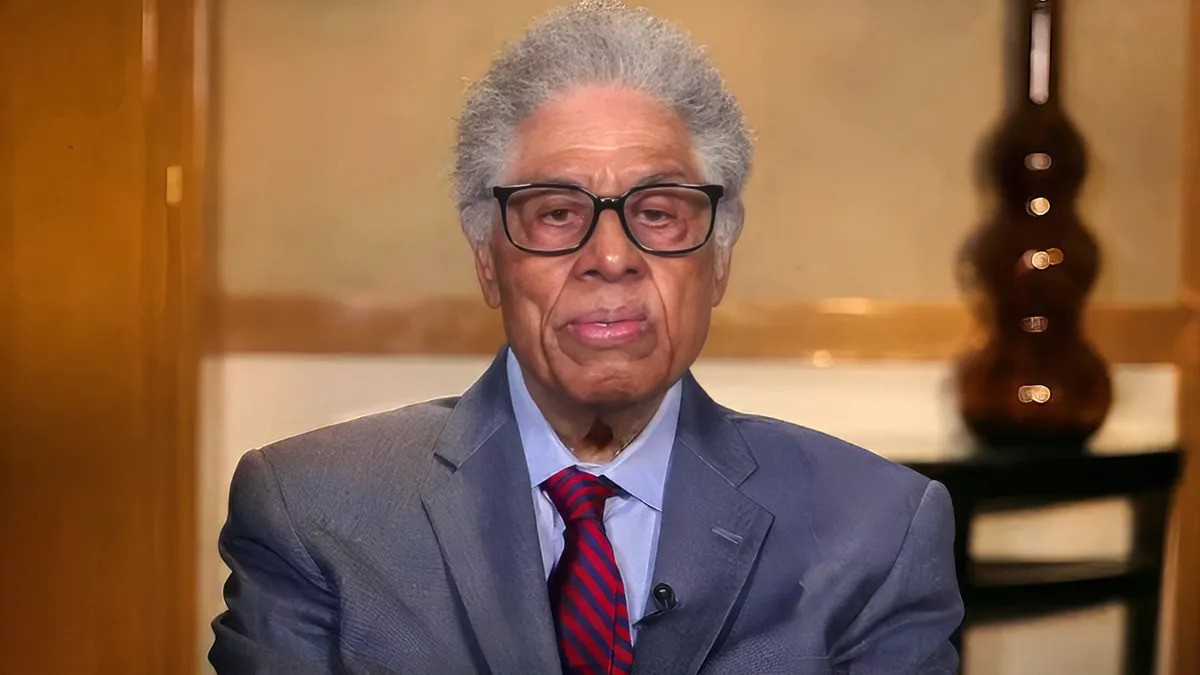
At an age when most public figures have long retreated from intellectual life, Thomas Sowell continues to stand as a singular presence in American discourse—a figure defined not by spectacle, but by the enduring force of disciplined thought. Now ninety-five years old, Sowell represents a rare archetype in modern public life: a scholar whose influence has been cultivated not through political office, viral notoriety, or rhetorical theatrics, but through decades of rigorous analysis, meticulous research, and a steadfast commitment to empirical truth.
His career, spanning more than half a century, has produced an expansive body of work comprising over thirty books and countless essays. These writings, grounded in economic reasoning and historical inquiry, have systematically interrogated many of the most entrenched assumptions in contemporary policy debates. While others have pursued visibility, Sowell has pursued understanding—often at a distance from the institutions and incentives that shape mainstream narratives.
Sowell’s intellectual journey is notable not merely for its longevity but for its consistency. In an era increasingly defined by rapid cycles of opinion and the commodification of attention, he has remained committed to a slower, more exacting process of knowledge acquisition. His work has unfolded largely outside the rhythms of political theater, insulated from the immediate pressures of electoral politics and public approval.
Unlike many influential figures, Sowell has never sought public office. He has not anchored his authority in institutional power, nor has he relied on the amplification mechanisms of modern media. Instead, his influence has been built incrementally, through a sustained engagement with data, historical evidence, and logical reasoning. This approach has allowed his ideas to endure beyond the ephemeral trends that often dominate public discourse.
As an economist and social theorist, Sowell has consistently emphasized the importance of outcomes over intentions. His analyses frequently challenge policies that, while well-intentioned, fail to deliver the results they promise. In doing so, he has positioned himself as a critic not of aspiration, but of inefficacy—a distinction that lies at the heart of his intellectual framework.
Perhaps the most succinct articulation of Sowell’s philosophy is encapsulated in a single, deceptively simple proposition: there are no perfect solutions in public policy, only trade-offs. This principle, which he has reiterated throughout his work, serves as a corrective to the often idealistic language that characterizes political debate.
Every intervention, he argues, carries consequences—intended and unintended alike. The critical question is not whether a policy addresses a problem in theory, but whether it produces net benefits in practice. This emphasis on trade-offs demands a level of analytical rigor that is frequently absent from discussions driven by moral urgency or ideological conviction.
Sowell’s insistence on this perspective has profound implications. It requires policymakers and citizens alike to confront the costs associated with their preferences, to acknowledge that resources are finite, and to recognize that gains in one area may entail losses in another. In this sense, his work functions as a form of intellectual discipline, urging a more sober and comprehensive evaluation of public initiatives.
One of the most contentious areas of Sowell’s scholarship has been his examination of policies aimed at promoting equality, particularly those involving preferential treatment or redistributive mechanisms. Over the course of several decades, he has conducted extensive studies on programs designed to reduce disparities, often arriving at conclusions that challenge prevailing orthodoxies.
Sowell has argued that many such initiatives, despite their stated objectives, produce outcomes that diverge significantly from their intentions. In particular, he has suggested that policies intended to assist disadvantaged groups frequently yield disproportionate benefits for those who are already relatively advantaged within those groups. As a result, the very populations these programs are meant to support may find themselves further marginalized.
This critique extends to the domain of higher education, where Sowell has scrutinized the distributional effects of admissions policies. He has contended that the beneficiaries of these systems are often individuals who already possess significant social and economic capital, rather than those from the most disadvantaged backgrounds. Such observations, while controversial, are grounded in his broader commitment to empirical analysis.
Underlying much of Sowell’s work is a focus on incentives—the mechanisms that shape human behavior within institutional frameworks. He has consistently emphasized that policies must be evaluated not only in terms of their goals but also in terms of the incentives they create. When incentives are misaligned, even the most well-intentioned programs can produce counterproductive outcomes.
This perspective has led him to question a wide range of policy interventions, from educational reforms to welfare programs. In each case, he has sought to identify the ways in which institutional arrangements influence behavior, often revealing unintended consequences that undermine the original objectives.
For example, in the context of social policy, Sowell has examined how certain forms of assistance may inadvertently discourage self-sufficiency or distort labor market dynamics. Similarly, in education, he has explored how administrative decisions can affect both student performance and institutional effectiveness. These analyses are characterized by a consistent methodology: the careful examination of data over time, coupled with a willingness to challenge assumptions.
Sowell’s work also reflects a broader skepticism toward what might be described as intellectual fashion—the tendency for certain ideas to gain prominence based on their rhetorical appeal rather than their empirical validity. He has argued that many of the policy shifts observed in recent decades can be understood as the replacement of approaches that demonstrably worked with alternatives that merely appeared more appealing.
This critique is particularly salient in discussions of urban policy and education. Sowell has pointed to historical examples in which established practices, though imperfect, yielded measurable benefits, only to be supplanted by reforms that prioritized ideological coherence over practical effectiveness. The result, in his view, has often been a deterioration in outcomes, particularly in communities already facing significant challenges.
Such observations underscore the importance of historical awareness in policy analysis. By examining the long-term effects of different approaches, Sowell seeks to provide a counterweight to the short-termism that frequently characterizes political decision-making.
Beyond his contributions to academic and policy debates, Sowell has also offered guidance to younger generations navigating an increasingly complex social and economic landscape. His advice is notably pragmatic, emphasizing the acquisition of skills, the cultivation of discipline, and the importance of personal responsibility.
Rather than encouraging reliance on external interventions, Sowell advocates for self-development as the most reliable pathway to advancement. This perspective aligns with his broader emphasis on agency and accountability, reinforcing the idea that individuals play a central role in shaping their own trajectories.
At the same time, his counsel reflects an awareness of the structural challenges that many individuals face. By focusing on skills that are valued in the marketplace, he seeks to equip individuals with tools that can enhance their opportunities, irrespective of broader systemic dynamics.
What distinguishes Sowell’s work, perhaps more than any specific conclusion, is his unwavering commitment to evidence. In a public discourse often dominated by anecdote and assertion, he has consistently returned to data as the foundation for analysis. This methodological rigor has enabled him to engage with complex issues in a manner that transcends ideological boundaries.
His approach does not demand agreement; rather, it invites scrutiny. By presenting arguments grounded in empirical observation, he challenges readers to engage critically with the material, to test assumptions, and to consider alternative interpretations. In this sense, his work embodies a form of intellectual openness that is increasingly rare.
As Thomas Sowell reaches his ninety-fifth year, his legacy stands as a testament to the enduring value of disciplined inquiry. In a cultural environment that often prioritizes immediacy over depth, his career offers a compelling alternative—a model of engagement that privileges understanding over attention.
His influence is not measured in headlines or electoral victories, but in the cumulative impact of ideas that have shaped debates across multiple domains. Whether one agrees with his conclusions or not, it is difficult to deny the significance of his contributions to the intellectual landscape.
In reflecting on his work, one is reminded that the most consequential voices are not always the loudest. Sometimes, they are those who, through patience and persistence, illuminate complexities that others overlook. Thomas Sowell, in his ninth decade of life, continues to exemplify this principle.
His career invites a reconsideration of what it means to participate meaningfully in public discourse. It suggests that the pursuit of truth, however demanding, remains a worthy endeavor—and that, even in an age of noise, there is still space for clarity.