





























|
Getting your Trinity Audio player ready...
|
By: Fern Sidman
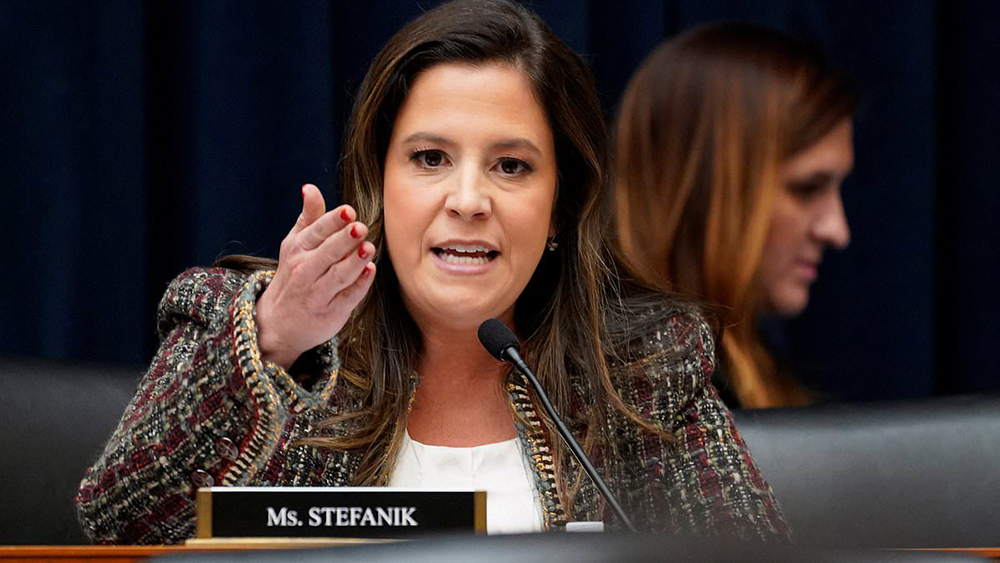
In a sweeping bipartisan effort that underscores mounting concern over the intersection of academia, geopolitics, and national security, Congresswoman Elise Stefanik (R-NY), Chairwoman of House Republican Leadership, along Senator Rick Scott (R-FL) and Rep. Josh Gottheimer (D-NJ) introduced a pair of legislative proposals on Wednesday that are designed to curtail foreign influence within American higher education. The bills, unveiled with urgency and emphatic rhetoric, seek to block federal research funding from universities that maintain institutional ties with what lawmakers describe as hostile foreign governments.
At the heart of the initiative lies a profound concern about the vulnerability of American academic institutions to external influence, particularly in fields that carry significant national security implications. According to legislative summaries and reporting, the proposals would impose strict conditions on universities seeking federal research grants, effectively forcing them to sever or reconsider relationships with certain foreign entities.

Stefanik, who has emerged as a leading voice on issues of foreign influence in education, framed the legislation as a necessary corrective to what she described as a troubling and longstanding pattern.
“Hostile foreign nations like China and Qatar have funneled millions of dollars to some of America’s most prestigious universities,” she said. “This funding has allowed these nations to promote harmful anti American ideologies on college campuses and gain access to sensitive research with national security applications.”
Her remarks, echoed in multiple public statements, reflect a growing consensus among lawmakers that financial ties between universities and foreign governments may carry consequences far beyond the academic sphere. “Our legislation will prevent federal research dollars from padding the pockets of universities that continue to knowingly operate branch campuses in these nations or accept funds for national security related research,” Stefanik added. “These concrete actions will help defend American universities and students from hostile foreign influence.”
The legislative effort is notable not only for its substance but also for its bipartisan backing. Gottheimer, a Democrat, emphasized that the issue transcends party lines, framing it as a matter of fundamental national interest.
“We know adversaries like the Chinese Communist Party are exploiting our universities to access cutting edge research and push their anti American agendas,” he stated. “This bipartisan legislation draws a clear line: if you are taking money tied to hostile nations, you should not be getting United States taxpayer dollars, full stop.”
The clarity of this position, expressed in unequivocal terms, underscores the seriousness with which lawmakers view the issue. For Gottheimer, the stakes are nothing less than the protection of American innovation and intellectual capital.
“It is about protecting our national security and standing up for American innovation,” he added.
Senator Scott, for his part, delivered perhaps the most blunt assessment of the situation, invoking the language of strategic competition and adversarial intent.
“America has enemies and we need to start acting like it,” he declared. “Countries like Communist China and terror supporting Qatar should not be able to use America’s colleges and universities as outposts to spy on us, steal sensitive research, and spread anti American propaganda, but we have been letting them do it for years.”

Scott’s remarks capture a broader shift in Washington’s posture toward foreign engagement, one that increasingly prioritizes vigilance over openness in sectors deemed critical to national security. “This legislation is critical to America’s national security and the future of our higher education system, neither of which should be for sale,” he concluded.
The two bills—identified in legislative materials as the Defending American Research Act and the No Branch Campuses in Hostile Countries Act—introduce a series of stringent requirements for institutions seeking federal research funding.
Among their key provisions:
Universities must certify that they do not operate branch campuses in specified adversarial nations as a condition of receiving federal research grants.
Institutions that accept funding from certain foreign governments for research related to national security—particularly in areas such as artificial intelligence, biotechnology, and quantum computing—would be barred from receiving federal research funding for a period of five years.
The legislation identifies a list of countries deemed ineligible to exert such influence, including China, Qatar, Venezuela, North Korea, Cuba, Turkey, and Russia.
These measures, lawmakers argue, are designed to create a clear and enforceable boundary between federally funded research and foreign influence.
The scale of foreign funding in American higher education provides critical context for the legislative push. According to federal data, tens of billions of dollars in foreign contributions have flowed into United States universities over the past several decades, with a significant portion disclosed only in recent years.
Critics of the current system argue that such funding, while often presented as benign or mutually beneficial, can carry hidden costs. These may include the shaping of academic discourse, the prioritization of certain research agendas, and, in some cases, the transfer of sensitive technologies.
Stefanik has previously pointed to what she described as “billions of dollars” in foreign contributions influencing campus environments, suggesting that the issue extends beyond isolated incidents to encompass systemic challenges.
The proposed legislation places American universities in a difficult position, forcing them to weigh the benefits of international partnerships against the potential loss of federal funding. For institutions heavily reliant on research grants, the stakes are particularly high.
Some analysts have warned that the bills could have far reaching consequences for leading research universities, many of which maintain global campuses and collaborative programs. However, proponents argue that such consequences are both necessary and justified.
“This is about drawing a line,” one lawmaker emphasized. “If you want to participate in sensitive research funded by American taxpayers, you cannot simultaneously maintain relationships that compromise our national interests.”
The introduction of these bills reflects a broader shift in United States policy toward foreign engagement in education and research. Over the past several years, lawmakers have increasingly scrutinized programs such as Confucius Institutes and other initiatives linked to foreign governments.
This evolving approach signals a recognition that universities, long viewed as centers of open exchange, can also serve as arenas for geopolitical competition.
As the legislation moves forward, it is likely to spark vigorous debate among policymakers, educators, and industry leaders. Supporters will argue that the measures are essential to safeguarding national security, while critics may raise concerns about academic freedom and the potential impact on international collaboration.
For now, however, the message from Capitol Hill is clear. In the words of Senator Scott, “We have been letting this happen for years,” a statement that encapsulates the sense of urgency driving the legislative effort.
The introduction of these bipartisan bills represents a pivotal moment in the ongoing effort to redefine the relationship between American universities and the global landscape. By seeking to limit foreign influence in areas of critical importance, lawmakers are attempting to strike a delicate balance between openness and security.
Whether this approach will achieve its intended objectives remains to be seen. What is certain, however, is that the debate it has ignited will shape the future of American higher education for years to come.
In the words of Rep. Elise Stefanik, the issue is ultimately about defending both the integrity of American institutions and the security of the nation itself. “These concrete actions will help defend American universities and students from hostile foreign influence,” she said—a declaration that captures both the ambition and the urgency of the moment.



