



















|
Getting your Trinity Audio player ready...
|
By: Fern Sidman
The controversy, which has reverberated through diplomatic and policy making circles, centers on the incongruity of granting a leadership role within a nuclear oversight forum to a regime widely accused of pursuing nuclear ambitions in defiance of international norms. For critics, the decision is not merely ill advised but emblematic of a deeper structural dysfunction within the United Nations system.
Moshe Phillips, Chairman of Americans For A Safe Israel, articulated the organization’s position on Wednesday with unmistakable clarity. “Perversely, the United Nations has long viewed Israel as wrong no matter what it does,” he said, framing the current dispute within a broader pattern of institutional bias. His remarks, delivered with characteristic directness, underscore a longstanding grievance among pro-Israel advocates who argue that the international body disproportionately scrutinizes democratic Israel while affording leniency, and at times legitimacy, to authoritarian regimes.
Phillips reserved particular praise for Ambassador Waltz, whose comments have become a focal point of the unfolding debate. According to Phillips, Waltz’s decision to speak candidly about the issue represents a departure from a tradition of diplomatic restraint that has often muted criticism of the United Nations.
“Ambassador Mike Waltz’s decision to call out the fact that, as in the ambassador’s words, this is ‘shameful’ and that ‘this is exactly the kind of nonsense that makes Americans roll their eyes’ are the type of remarks that Americans regard as a breath of fresh air,” Phillips stated. “Americans have been looking for our representatives to the United Nations to call out the United Nations for the corrupt body that it is.”
Such language reflects a growing impatience among segments of the American public and policy community who view international institutions as increasingly detached from the principles they were designed to uphold. The elevation of Iran within the framework of a nuclear review conference, critics argue, epitomizes this disconnect.
The Nuclear Non Proliferation Treaty, long regarded as a cornerstone of global efforts to prevent the spread of nuclear weapons, is predicated on a delicate balance of obligations and trust among its signatories. Conferences convened to review the treaty’s implementation are intended to reinforce these commitments and address emerging challenges. Against this backdrop, the appointment of Iran—a nation that has faced repeated allegations of non compliance—has been met with incredulity and alarm.
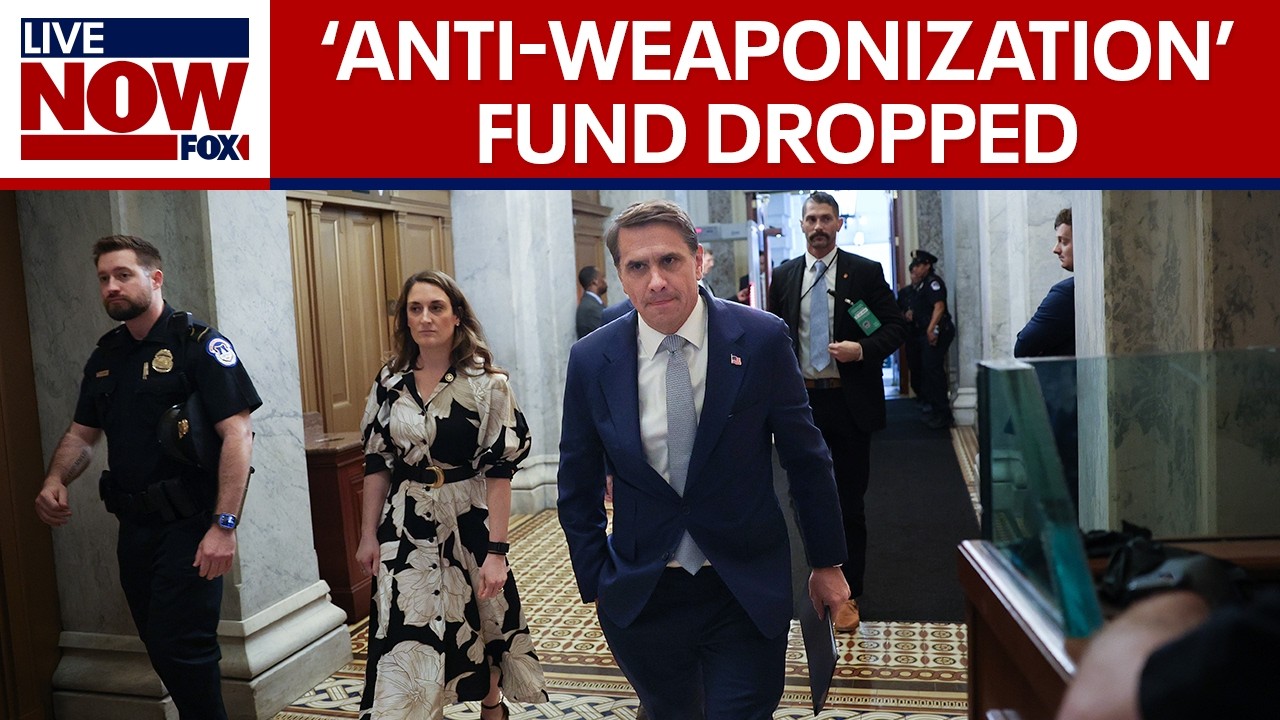
Christopher Yeaw, the United States assistant secretary for arms control and nonproliferation, echoed these concerns in emphatic terms. “It is beyond shameful and an embarrassment to the credibility of this conference,” he said, drawing attention to the potential damage such a decision could inflict on the integrity of the proceedings. His remarks, widely circulated in diplomatic circles, reinforce the perception that the controversy extends beyond partisan or ideological divides.
For Americans For A Safe Israel, the issue is not confined to a single appointment but rather indicative of a systemic problem. Phillips elaborated on this perspective, emphasizing what he described as a persistent double standard in the treatment of Israel compared to its adversaries.
“Israel, a democracy, is regularly singled out for criticism by every United Nations body while its totalitarian enemies are not just welcomed but regularly put in positions of authority,” he asserted. This juxtaposition, he argued, highlights a fundamental inconsistency that undermines the credibility of international governance mechanisms.
The organization’s critique is rooted in decades of advocacy and observation. Founded in 1970, Americans For A Safe Israel has established itself as one of the most enduring voices in the pro-Israel landscape. Its mission, centered on promoting security and combating misinformation, has taken on renewed urgency in an era marked by heightened geopolitical tensions and an increasingly polarized discourse.
“We cannot thank Ambassador Waltz enough for speaking out against Iran’s inclusion,” Phillips continued. “That the ambassador’s comments were necessary to make in the first place shows just how far the United Nations has strayed from its mandate and purpose.”
This assertion speaks to a broader concern that the United Nations, originally conceived as a forum for cooperation and conflict resolution, has clearly deviated from its foundational principles. Critics contend that political considerations and bloc dynamics have at times overshadowed the pursuit of impartiality and accountability.
The reaction from Americans For A Safe Israel also reflects a strategic effort to galvanize public opinion and influence policy discussions. By amplifying the statements of senior American officials and framing the issue in terms of fundamental fairness and credibility, the organization seeks to underscore the stakes involved.
At the heart of the controversy lies a question of legitimacy. Can a nation accused of undermining the very principles of nuclear nonproliferation effectively contribute to a forum designed to uphold them? For many observers, the answer is self-evident, and the decision to grant Iran a leadership role is seen as a troubling contradiction.
The implications of this development extend beyond the immediate context of the conference. They touch upon the broader architecture of international governance and the mechanisms through which norms are enforced. If those mechanisms are perceived as inconsistent or compromised, their ability to command respect and compliance may be diminished.
In this sense, the debate over Iran’s appointment is emblematic of a larger struggle over the future of multilateral institutions. As geopolitical rivalries intensify and trust erodes, the challenge of maintaining credible and effective frameworks for cooperation becomes ever more complex.
For proponents of a robust and principled approach to international diplomacy, the current episode serves as a cautionary tale. It underscores the importance of aligning institutional practices with stated objectives and of ensuring that positions of authority are entrusted to actors who embody, rather than contradict, the values they are meant to advance.
Americans For A Safe Israel has made clear that it views the situation as a pivotal moment. By voicing its support for Ambassador Waltz and other officials who have spoken out, the organization is positioning itself at the forefront of a broader campaign to demand accountability and reform.
The resonance of its message suggests that the issue is likely to remain a subject of intense scrutiny in the weeks and months ahead. As the Nuclear Non-Proliferation Treaty review process unfolds, the credibility of the proceedings—and by extension, the institutions that oversee them—will be closely watched.
In the words of Moshe Phillips, the stakes could not be higher. “This is exactly the kind of nonsense that makes Americans roll their eyes,” he said, capturing a sentiment that appears to be gaining traction across a wide spectrum of observers.
Whether this moment will catalyze meaningful change or merely deepen existing divisions remains an open question. What is certain, however, is that the decision to elevate Iran has ignited a debate that reaches far beyond the confines of a single conference, touching on the very foundations of international order and the principles that sustain it.



