





















|
Getting your Trinity Audio player ready...
|
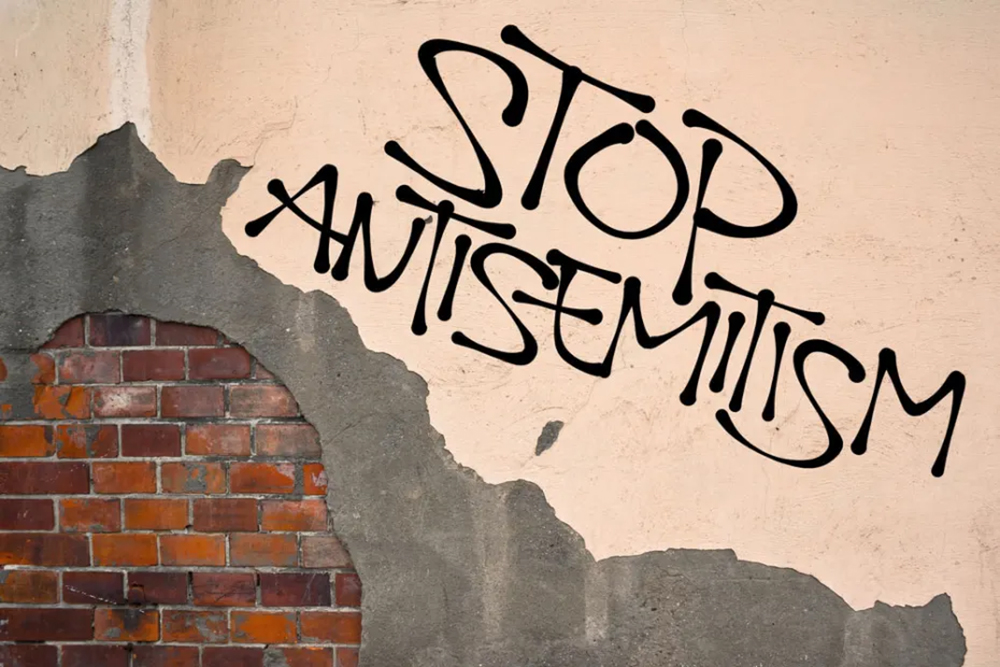
Wave of Antisemitic Violence Escalates Globally as NYC Synagogue Siege Sparks Alarm
By: Fern Sidman
A deeply troubling surge in antisemitic incidents—spanning physical assaults, ideological incitement, and symbolic acts of hatred—has intensified global concern, with New York City once again emerging as a focal point. For the second time in less than 6 days, a synagogue in Brooklyn was besieged by demonstrators openly espousing pro-terror rhetoric, underscoring what experts describe as an increasingly emboldened and coordinated campaign of intimidation targeting Jewish communities.
According to data compiled and analyzed by the Antisemitism Research Center (ARC) of the Combat Antisemitism Movement, the events in the Midwood section of Brooklyn represent part of a broader and rapidly escalating pattern. CAM has tracked a notable spike in antisemitic incidents worldwide this week, with at least 8 violent acts recorded—a figure representing more than a 50% increase over the weekly average for 2026 thus far.
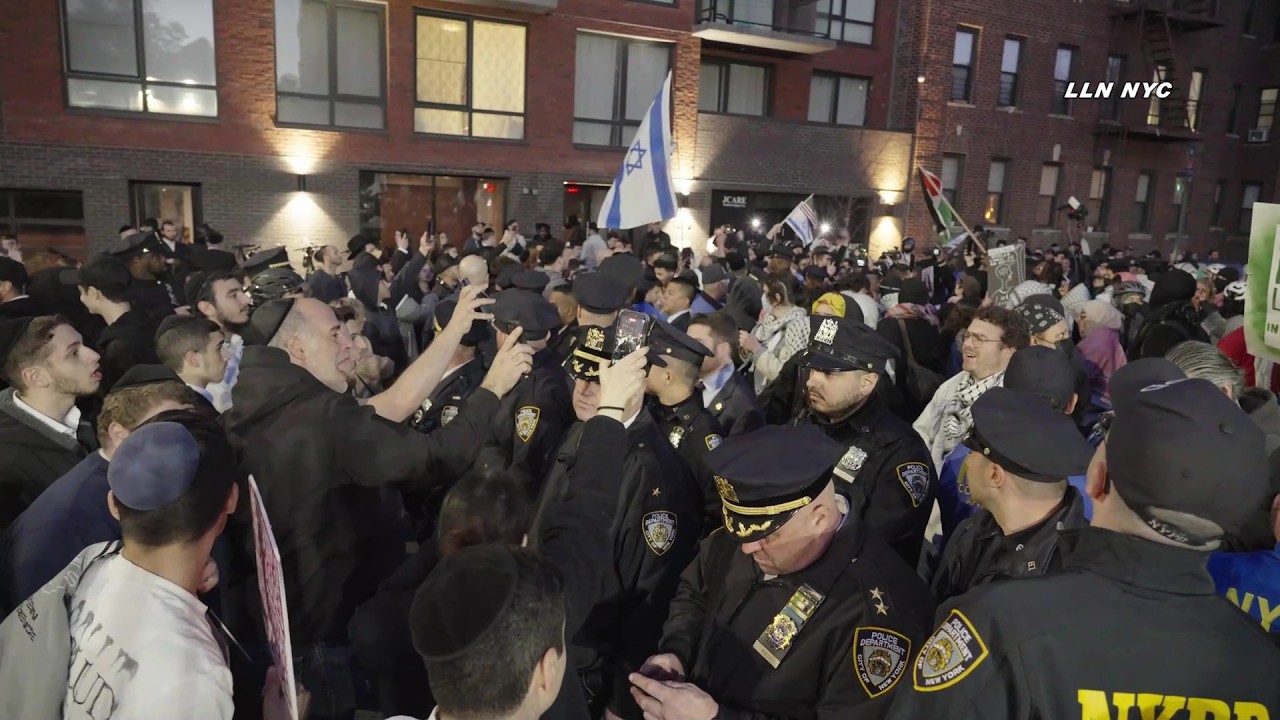
The most immediate and alarming episode unfolded Monday evening outside the Young Israel of Midwood in Brooklyn, where an Israeli real estate expo was being held. Demonstrators affiliated with Pal-Awda NY/NJ descended upon the synagogue in what witnesses described as a coordinated attempt to disrupt the event and intimidate attendees.
Chants echoed through the streets with unmistakable hostility. Protesters were heard shouting, “Brick by brick, wall by wall, Zionism will fall,” as well as the more incendiary declaration, “There is only one solution: Intifada, Revolution.”
Observers reported the presence of Hezbollah flags and Hamas symbols within the crowd—imagery that Jewish leaders and security analysts know are explicit endorsements of terrorist organizations. The atmosphere quickly deteriorated from protest to confrontation.
One particularly disturbing incident involved the physical assault of a young Jewish woman, highlighting the volatility of the gathering and reinforcing concerns about the safety of Jewish residents in the area.
CAM’s ARC characterized the event in stark terms, noting that it was not an isolated outburst but rather indicative of a growing trend in which demonstrations increasingly cross the threshold into intimidation and violence. “This was not merely a protest,” one analyst affiliated with CAM observed. “It was an organized attempt to besiege a place of worship and community gathering.”
The Brooklyn incident is emblematic of a broader surge in antisemitic activity documented by CAM over the past week. The organization’s global monitoring efforts reveal a constellation of incidents that, while geographically dispersed, share a common thread of hostility directed toward Jewish individuals and institutions.
In the United States, CAM reported that an Ohio man has been charged after allegedly threatening a student outside a Jewish school in the Cincinnati area. The nature of the threat, though not publicly detailed in full, has raised alarm among parents and community leaders concerned about the safety of Jewish educational environments.
Another incident occurred in Washington, D.C., where New York Congressman Mike Lawler was verbally accosted in a bar by William Paul, the son of Senator Rand Paul. According to accounts documented by CAM, Paul launched into what was described as a drunken antisemitic tirade, accusing Lawler of being Jewish and directing a stream of offensive rhetoric at him.
Such incidents, while distinct in their circumstances, contribute to what CAM identifies as a climate of normalization surrounding antisemitic expression—where rhetoric that was once confined to the margins is increasingly voiced in public settings.
The troubling trend extends well beyond American borders. CAM’s ARC has documented a series of incidents across multiple countries, each illustrating the pervasive and transnational nature of contemporary antisemitism.
In Mexico, a so-called “children’s workshop” held at the José Recek Saade Popular Theater included an activity in which participants beat a piñata adorned with a swastika superimposed on an Israeli flag. The symbolism of the act—combining Nazi imagery with representations of the Jewish state—has been widely condemned as both inflammatory and deeply offensive.
In the United Kingdom, violence against Jewish individuals has also been reported. A Jewish schoolboy was punched outside a school in London’s Stanford Hill neighborhood, while in the borough of Hackney, several visibly Jewish women were assaulted by an individual wielding a belt. These incidents, according to CAM, reflect a disturbing willingness to target individuals based on their religious identity.
Meanwhile, in Norway, vandals defaced Holocaust memorial bricks in Oslo by spray-painting Hamas symbols—an act that CAM described as “a direct affront to historical memory and the victims of one of history’s greatest atrocities.”
The cumulative effect of these incidents is reflected in CAM’s data, which indicates a sharp uptick in violent antisemitic acts. The ARC reported eight such incidents globally within a single week—a figure that exceeds the 2026 weekly average by more than 50%.
“This level of escalation is deeply concerning,” a CAM spokesperson stated. “We are witnessing not only an increase in frequency but also a rise in the severity and brazenness of these acts.”
The data suggests that antisemitism is not merely persisting but evolving—adapting to contemporary political and social dynamics while drawing on longstanding prejudices.
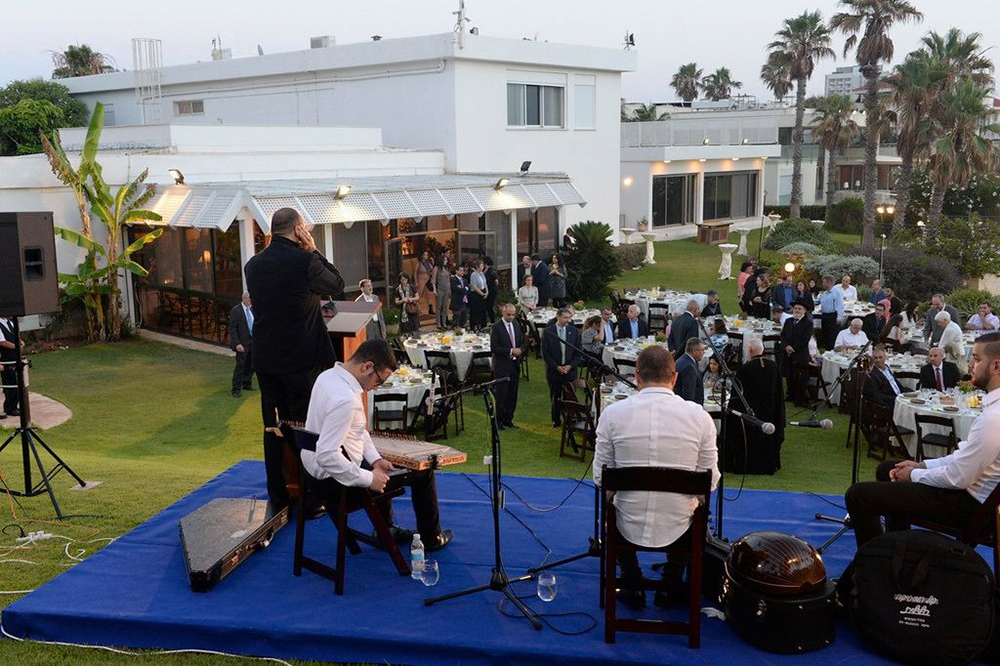
Amid these developments, efforts to counter antisemitism and promote awareness continue. CAM recently hosted a Jewish American Heritage Month reception at Terrace Hill in Des Moines, Iowa, where Governor Kim Reynolds delivered keynote remarks.
The event also honored winners of Iowa’s Jewish American Heritage Month Student Scholarship Contest, highlighting the importance of education and community engagement in combating prejudice.
While such initiatives provide a measure of hope, they stand in stark contrast to the incidents documented by CAM, underscoring the dual reality faced by Jewish communities: one of resilience and cultural celebration, juxtaposed against a backdrop of rising hostility.
Experts caution that the current wave of antisemitic incidents must be understood within a broader socio-political context. The convergence of geopolitical tensions, particularly related to Israel, with domestic political discourse has created an environment in which anti-Israel sentiment can and does spill over into antisemitic expression.
CAM has consistently emphasized the importance of distinguishing between legitimate political criticism and rhetoric that crosses into hatred or incitement. However, the presence of terrorist symbols and calls for violence—such as those heard in Brooklyn—leaves little ambiguity.
“Chants invoking ‘Intifada’ and the display of Hamas and Hezbollah symbols are not expressions of peaceful protest,” a CAM analyst noted. “They are endorsements of violence.”
As New York City grapples with the aftermath of the Midwood synagogue siege and communities worldwide confront similar challenges, the question facing policymakers, law enforcement, and civil society is how to respond effectively to this escalating threat.
The data and incidents documented by CAM paint a sobering picture—one that demands vigilance, accountability, and a renewed commitment to protecting the fundamental rights and safety of Jewish individuals.
The events of this past week serve as a stark reminder that antisemitism, in its many forms, remains a persistent and evolving challenge. Whether through physical violence, verbal harassment, or symbolic acts of hatred, the impact is profound and far-reaching.
For many, the siege of a Brooklyn synagogue is not merely a local incident but a symbol of a broader crisis—one that requires urgent attention and decisive action.
As CAM continues to monitor and report on these developments, the imperative is clear: to confront antisemitism in all its manifestations and to ensure that the principles of tolerance, dignity, and mutual respect are upheld in communities around the world.