










|
Getting your Trinity Audio player ready...
|
Trump’s Dramatic White House Address Follows Chaotic Evacuation from Correspondents’ Dinner
By: Fern Rosenblatt
In a night that began with ceremonial pageantry and concluded in abrupt disruption, President Donald Trump delivered a solemn yet resolute address to the nation from the White House late Saturday after a shocking security incident forced the evacuation of the White House Correspondents’ Association Dinner in Washington. The episode, which unfolded with alarming speed and intensity, transformed what is traditionally an evening of levity, reflection, and bipartisan camaraderie into a moment of collective unease and national introspection.
According to a report on Saturday night by VIN News, the disturbance began shortly after 8:30pm near the Washington Hilton Hotel in downtown Washington, where the annual black-tie gathering was underway. The event, attended by senior government officials, members of the press, and prominent public figures, was interrupted by reports of gunfire emanating from an area adjacent to the venue’s primary security screening point. Within moments, the atmosphere of celebration gave way to confusion and urgency, as security personnel initiated emergency protocols.
President Trump, who was attending the prestigious dinner for the first time during his presidency, was in the midst of the evening’s program when Secret Service agents moved decisively to escort him from the stage. The First Lady, Melania Trump, along with cabinet members and other high profile attendees, were similarly evacuated in a coordinated operation designed to minimize risk and maintain order amid escalating uncertainty.
Despite the alarming nature of the incident, authorities confirmed that neither the president nor the First Lady sustained any injuries. Other attendees were likewise reported to be unharmed, though the psychological impact of the sudden disruption was palpable. As detailed by VIN News, the rapid response of security personnel was widely credited with preventing what could have developed into a far more dangerous situation.
In his remarks from the White House later that evening, President Trump struck a tone that combined gravity with determination. He described the events as “rather traumatic,” acknowledging the distress experienced by those present, particularly the First Lady. At the same time, he expressed confidence in the resilience of the nation and its institutions.
The president praised the professionalism and courage of law enforcement officers, emphasizing their swift action in apprehending the suspect and securing the area. He characterized the individual responsible as a “lone wolf” originating from California, a description that aligns with preliminary findings reported by VIN News.
Trump also reflected on the symbolic significance of the event itself. The White House Correspondents’ Dinner, he noted, is dedicated to the principles of free speech and a free press, values that occupy a central place in the American constitutional framework. The disruption of such an event, therefore, carries implications that extend beyond the immediate circumstances.
Prior to the incident, the president had reportedly prepared a speech that would adopt a more confrontational tone, consistent with the often-spirited exchanges that characterize the relationship between the executive branch and the media. However, in light of the evening’s events, he chose instead to emphasize themes of unity and shared purpose.
“This was a moment,” he observed, “when people from across the political spectrum came together.” His remarks underscored the capacity of national crises to transcend partisan divisions, at least temporarily, fostering a sense of collective identity and mutual concern.
The abrupt interruption of the dinner thus served as both a disruption and a revelation, highlighting the fragility of public gatherings while also illuminating the enduring strength of democratic values.
Law enforcement officials have confirmed that the shooting occurred outside the main screening area of the venue, a detail that has prompted renewed scrutiny of security arrangements. One secret service officer was injured during the incident and is currently receiving medical treatment. The extent of the injuries has not been fully disclosed, but officials have indicated that the officer’s condition is stable.
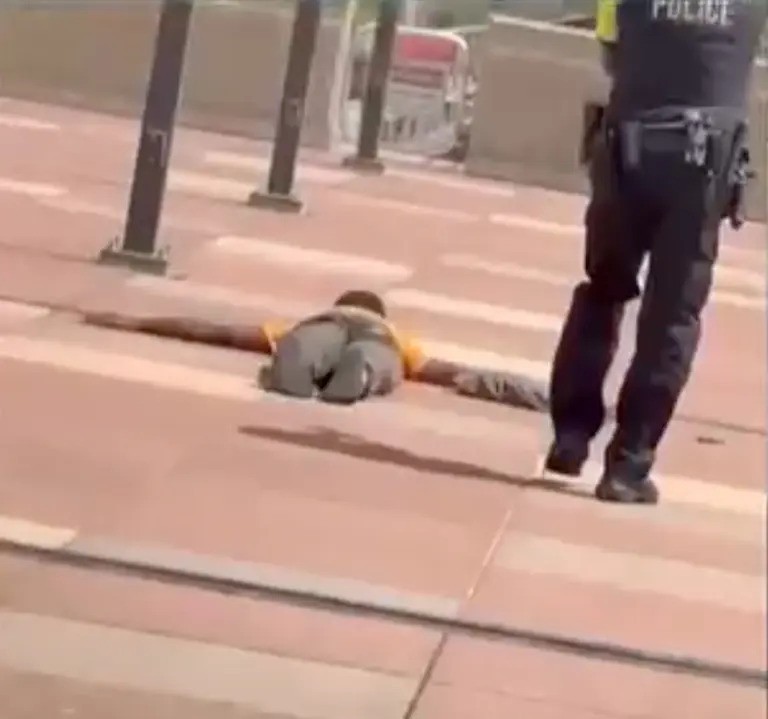
The suspect was taken into custody without further incident, and authorities have initiated a comprehensive investigation to determine the circumstances surrounding the attack. As noted in coverage by VIN News, investigators are examining the individual’s background, potential motivations, and any connections that may shed light on the nature of the threat.
The White House Correspondents’ Association, which organizes the annual dinner, moved swiftly to address the situation. In a statement, the organization confirmed that the event would be rescheduled, emphasizing its commitment to continuing the tradition while ensuring the safety of all participants.
The dinner, which raises funds for journalism scholarships, occupies a unique place in the American public sphere. It serves not only as a social occasion but also as a celebration of the First Amendment, bringing together journalists and public officials in a shared acknowledgment of the importance of a free and independent press.
The decision to postpone the event reflects both practical considerations and a broader recognition of the need to preserve its symbolic integrity.
The events of Saturday evening have inevitably prompted a reassessment of security protocols at high profile gatherings. Despite the extensive measures typically employed to safeguard such events, the ability of an armed individual to approach a critical access point underscores the challenges faced by security professionals in an evolving threat landscape.
Experts have long noted that individuals acting independently, often described as lone actors, present a particularly complex challenge. Their actions are difficult to predict, and their motivations can be diverse, ranging from ideological extremism to personal grievances.
The characterization of the suspect in this case as a lone actor aligns with this broader pattern, raising questions about how best to identify and mitigate such threats without compromising the openness that defines democratic societies.
In concluding his address, President Trump articulated a message of resilience and continuity. “We are not going to let anybody take over our society,” he declared, reaffirming his commitment to ensuring that public life continues despite attempts to disrupt it.
This statement reflects a broader determination to maintain the normal functioning of democratic institutions, even in the face of adversity. It also serves as a reminder that the response to such incidents is as important as the events themselves, shaping public perceptions and influencing future policy decisions.
As the investigation progresses and further details emerge, the incident is likely to remain a focal point of national attention. It raises important questions about security, public safety, and the balance between vigilance and openness.
For those who were present at the dinner, the experience will undoubtedly leave a lasting impression, a reminder of the unpredictability of public life and the importance of preparedness. For the broader public, it serves as an opportunity to reflect on the values that underpin American society and the measures necessary to protect them.
The disruption of the White House Correspondents’ Dinner represents more than a singular event; it is a moment that encapsulates the tensions and challenges of the contemporary era. As reported by VIN News, the swift response of law enforcement and the composed leadership displayed in the aftermath have helped to restore a sense of order and confidence.
Yet the incident also speaks volumes about the need for continued vigilance and adaptation. In a world where threats can emerge unexpectedly, the capacity to respond effectively and maintain the continuity of public life is of paramount importance.
The dinner will be rescheduled, the traditions it represents will endure, and the principles it celebrates will continue to guide the nation. But the events of Saturday night will remain a defining chapter in its history, a testament to both the vulnerabilities and the resilience of the institutions that shape American democracy.



