



























|
Getting your Trinity Audio player ready...
|
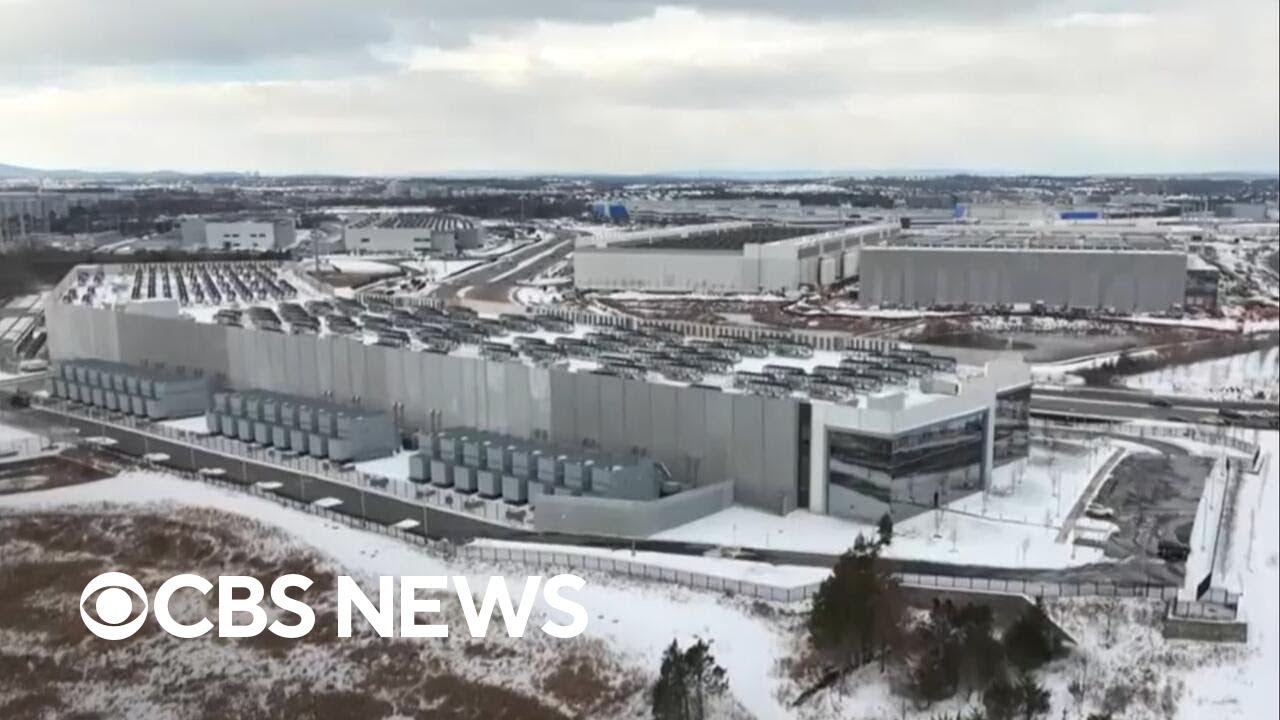
(TJV NEWS) America’s artificial intelligence revolution is no longer confined to Silicon Valley boardrooms or futuristic tech conferences. It is rapidly moving into suburbs, industrial parks, small towns, and residential corridors across the country — and millions of Americans may soon find an AI data center operating just miles from their homes.
According to reporting by The Epoch Times, nearly 4,900 AI-related data centers are now operating, under development, or planned across the United States as technology giants race to build the enormous infrastructure needed to power the exploding artificial intelligence economy. The unprecedented construction boom is triggering both excitement and growing alarm nationwide.
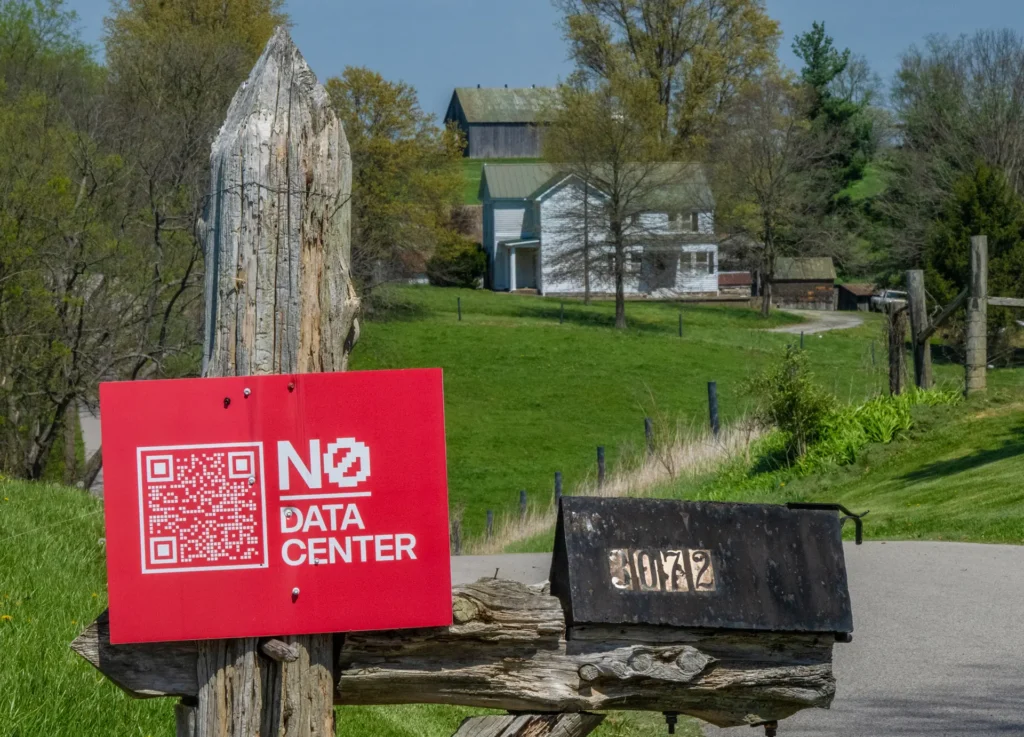
The Epoch Times reported that the rapid expansion is being fueled by soaring demand for AI systems including ChatGPT-style platforms, military AI applications, cloud computing, autonomous vehicles, financial modeling, and next-generation business automation. But as hyperscale facilities spread into local communities, residents are increasingly raising concerns over electricity usage, water consumption, environmental strain, noise pollution, land use, and quality of life.
The Largest Infrastructure Buildout in Modern Tech History
Industry analysts increasingly describe the AI data center surge as one of the largest infrastructure expansions in modern American history.
Research from Epoch AI shows the newest generation of AI supercomputing campuses consume extraordinary amounts of electricity — in some cases rivaling the power usage of entire cities. One major AI project alone could require enough energy to power a metropolitan area the size of Seattle.
The facilities themselves are massive. Many stretch across hundreds of acres and contain warehouses packed with specialized AI chips, cooling systems, backup generators, transformers, and advanced networking infrastructure.
The Epoch Times reported that local governments across the country are being flooded with proposals from tech companies seeking land, tax incentives, and utility access for new AI server farms.
Why Communities Are Fighting Back
As the projects spread, opposition is intensifying.
Residents in multiple states have voiced concerns that AI data centers bring heavy industrial infrastructure into areas originally zoned for residential or mixed commercial use. Critics argue that many projects generate fewer long-term jobs than traditional manufacturing while consuming enormous public resources.
The Epoch Times reported that local activists have increasingly challenged secretive tax agreements, non-disclosure arrangements, and accelerated approval processes tied to proposed data center projects.
Noise pollution from industrial cooling fans, diesel backup generators, and constant electrical operations has become another major issue in communities located near hyperscale facilities.
Water usage is also emerging as a growing flashpoint, particularly in drought-prone regions. Many AI data centers require millions of gallons of water annually to cool servers operating around the clock.
Power Grid Stress Becoming National Concern
Perhaps the biggest concern involves electricity demand.
Recent academic research found that AI infrastructure growth is placing increasing strain on regional power grids, particularly in states already facing energy shortages or aging infrastructure. Some projections suggest AI data centers could account for roughly 1% of global electricity demand within just a few years.
Regions such as Northern Virginia, Texas, Oregon, Arizona, and parts of the Midwest are already emerging as major AI infrastructure corridors due to favorable tax policies, land availability, and energy access.
Northern Virginia remains the most concentrated data center region in the world, earning the nickname “Data Center Alley.”
According to Reddit discussions and local community forums, many residents increasingly fear that rapid AI expansion could overwhelm existing utility systems and raise household electricity costs.
The Environmental Debate Intensifies
Environmental concerns surrounding AI infrastructure are becoming more politically explosive.
A recent study examining the “data heat island effect” suggested that large-scale AI data centers may contribute to measurable local temperature increases around surrounding areas. Researchers warned that expanding hyperscale infrastructure could affect millions of people globally if growth continues unchecked.
Critics also point to emissions associated with backup generators, industrial cooling systems, and the enormous energy requirements needed to power advanced AI training clusters.
Online activists and local groups have increasingly accused major tech firms of prioritizing AI growth over environmental sustainability and community well-being.
Silicon Valley Says America Has No Choice
Despite the backlash, technology leaders argue the buildout is essential if the United States hopes to remain competitive against China in the global AI race.
Executives from major firms including OpenAI, Microsoft, Google, Meta, Amazon, Oracle, and xAI have repeatedly warned that America risks falling behind in artificial intelligence unless it dramatically expands computing infrastructure.
Supporters of the projects argue AI data centers create construction jobs, tax revenue, technology investment, and long-term economic growth.
Industry advocates also note that AI systems increasingly support everything from healthcare and scientific research to logistics, cybersecurity, energy management, and national defense.
Some researchers argue future innovations involving nuclear power, renewable energy integration, and advanced cooling systems could eventually reduce the environmental footprint of hyperscale AI operations.
A Quiet Transformation Already Underway
One reason the issue has remained relatively under the radar is that many Americans still do not fully understand what AI data centers actually are — or how rapidly they are spreading.
Researchers at Epoch AI have begun mapping hundreds of major AI computing clusters using satellite imagery, permits, and public infrastructure records in an effort to track the industry’s extraordinary expansion.
But experts warn the public maps likely represent only a fraction of the total infrastructure now being developed behind the scenes.
The Future of the AI Economy May Depend on Your Neighborhood
As artificial intelligence becomes more deeply embedded in daily life, the physical infrastructure powering it is becoming impossible to ignore.
What was once viewed as an invisible digital industry is increasingly becoming a visible, physical presence reshaping local communities across America.
The Epoch Times reported that with thousands more facilities potentially on the horizon, debates surrounding AI data centers are likely to intensify dramatically in the coming years.
For supporters, the projects represent the backbone of America’s technological future.
For critics, they symbolize a new form of industrial expansion arriving quietly — and permanently — in neighborhoods that never expected to become part of the global AI arms race.