



















|
Getting your Trinity Audio player ready...
|
By Jared Evan
(TJV NEWS) The increasingly explosive international legal battle surrounding Israel’s war against Hamas took a dramatic turn this week after reports emerged claiming that the International Criminal Court’s prosecutor acknowledged investigators have not uncovered evidence supporting accusations of genocide in Gaza.
BREAKING: The ICC prosecutor has admitted that he has not found a shred of evidence suggesting a genocide in Gaza.
Complete vindication. pic.twitter.com/sBHZQZMC3d
— Eyal Yakoby (@EYakoby) May 14, 2026
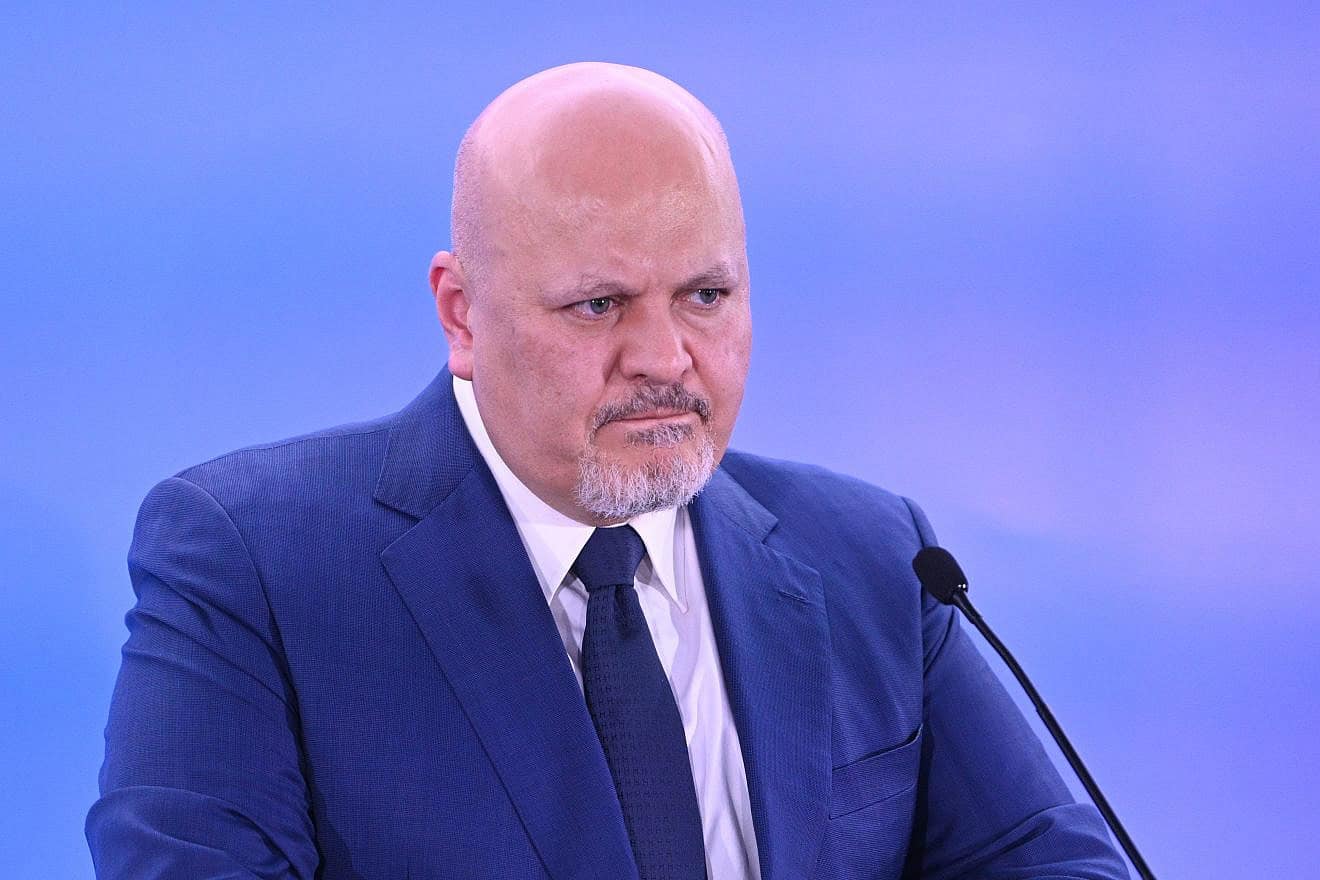
According to Belgian news outlet 21 News, ICC Prosecutor Karim Khan reportedly admitted during discussions surrounding the ongoing investigation that no concrete evidence establishing genocide by Israel has been found thus far. The report has already triggered intense international debate as genocide accusations against Israel continue dominating diplomatic, legal, and political discourse worldwide. (21news.be)
The claims come amid mounting international pressure on both Israel and international legal institutions following months of devastating warfare in Gaza after Hamas’ October 7 terrorist massacre inside southern Israel.
Legal Definition of Genocide at Center of Debate
The accusation of genocide carries one of the most severe implications under international law and requires proving deliberate intent to destroy, in whole or in part, a national, ethnic, racial, or religious group.
Legal experts have repeatedly noted that establishing genocide under international law involves an extraordinarily high evidentiary threshold.
According to 21 News, Khan reportedly indicated that while investigations into alleged war crimes and humanitarian violations remain ongoing, investigators had not identified evidence meeting the legal definition required to establish genocide. (21news.be)
The report has fueled renewed controversy surrounding repeated accusations by anti-Israel activists and several foreign governments that Israel’s military campaign in Gaza constitutes genocide.
War Crimes and the Psychological Collapse of Combat
While war crimes are never legally or morally acceptable, military historians and war psychologists have long noted that atrocities often emerge from the extreme psychological pressures of combat rather than from formal government policy.
During the Vietnam War, incidents such as the My Lai massacre became infamous examples of how prolonged exposure to guerrilla warfare, constant ambushes, civilian uncertainty, battlefield trauma, and emotional exhaustion can push soldiers beyond normal moral boundaries.
Experts studying war crimes in Vietnam, Iraq, Afghanistan, and World War II have repeatedly found that intense combat environments can lead to dehumanization of the enemy, mental breakdowns, revenge killings, and uncontrolled violence by individual troops or isolated units. Under international law, nations and soldiers can still be prosecuted for war crimes regardless of the circumstances.
However, legal scholars often distinguish between isolated unlawful acts committed during the chaos of war and organized state-directed genocide campaigns specifically designed to exterminate an ethnic or national population. The history of warfare demonstrates that battlefield brutality, psychological collapse, and breakdowns in military discipline are tragic realities that have appeared in nearly every major armed conflict throughout modern history.
Israel Has Strongly Rejected Genocide Claims
Israeli officials have consistently and aggressively denied genocide allegations.
Prime Minister Benjamin Netanyahu and other senior Israeli leaders have argued that Israel is engaged in a legitimate war of self-defense following Hamas’ October 7 massacre, during which terrorists murdered civilians, kidnapped hostages, and launched widespread attacks across Israeli communities.
Israel has repeatedly maintained that Hamas embeds military infrastructure inside civilian areas, including schools, hospitals, mosques, and residential neighborhoods, complicating military operations and increasing civilian casualties.
Supporters of Israel argue that equating the war against Hamas with genocidWAe represents a distortion of international law and trivializes historical genocides.
International Pressure on Israel Intensifies
Despite the reported ICC assessment, international scrutiny of Israel’s military operations remains extremely intense.
The International Court of Justice and the International Criminal Court have both faced growing political pressure tied to allegations involving civilian casualties, humanitarian access, displacement, and wartime conduct in Gaza.
According to 21 News, the prosecutor’s reported remarks are likely to complicate efforts by activists and governments seeking formal genocide findings against Israel in international forums. (21news.be)
Human rights organizations critical of Israel continue arguing that the scale of destruction and civilian suffering in Gaza demands deeper international legal accountability.
Critics Accuse International Institutions of Bias
The ICC itself remains deeply controversial.
Israeli officials and many supporters of Israel have long accused international legal institutions of disproportionately targeting the Jewish state while failing to adequately confront terrorism and human rights abuses committed by groups such as Hamas, Hezbollah, and Iran-backed militias.
At the same time, critics of Israel argue international bodies have not gone far enough in pursuing accountability over civilian deaths and humanitarian conditions in Gaza.
The legal and political divide surrounding the war has become one of the most polarizing international disputes in recent memory.
Hamas’ October 7 Attack Remains Central
The broader legal debate continues unfolding against the backdrop of Hamas’ October 7 attacks, which fundamentally reshaped the region.
Israeli officials insist the war cannot be understood apart from the massacre itself, during which Hamas terrorists killed civilians, burned homes, attacked communities, and abducted hostages into Gaza.
Supporters of Israel argue that many international discussions surrounding Gaza fail to sufficiently acknowledge Hamas’ role in initiating the conflict and embedding military operations within civilian populations.
Global Political Fallout Continues Growing
The genocide allegations have become politically explosive across Europe, the United States, the United Nations, and international activist movements.
University protests, diplomatic disputes, economic boycotts, and public demonstrations tied to the Gaza war have increasingly centered around accusations involving genocide and crimes against humanity.
The 21 News report is therefore likely to become a major talking point among both supporters and critics of Israel as legal investigations continue evolving. (21news.be)
Legal Investigations Far From Over
Despite the reported comments, international investigations tied to Gaza remain ongoing and highly politically charged.
The ICC continues examining allegations involving multiple actors connected to the conflict, including Hamas leadership and Israeli officials.
Legal analysts caution that investigations involving war crimes, crimes against humanity, and humanitarian law violations may continue for years regardless of whether genocide allegations ultimately succeed.
Still, if accurately reported, the prosecutor’s apparent acknowledgment that evidence of genocide has not been found could significantly influence the broader international narrative surrounding the war.
As the conflict and its legal consequences continue unfolding, the battle over language, law, and legitimacy surrounding Gaza appears far from finished.




1 Comment
Hazzan Steven Hevenstone
May 15, 2026This is all well and good – however the main stream media like the NY Times and others keep reporting the opposite, and no matter what anyone says noting the claims are false people still believe them over the facts.