




























|
Getting your Trinity Audio player ready...
|
Harvey Weinstein Rape Retrial Ends in Deadlock as Manhattan Judge Declares Mistrial Again
By: Andrew Carlson
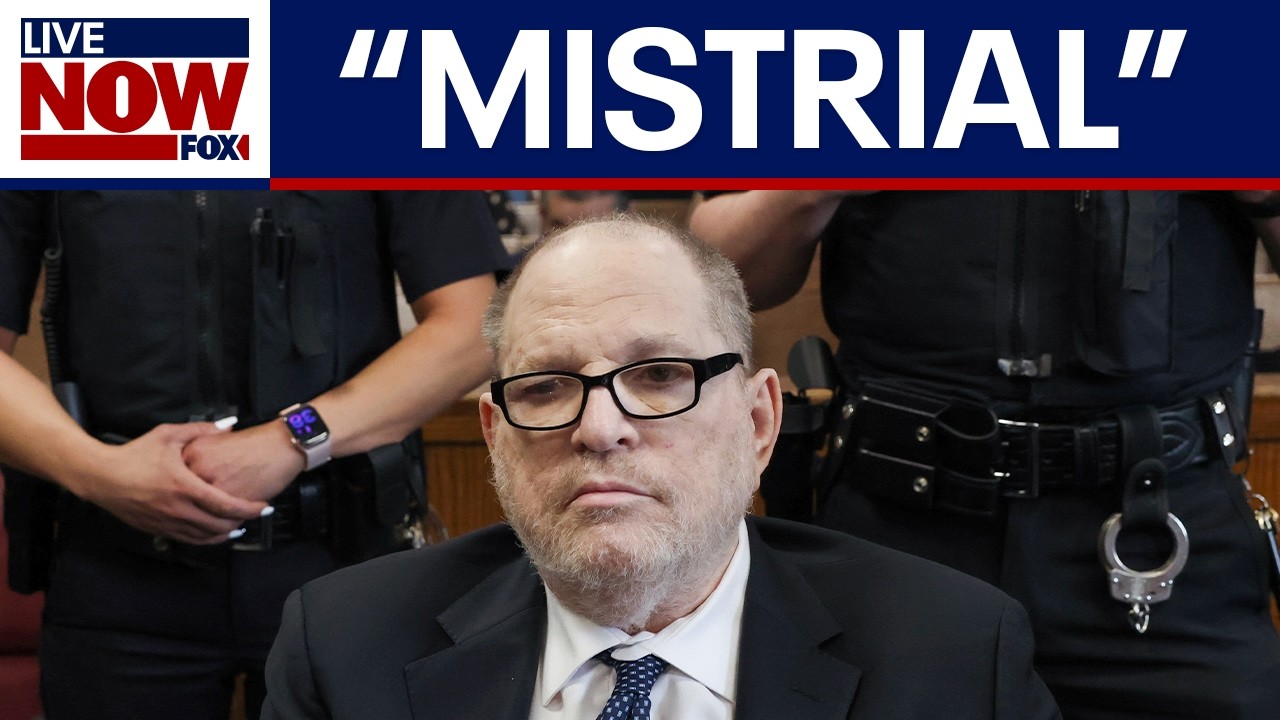
In a case that has come to symbolize both the complexities of prosecuting sexual assault allegations and the enduring reverberations of the global reckoning over abuse in positions of power, a Manhattan courtroom was once again thrust into uncertainty as a jury failed to reach a unanimous verdict in the retrial of disgraced film mogul Harvey Weinstein. As reported by The New York Daily News, the impasse led Justice Curtis Farber to declare a mistrial on Friday, marking yet another chapter in a protracted legal saga that has spanned nearly a decade.
The jury—composed of 7 men and 5 women—had been deliberating for 2 days on a charge of third-degree rape stemming from allegations made by Jessica Mann, a former aspiring actress who has accused Weinstein of raping her in 2013. The deliberations, which began on Wednesday, quickly revealed deep divisions among jurors, culminating in a note sent to the court at 11:20 a.m. on Friday stating unequivocally: “We the jury request to let the judge know that the members of the jury have concluded that we cannot reach an unanimous decision.”
Justice Farber, adhering to established legal protocol, responded by issuing an Allen charge—a directive intended to encourage jurors to reexamine their positions and strive for consensus. In delivering the instruction, he reminded the panel that “it wasn’t meant to be easy,” underscoring the gravity of their responsibility. However, the effort proved unavailing. By approximately 1:00 p.m., the jury reiterated its inability to reach a verdict. At that juncture, Farber concluded that the panel was “hopelessly deadlocked,” adding that further insistence on deliberation would risk coercion rather than clarity.
The declaration of a mistrial—echoing a similar outcome in Weinstein’s previous retrial—once again leaves unresolved the specific allegation brought by Mann, even as it reinforces the inherent challenges of adjudicating cases that often hinge on credibility, interpretation, and deeply personal testimony.
According to The New York Daily News report, Mann’s account has remained consistent across multiple proceedings. During five days of emotionally charged testimony in the latest trial, she described in detail her allegation that Weinstein raped her at the DoubleTree Hotel in Midtown Manhattan on March 18, 2013. She further testified that the encounter occurred weeks after the two had first met at a party in Los Angeles and was followed by additional alleged assaults in California, though only the Manhattan incident was formally charged in this case.
The emotional weight of Mann’s testimony has been a central element of the proceedings. Over the course of three separate trials, she has repeatedly recounted what prosecutors have characterized as “unthinkably painful experiences.” Her perseverance was acknowledged in a statement issued by Manhattan District Attorney Alvin Bragg following the mistrial. “While we are disappointed that the proceedings ended with a mistrial, we deeply respect the jury system and sincerely thank all of the jurors for their time and dedication,” Bragg said, according to The New York Daily News.
He continued by emphasizing the broader significance of Mann’s efforts: “For nearly a decade, Jessica Mann has fought for justice. Over the course of many weeks during 3 separate trials, she relived unthinkably painful experiences in front of complete strangers. Her perseverance and bravery are inspiring to the members of my office, and more importantly, to survivors everywhere.”
Bragg also indicated that his office is actively consulting with Mann to determine whether to pursue yet another retrial on the unresolved charge—a decision that carries both legal and emotional implications.
Weinstein’s legal journey has been marked by a series of convictions, reversals, and retrials that have kept his case in the public eye. In 2020, he was convicted in New York of both raping Mann and sexually assaulting Miriam Haley, a former assistant on the television show “Project Runway.” However, in 2024, New York’s highest court overturned those convictions on procedural grounds unrelated to the substance of the allegations.
The subsequent retrial in 2025 resulted in a conviction on the Haley charge but once again ended in a mistrial regarding Mann’s allegation after jurors failed to reach consensus. The latest mistrial thus represents the third time that Mann’s claim has been presented to a jury without yielding a definitive verdict.
Throughout these proceedings, Mann has been subjected to extensive and often grueling cross-examination. Defense attorneys have repeatedly questioned her about continued interactions with Weinstein following the alleged assault, seeking to challenge her account of non-consensual conduct. Mann, however, has consistently maintained that the 2013 incident at the DoubleTree Hotel was fundamentally different from any subsequent encounters and occurred against her will.
The New York Daily News reported that, unlike earlier trials, the most recent proceedings were more narrowly focused. Jurors did not hear testimony from other women who have accused Weinstein of similar misconduct, nor were they informed of his 2022 conviction in Los Angeles for raping and sexually assaulting Italian model and actor Evgeniya Chernyshova. That conviction resulted in a 16-year prison sentence, which Weinstein is currently serving.
The absence of such contextual information may have influenced the jury’s deliberations, as they were tasked with evaluating Mann’s allegations in isolation rather than within the broader pattern of accusations that have emerged over the past decade. More than 80 women have publicly accused Weinstein of sexual misconduct, allegations that collectively catalyzed the global movement against sexual abuse and workplace harassment that gained momentum in 2017.
Weinstein, now 74, remains incarcerated and faces significant additional prison time. His 2025 conviction for sexually assaulting Miriam Haley carries a potential sentence of up to 25 years. Moreover, he is expected to return to California custody to continue serving his 16-year sentence before any transfer to a New York facility is considered.
The repeated mistrials in Mann’s case underscore the inherent difficulties of securing unanimous jury verdicts in complex sexual assault prosecutions. Such cases often rely heavily on testimonial evidence, with limited physical corroboration, placing jurors in the challenging position of weighing competing narratives and assessing credibility under conditions of uncertainty.
Legal experts have long noted that the requirement of unanimity, while a cornerstone of the American judicial system, can also lead to impasses in cases where jurors hold deeply divergent views. The use of the Allen charge is intended to mitigate this risk, but as this case demonstrates, it is not always sufficient to overcome entrenched disagreement.
For Mann, the outcome represents yet another instance in which her allegations have been neither definitively validated nor dismissed by a jury. For prosecutors, it raises strategic questions about the viability of pursuing a fourth trial. And for the broader public, it serves as a reminder of the complexities and limitations of the legal system in addressing allegations of sexual violence.
As The New York Daily News has emphasized in its coverage, the Weinstein cases continue to occupy a unique place in the American legal and cultural landscape. They have not only reshaped conversations about power and accountability but have also exposed the challenges inherent in translating those conversations into judicial outcomes.
The path forward remains uncertain. Whether prosecutors will elect to retry the Mann charge once again will depend on a range of factors, including the willingness of the complainant, the strength of the available evidence, and the likelihood of achieving a different outcome before a new jury.
What is clear, however, is that the legal saga surrounding Harvey Weinstein is far from over. Even as one chapter closes with the declaration of a mistrial, the broader narrative—encompassing questions of justice, accountability, and the enduring impact of one of the most consequential scandals in modern American history



