





















|
Getting your Trinity Audio player ready...
|
By: Tzirel Rosenblatt
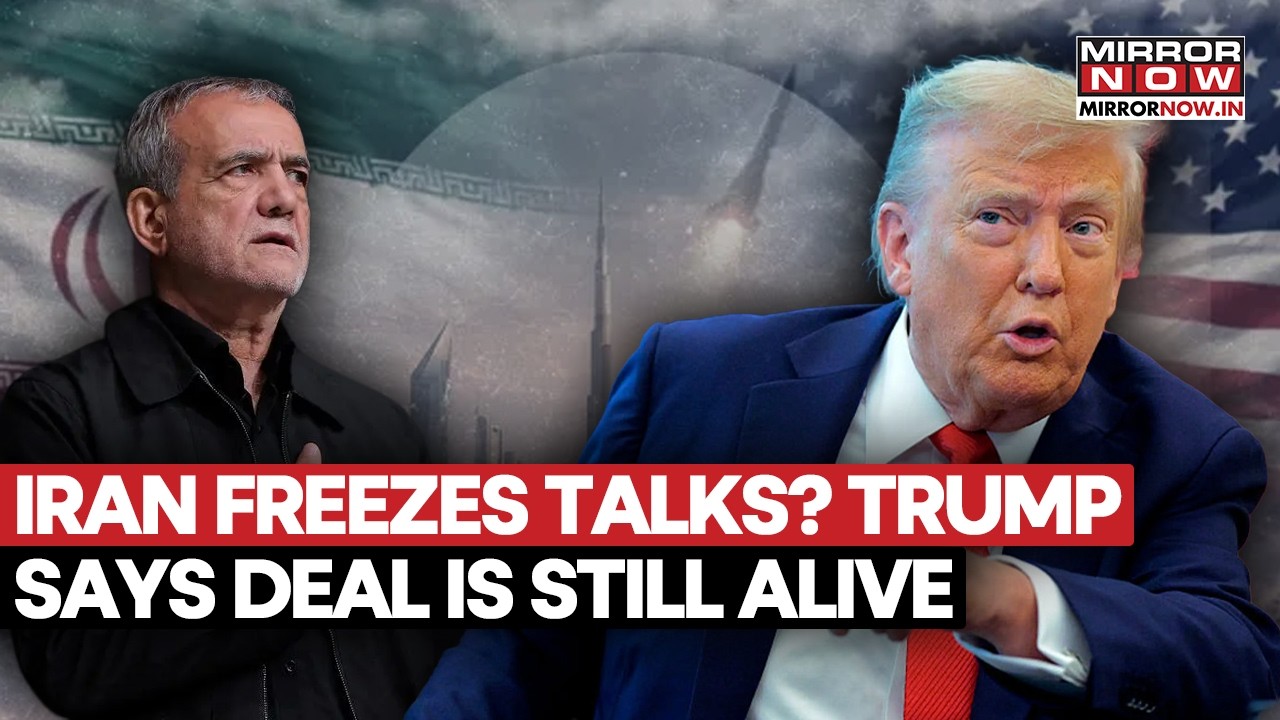
In a forceful and unambiguous declaration that underscores the escalating stakes of the ongoing confrontation with Iran, President Trump delivered a sweeping warning on Tuesday, asserting that the Islamic Republic would face total destruction should it fail to agree to terms ending the war and dismantling its nuclear ambitions. The remarks, delivered at the White House prior to his departure for a high-profile diplomatic visit to China, signal a decisive hardening of Washington’s posture at a moment when the tenuous ceasefire appears increasingly precarious.
According to extensive reporting and analysis on Wednesday by The Jewish News Syndicate, Trump’s rhetoric reflects both mounting frustration with Tehran’s negotiating stance and a broader strategic recalibration that places military leverage at the forefront of American policy. His language, striking in both its bluntness and finality, leaves little room for ambiguity.
“We’ll win it one way or the other,” Trump told assembled journalists. “Their navy is gone, their air force is gone; every single element of their war machine is gone.” The president’s assertion conveyed a sense of overwhelming military superiority, framing the conflict as one in which the outcome is not in doubt but rather contingent on the path chosen by Tehran.
The president further escalated his rhetoric by invoking the human toll of the conflict. “The regime killed 42,000 people at least over the last month and a half—we’re gonna… we’ll win,” he said, linking the war’s devastation to his administration’s determination to bring it to a decisive conclusion. This framing, as emphasized in the JNS report, situates the conflict within a broader moral narrative, portraying the United States as both a strategic and ethical counterweight to Iranian aggression.
Central to Trump’s position is the unequivocal demand that Iran abandon its nuclear ambitions. “The Islamic Republic cannot have a nuclear weapon,” he declared. “They will not have a nuclear weapon. They know that… we don’t play games.” The repetition of this principle—described by JNS as the “cornerstone” of the administration’s policy—underscores its non-negotiable status within the broader framework of U.S. objectives.
In perhaps his most stark formulation, Trump presented Tehran with a binary choice: capitulation or annihilation. “We’re either going to make a deal or they’re going to be decimated—so one way or the other, we win,” he said. The language, which JNS characterized as “extraordinarily direct even by Trump standards,” reflects a strategic doctrine predicated on overwhelming pressure and the credible threat of force.
Despite the intensity of his warnings, Trump suggested that Iran might not dominate his upcoming discussions with Xi Jinping in Beijing. “We have Tehran very much under control,” he said, signaling a degree of confidence in the current trajectory of the conflict even as tensions remain high. Nonetheless, the JNS report indicates that Iran’s relationship with China—particularly in the context of energy trade and geopolitical alignment—remains an undercurrent that could influence future developments.
The president’s remarks were echoed and amplified in a separate interview with WABC radio host Sid Rosenberg, where Trump elaborated on the state of negotiations. According to the JNS report, he claimed that Iran had initially signaled a willingness to relinquish its stockpile of enriched uranium, only to reverse course in subsequent communications. “I call it the nuclear dust because it’s appropriate. It’s easier for people to understand. And we’re going to get it,” Trump said, employing a vivid metaphor to describe the contested material.
He continued with a striking assertion regarding the capabilities required to secure such assets. “The problem is there’s only 2 countries in the world that can get it, us and China, because nobody has the equipment,” he stated. “Because when we bombed it, it was a total—that I was right—it was a total obliteration. The entire mountain collapsed on top of it.” This claim, prominently cited by JNS, reinforces the administration’s narrative of decisive military success while simultaneously raising questions about the residual capabilities of Iran’s nuclear infrastructure.
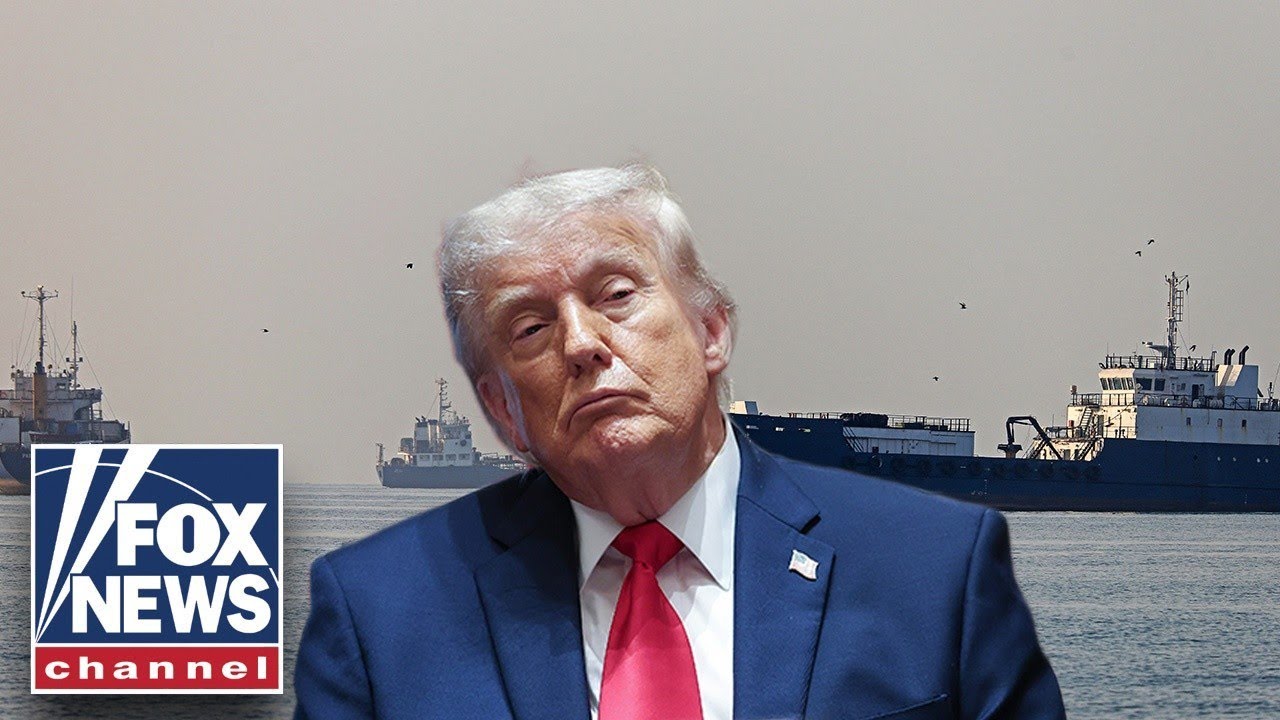
The specter of renewed military operations looms large over the diplomatic landscape. Trump warned that “Operation Project Freedom,” the U.S. naval initiative designed to secure maritime traffic in the Strait of Hormuz, could be reactivated and expanded if Tehran fails to comply with American demands. Launched on May 4 in response to a series of Iranian attacks on commercial vessels, the operation was intended to safeguard one of the world’s most critical energy corridors.
The Strait of Hormuz, through which a significant proportion of global oil shipments pass, has become a focal point of the conflict. Iranian efforts to restrict access to the waterway have triggered sharp increases in fuel prices and introduced volatility into international financial markets. As JNS has repeatedly emphasized, control of the strait is not merely a tactical concern but a strategic lever with global ramifications.
“Operation Project Freedom” was suspended just two days after its initiation, following a request from Pakistan, which has emerged as a key intermediary in negotiations between Washington and Tehran. However, Trump’s latest comments suggest that the suspension may prove temporary. The prospect of its resumption adds a further layer of uncertainty to an already volatile situation.
The fragility of the current ceasefire was laid bare in Trump’s remarks earlier this week, when he described the Islamabad-brokered truce as “unbelievably weak” and “on life support.” According to the JNS report, the president’s frustration stems in large part from Iran’s failure to engage in meaningful negotiations. “I would call it the weakest right now after reading the piece of garbage [proposal] they sent us,” he said. “I said, ‘I’m not even going to waste my time reading it.’ I would say it’s one of the weakest. Right now, it’s on life support.”
Such language reflects a deepening skepticism within the administration regarding the viability of a diplomatic resolution. While negotiations continue, the tone emanating from the White House suggests that patience is rapidly eroding. JNS analysts note that this shift could presage a renewed emphasis on military options, particularly if Tehran continues to resist key American demands.
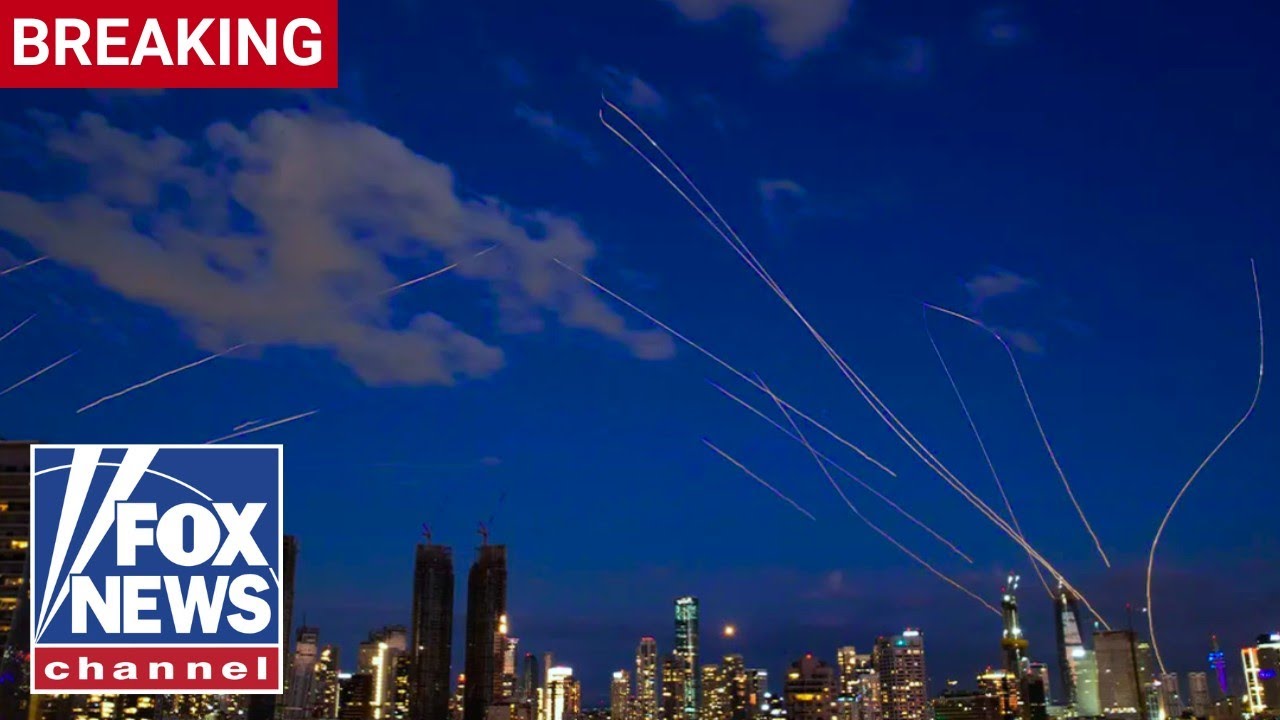
The broader context of the conflict further complicates the picture. The war, which began with coordinated U.S. and Israeli strikes on Iranian targets, has evolved into a multifaceted confrontation involving a range of regional and international actors. Iranian missile and drone attacks have targeted both military and civilian infrastructure across the Gulf, while the closure of the Strait of Hormuz has disrupted global trade.
Within this environment, Trump’s insistence on a decisive outcome—“peacefully or otherwise”—resonates as both a statement of intent and a warning. “We’ll win it one way or the other. We’ll win it peacefully or otherwise. No matter how you cut it, we win,” he declared in remarks that JNS described as encapsulating the administration’s overarching strategy.
Yet even as the president projects confidence, significant uncertainties remain. The internal dynamics of the Iranian regime, the role of external mediators such as Pakistan, and the broader geopolitical interplay involving China all contribute to a complex and fluid situation. JNS reporting suggests that while the United States maintains considerable leverage, the path to a durable resolution is far from clear.
What is evident, however, is that the stakes could scarcely be higher. The question of Iran’s nuclear program lies at the heart of the conflict, shaping both the strategic calculations of the parties involved and the broader international response. Trump’s repeated insistence that “they will not have a nuclear weapon” underscores the centrality of this issue, even as the means of achieving that objective remain contested.
As the president embarks on his diplomatic mission to Beijing, the juxtaposition of global statecraft and regional conflict highlights the interconnected nature of contemporary geopolitics. While Trump downplayed the likelihood of Iran dominating his discussions with Xi, the underlying tensions between Washington, Tehran, and Beijing ensure that the issue will remain a focal point of international attention.
For now, the situation remains delicately balanced between diplomacy and escalation. The ceasefire, described by Trump as being on “life support,” continues to hold, albeit tenuously. Negotiations proceed, even as both sides signal a willingness to resort to force if necessary. And the specter of a broader regional conflagration looms in the background, a reminder of the profound consequences that could arise from a failure to achieve a lasting resolution.
In this volatile landscape, Trump’s message to Tehran is unmistakably clear: comply with American demands or face overwhelming consequences. Whether that ultimatum will compel a breakthrough or precipitate further conflict remains to be seen. What is certain, as JNS has consistently underscored, is that the coming days and weeks will prove decisive in shaping the trajectory of one of the most consequential geopolitical crises of the modern era.