












|
Getting your Trinity Audio player ready...
|
Cole Allen, 31, a California Educator, Identified as Suspect in White House Correspondents’ Dinner Shooting
By: Fern Sidman
In what has already been described as one of the most alarming security breaches in recent American political history, a violent and highly coordinated shooting incident shattered the decorum of the prestigious White House Correspondents’ Dinner on Saturday evening, sending shockwaves through Washington’s political and media establishment. As reported on Saturday night by The New York Post, the suspect—identified as 31-year old Cole Allen of Torrance, California—has been apprehended following a harrowing sequence of events that unfolded just outside the event’s primary security perimeter.
The annual dinner, long regarded as a symbol of the intersection between political authority and journalistic enterprise, was underway when the tranquility of the evening was violently interrupted. According to accounts compiled by The New York Post, the incident occurred at 8:36 pm, at a moment when the gathering had reached a relaxed interlude, with attendees—including senior government officials and members of the press corps—being served their first course.
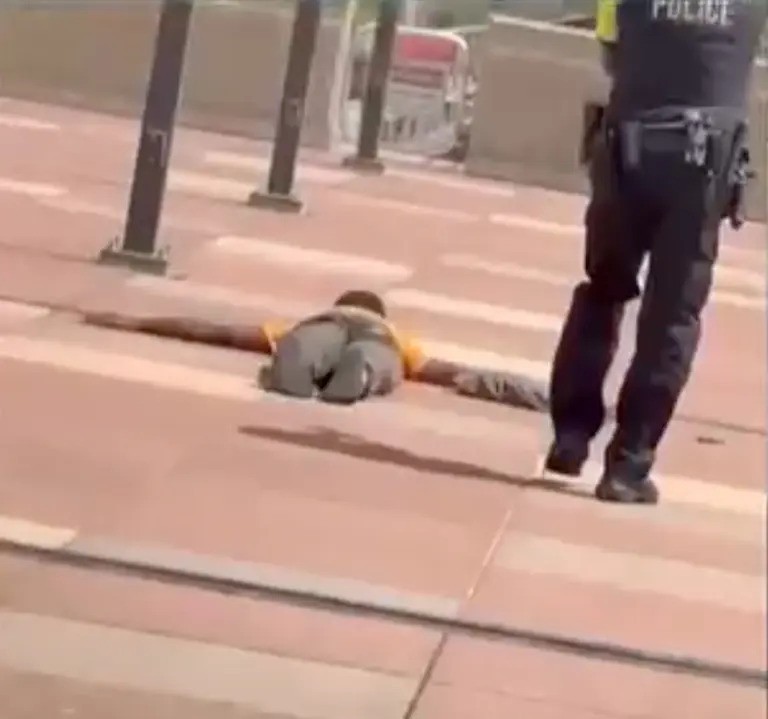
Authorities have since confirmed that Allen, who is believed to be employed as a teacher, approached the vicinity of the event’s main security checkpoint armed with a formidable and deeply concerning array of weaponry. Law enforcement officials reported that he carried not only a shotgun and a handgun, but also multiple knives, suggesting a level of preparation that has prompted serious questions regarding both intent and capability.
Washington Metropolitan Police Chief Jeffrey Carroll, whose remarks were cited in The New York Post report, characterized the suspect as a lone actor, emphasizing that preliminary findings do not indicate the involvement of any broader network or coordinated group. “At this stage,” Carroll stated, “all available evidence suggests that the individual acted independently, without external assistance or organizational backing.”
Despite this initial assessment, investigators remain cautious, acknowledging that the complexity of such incidents often necessitates a comprehensive review of all potential connections, motivations, and influences.
Eyewitness testimonies, as detailed in The New York Post report, paint a vivid and deeply unsettling picture of the events as they unfolded. Allen reportedly discharged his weapon near the security screening area before advancing toward the main ballroom, where the nation’s political elite had gathered.
During this chaotic progression, a secret service officer stationed at the checkpoint was struck by gunfire. Fortunately, the officer was equipped with protective body armor, which is credited with preventing what could have been a fatal injury. Officials have since confirmed that the officer is expected to make a full recovery, a development that has been widely interpreted as a testament to both preparedness and resilience.
Chief Carroll noted that the suspect’s actions appeared both deliberate and aggressive, describing a scenario in which Allen sought to penetrate the security perimeter and enter the event’s central gathering space. The potential consequences of such a breach, given the high concentration of prominent figures in attendance, are difficult to overstate.
The human dimension of the incident is perhaps most poignantly captured in the accounts of those who were present at the dinner. Witnesses described a sudden eruption of panic as multiple gunshots rang out, shattering the evening’s atmosphere of civility and celebration.
According to one attendee quoted by The New York Post, guests instinctively sought cover beneath tables, remaining there for what felt like an extended and uncertain period. Another observer recounted the confusion and fear that gripped the room, noting that the distinction between rumor and reality quickly blurred in the absence of clear information.
Helen Mabus, a volunteer assisting with the event, provided a particularly striking account of the suspect’s actions prior to the shooting. She described a “makeshift room” near the entrance, an area used for storage of bar equipment, where security presence was reportedly minimal. According to her testimony, Allen retrieved a weapon from a bag within that space before initiating the attack.
Her description of the firearm—long in form and atypical in appearance—has contributed to ongoing discussions regarding the adequacy of security protocols and the potential vulnerabilities inherent in large scale public events.
In the immediate aftermath of the incident, President Trump issued a statement commending the swift and decisive actions of law enforcement personnel. As reported by The New York Post, the president emphasized the professionalism and courage demonstrated by officers who responded to the threat, noting that their intervention likely prevented a far more catastrophic outcome.
“Law enforcement acted with remarkable speed and bravery,” the president said at a press briefing at the White House, adding that the suspect had been successfully apprehended and that the situation was now under control. He further indicated that authorities would conduct a thorough search of the suspect’s residence in Torrance, California, as part of an ongoing investigation into the individual’s background and potential motives.
In a decision that has sparked considerable debate, the president initially suggested that the event might continue despite the disruption, urging that the show proceed as planned. However, he ultimately deferred to law enforcement officials, who determined that the dinner should be postponed in light of the circumstances.
The immediate consequence of the incident has been the postponement of the White House Correspondents’ Dinner, with officials indicating that the event will be rescheduled within the next 30 days. Beyond this logistical adjustment, however, the episode has raised profound questions regarding security, preparedness, and the evolving nature of threats in contemporary society.
The characterization of the suspect as a “lone wolf” has not diminished the gravity of the situation. On the contrary, it has underscored the challenges faced by law enforcement agencies in anticipating and preventing acts of violence carried out by individuals operating outside traditional networks.
Experts have long warned that such actors, often driven by personal grievances or ideological extremism, can be particularly difficult to detect and deter. The events of Saturday evening appear to reinforce those concerns, highlighting the need for continued vigilance and innovation in security practices.
The incident also carries significant symbolic weight. The White House Correspondents’ Dinner is not merely a social gathering; it is an institution that embodies the relationship between the government and the press. An attack on such an event therefore resonates beyond the immediate physical threat, touching upon broader themes of democracy, transparency, and the resilience of public institutions.
In its comprehensive coverage, The New York Post emphasized the importance of examining both the specific circumstances of the attack and the larger context in which it occurred. This includes not only the operational aspects of security but also the societal factors that may contribute to acts of violence.
As investigations continue and the nation reflects on the events of that tumultuous evening, one conclusion remains inescapable: the line between normalcy and crisis can be alarmingly thin. The swift actions of law enforcement, combined with a measure of fortuitous circumstance, ensured that the incident did not result in greater loss of life.
Yet the questions it has raised—about security, preparedness, and the nature of contemporary threats—will undoubtedly persist. In the words of one observer cited by The New York Post, the evening served as a stark reminder that even the most carefully orchestrated events are not immune to disruption.
In the days and weeks ahead, policymakers, security experts, and the public alike will grapple with the implications of what transpired. The challenge will be to translate the lessons of that night into meaningful action, ensuring that the institutions and traditions it sought to disrupt emerge not weakened, but strengthened in their resolve.



