



























|
Getting your Trinity Audio player ready...
|
Israel Moves Toward Historic Break: Law to Nullify Oslo Accords Signals Dramatic Shift in Security Doctrine
By: Fern Sidman
In what could become one of the most consequential legislative initiatives in Israel’s modern history, the government is preparing to deliberate a proposal that would formally annul the Oslo Accords and subsequent agreements with the Palestinian leadership—frameworks that have defined Israeli policy for more than 30 years. The development, first reported on Saturday by Israel National News, reflects a growing consensus among segments of Israel’s political leadership that the foundational assumptions of the Oslo process have failed and must be fundamentally reexamined.
The bill, introduced by Member of Knesset Limor Son Har-Melech and supported by the entirety of the Otzma Yehudit faction, is scheduled for discussion before the Ministerial Committee for Legislation on Sunday. If advanced, it would not merely represent a symbolic repudiation of past agreements but would initiate a comprehensive legal and strategic transformation of Israel’s relationship with the Palestinian Authority and the broader Palestinian political structure.
At its core, the proposed legislation seeks to terminate all agreements signed between the State of Israel and entities such as the Palestine Liberation Organization and the Palestinian Authority. This includes the Oslo Accords of 1993, the Hebron Protocol of 1997, and the Wye River Memorandum of 1998—agreements that collectively established the framework for Palestinian self-governance in parts of Judea and Samaria.
According to details cited in the Israel National News report, the bill would render these agreements “fully annulled” and no longer binding upon the State of Israel or its representatives. Beyond this declarative step, the proposal contains a substantive legal mechanism: the repeal of all Israeli legislation enacted to implement these accords.
The intent, as articulated in the bill’s explanatory notes, is to restore the legal and security environment to its pre-1993 condition, effectively reversing the structural changes introduced by the Oslo process.
Supporters of the legislation have framed it not as an abstract political gesture but as a necessary response to what they describe as decades of escalating violence and failed expectations. The explanatory memorandum accompanying the bill draws a direct connection between the Oslo framework and the current security challenges facing Israel.
“The Oslo Accords led to thousands of victims of peace and harmed Israel’s security,” the proposal states, according to the Israel National News report. The language reflects a deeply held conviction among proponents that the agreements, rather than fostering stability, created conditions that have been exploited by hostile actors.
This perspective has gained renewed urgency in the aftermath of the October 7 massacre, an event that profoundly reshaped Israeli public discourse and intensified scrutiny of longstanding policy assumptions.
In advance of the committee’s deliberations, MK Limor Son Har-Melech delivered a forceful defense of the proposal, articulating a narrative that resonates with a significant portion of Israel’s electorate.
“After 30 years of terror attacks, withdrawals, and bloodshed, everyone understands that the time has come to stop being afraid and tell the truth: The Oslo Accords did not bring peace, but terrorism; not security, but Jewish blood spilled in streets, communities, and cities across Israel,” she stated, as quoted by Israel National News.
Her remarks underscore a central theme of the legislative effort: the assertion that the Oslo framework fundamentally misjudged the intentions and capabilities of Israel’s adversaries.
Son Har-Melech further argued that the agreements conveyed a message of weakness that emboldened hostile actors. “The Oslo Accords sent a message of weakness to the enemy and a message that the Land of Israel was negotiable,” she said.
Expanding on this critique, she emphasized the dangers of transferring authority and resources to entities that, in her view, remain committed to Israel’s destruction. “Over the years it has been proven in a way which is impossible to ignore what happens when you give power, weapons, and territory to an enemy whose goal is the destruction of the State of Israel,” she added.
Her conclusion was unequivocal: “The State of Israel must free itself from these failed agreements and restore full responsibility for the security of its citizens and its sovereignty.”
The proposal has also received strong backing from National Security Minister Itamar Ben Gvir, who characterized the Oslo Accords in stark terms.
“The Oslo Accords were a national disaster that brought terrorism, bloodshed, and bereavement upon the State of Israel,” Ben Gvir declared. “After 30 years, it is time to say clearly: the concept collapsed, Oslo is dead, and Israel must free itself from these dangerous agreements.”
Ben Gvir’s endorsement highlights the alignment between the proposed legislation and the broader security philosophy of Israel’s current leadership, which places a premium on sovereignty and self-reliance in defense matters.
He also praised Son Har-Melech’s initiative as an act of political courage. “I commend MK Limor Son Har-Melech for this important and courageous bill. It is a proposal for historic correction — for restoring sovereignty, responsibility, and security to the hands of the State of Israel,” he said.
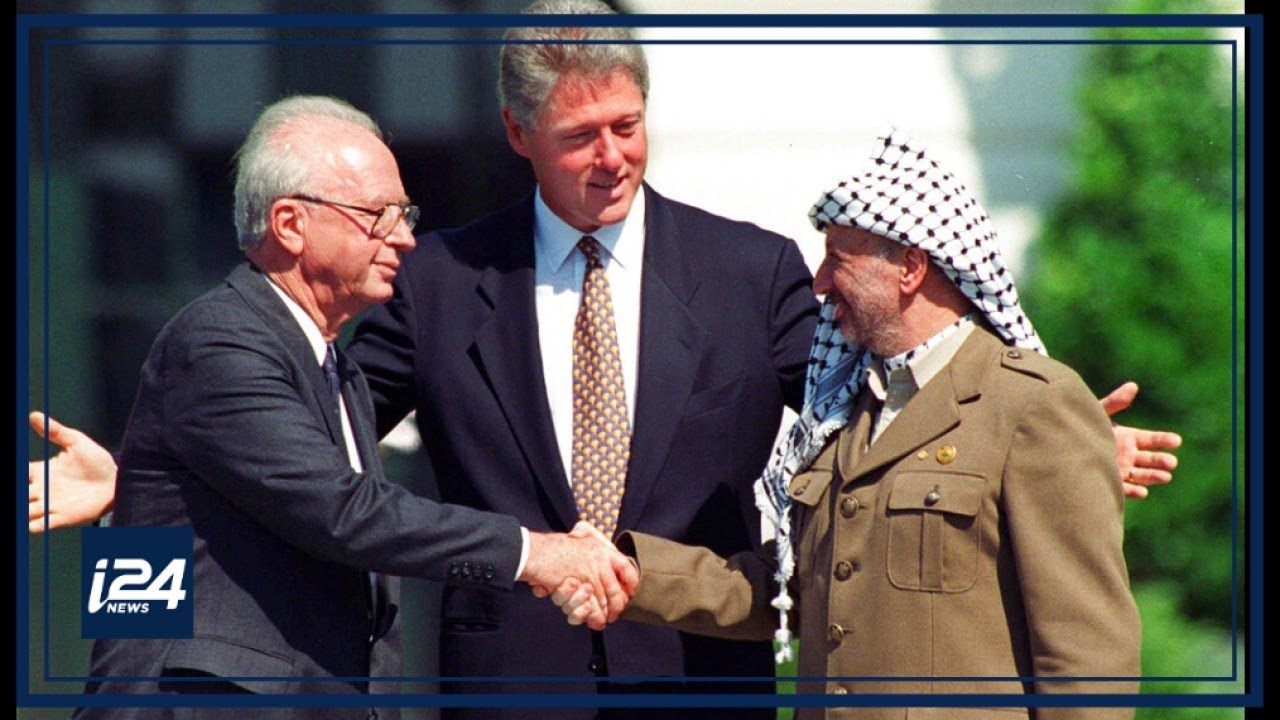
The Oslo Accords, signed on the White House lawn in 1993, were originally conceived as a pathway to peace through mutual recognition and gradual confidence-building measures. However, critics have long argued that the agreements failed to achieve their intended objectives and instead introduced new vulnerabilities.
Israel National News has reported on the evolving debate within Israel regarding the legacy of Oslo, noting that public confidence in the framework has eroded significantly over time.
For proponents of the current bill, the cumulative record of violence—including waves of terrorism during the Second Intifada and subsequent conflicts—serves as evidence that the agreements were fundamentally flawed.
If enacted, the legislation would have far-reaching implications for Israel’s domestic law and international posture. By repealing the legal infrastructure underpinning the Oslo framework, Israel would effectively reclaim full authority over areas previously subject to shared or delegated governance.
Supporters argue that this step is essential for restoring operational flexibility to Israeli security forces and ensuring that the state can respond decisively to emerging threats.
Critics, however, are likely to raise concerns about the potential diplomatic ramifications, including the reaction of international partners and the impact on existing arrangements with the Palestinian Authority.
The proposed law can be understood as part of a broader reorientation in Israeli policy, driven by changing regional dynamics and evolving threat perceptions. The normalization agreements with several Arab states in recent years have altered the strategic landscape, reducing the centrality of the Palestinian issue in regional diplomacy.
At the same time, the persistence of hostility from groups such as Hamas and other militant organizations has reinforced the argument that security considerations must take precedence.
The Israel National News report highlighted this shift, noting that many Israeli leaders now view the Oslo paradigm as incompatible with the realities of contemporary conflict.
The momentum behind the legislation reflects not only the position of political leaders but also a broader sentiment within Israeli society. The events of recent years have intensified demands for a more assertive approach to national security, with many citizens expressing skepticism toward frameworks perceived as ineffective.
The bill’s proponents have sought to channel this sentiment into a concrete legislative initiative, presenting it as an opportunity for what they describe as “national correction.”
As the Ministerial Committee for Legislation prepares to consider the proposal, Israel stands at a pivotal juncture. The decision to advance—or reject—the bill will have profound implications for the country’s legal framework, security strategy, and diplomatic posture.
For supporters, the legislation represents a long-overdue reckoning with a policy that, in their view, has failed to deliver on its promises. For opponents, it raises complex questions about the future of Israeli-Palestinian relations and the way forward.
What is clear, as emphasized in the report by Israel National News, is that the debate over Oslo is no longer confined to historical analysis. It has become a central issue in shaping Israel’s future—one that will continue to command attention both domestically and internationally in the months ahead.




1 Comment
Dar_al_Israel
May 10, 2026Oslo is Israel’s greatest military and political blunder in its 78 years. A mistake so self destructive and naive we are still suffering ramifications of it. The masochist Israeli left deluded themselves they could pretend Arafat could be bribed into becoming a statesman. Thousands of dead Jews. Gaza lost. Withdrawal from southern Lebanon. Israel nearly committed suicide because of Yossi Beilin and Shimon Peres. Oslo should have never occurred. Arafat was broke and ostracized and Beilin and Peres revived him and along with him the “Palestinism” terror wave and allowed the ossification of Palestinians as a “people”. Oct 7 is the legacy of Beilin and Peres.