














|
Getting your Trinity Audio player ready...
|
By: Jeff Gorman
Israeli authorities on Monday confirmed that American content creator Tyler Oliveira was denied entry into the country upon arrival at Ben Gurion Airport, following what officials described as a thorough review of his online activity and its alleged connection to antisemitic rhetoric and incitement. The decision, reported on Monday by VIN News, reflects an increasingly assertive posture by Israeli authorities toward individuals suspected of promoting hostility against Jews and the State of Israel.
According to accounts detailed by VIN News, Oliveira was stopped during routine questioning upon arrival and subsequently barred from entering the country. The refusal followed a formal recommendation issued by Israel’s Ministry of Diaspora Affairs and Combating Antisemitism, which had reportedly been monitoring his public statements and digital content prior to his attempted entry.
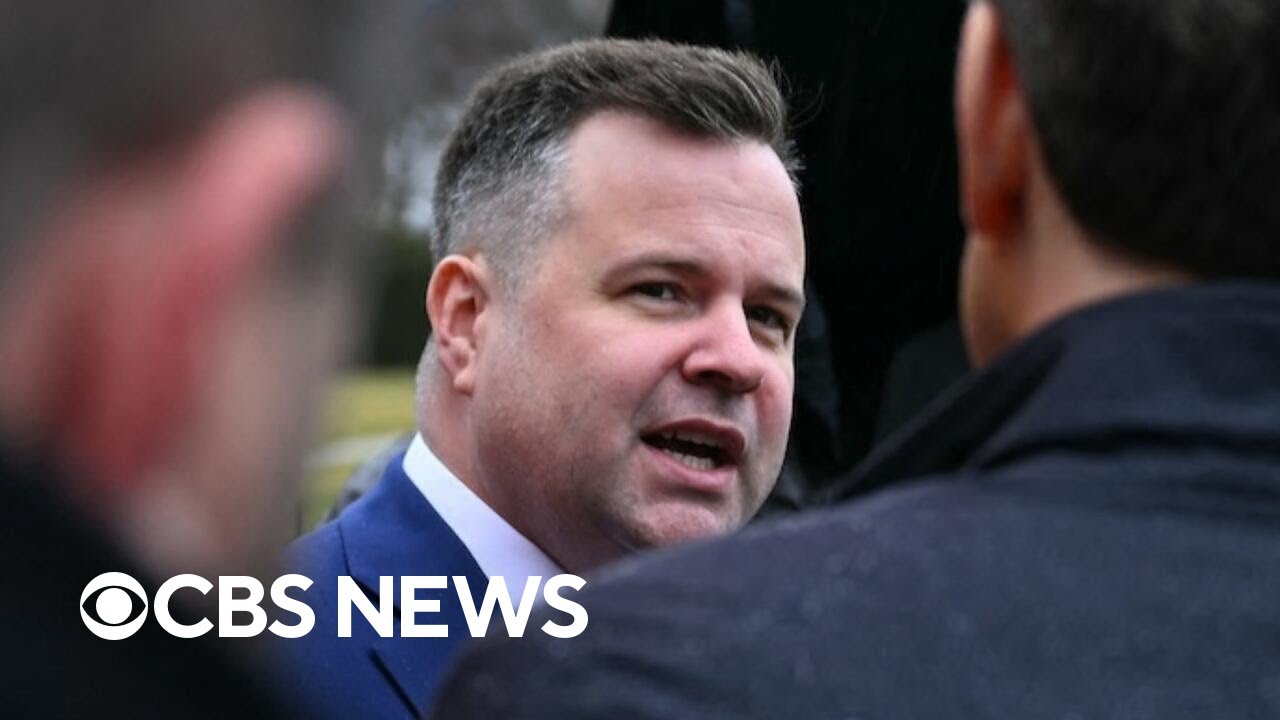
The decision was publicly defended by Amichai Chikli, Israel’s Minister of Diaspora Affairs, who characterized the move as a necessary measure to prevent the dissemination of hate. “The celebration is over,” Chikli declared in a statement cited by VIN News. “Anyone who comes here with the goal of spreading hatred will be sent back the way they came.” His remarks emphasized a broader policy approach that seeks to draw a firm line between protected expression and speech deemed to incite hostility or discrimination.
Officials familiar with the matter indicated that Oliveira’s exclusion was based on a body of content that authorities believe exceeded the bounds of legitimate discourse. As outlined in the VIN News report, the Ministry of Diaspora Affairs concluded that certain statements and videos produced by Oliveira “go beyond legitimate freedom of expression,” alleging that they contained elements of antisemitic rhetoric and incitement directed at both Jewish individuals and the Israeli state.
The ministry further noted that it had received advance intelligence regarding Oliveira’s planned arrival in Israel, enabling authorities to assess his case prior to his landing. This preemptive review culminated in a recommendation that immigration officials deny him entry under provisions of Israel’s Entry Law, which grants the government discretion to refuse admission to individuals deemed to pose a risk to public order or national interests.
In elaborating on the rationale behind the decision, officials cited specific examples from Oliveira’s recent body of work. According to the information provided in the VIN News report, these included videos and interviews in which he allegedly portrayed Jews in a negative and conspiratorial light, characterizing them as manipulative, racially biased, or wielding disproportionate political influence through improper means. Such depictions, authorities argued, contribute to harmful stereotypes and can incite animosity.
Particular attention was also drawn to Oliveira’s coverage of Orthodox Jewish communities in the United States. As reported by VIN News, Israeli officials referenced content focusing on areas such as Kiryas Joel and communities in New Jersey, suggesting that these portrayals formed part of a broader pattern of messaging that authorities found troubling.
While the precise legal thresholds applied in this case have not been publicly detailed, the decision reflects a growing emphasis within Israel on confronting what it perceives as the global spread of antisemitic narratives, particularly in digital spaces. The Ministry of Diaspora Affairs, which played a central role in the recommendation, has been tasked with monitoring and countering such trends, often in coordination with other government bodies.
In this context, the denial of entry to Oliveira can be seen as part of a wider strategy aimed at deterring individuals whose activities are viewed as contributing to hostility against Jews. As the VIN News report noted, Israeli authorities have in recent years exercised their legal authority to restrict entry to certain activists, commentators, and public figures whose positions are deemed incompatible with the country’s policies or values.
At the same time, the case raises broader questions about the intersection of free expression and national security considerations. The ministry’s assertion that Oliveira’s content “goes beyond legitimate freedom of expression” suggests a delineation between permissible criticism and speech that is considered incitement. Determining where that boundary lies is often a matter of legal and political interpretation, and it remains a subject of ongoing debate both within Israel and internationally.
For its part, the Israeli government has consistently maintained that it is committed to protecting free speech while also safeguarding against expressions that could incite violence or discrimination. The exclusion of Oliveira, as framed by officials and reported by VIN News, is presented as falling within this protective mandate.
The operational aspects of the decision were carried out at Ben Gurion Airport, Israel’s primary international gateway, where security and immigration procedures are known for their rigor. According to the VIN News report, Oliveira was questioned upon arrival and subsequently informed that he would not be permitted to enter the country. Arrangements are now being made for his return to the United States, in accordance with standard protocols for denied entry cases.
The incident has drawn attention within media and policy circles, highlighting the challenges faced by governments in addressing the proliferation of controversial or inflammatory content in an era of global digital communication. As individuals increasingly leverage online platforms to reach wide audiences, the potential impact of their messaging extends far beyond national borders.
In Israel’s case, the government has signaled its intent to take a proactive stance in addressing such challenges. Minister Chikli’s statement—“Anyone who comes here with the goal of spreading hatred will be sent back the way they came”—encapsulates a policy approach that prioritizes prevention and deterrence.
The broader implications of this approach will likely continue to unfold as similar cases arise. For now, the denial of entry to Tyler Oliveira stands as a notable example of how Israeli authorities are applying existing legal frameworks to address concerns related to antisemitism and incitement.
As VIN News follows these developments, the case is expected to contribute to ongoing discussions about the balance between open discourse and the responsibilities of states to protect their citizens and uphold public order. Whether it will influence future policy decisions or set a precedent for similar actions remains to be seen, but it has already underscored the complexities inherent in navigating these issues in a rapidly evolving media landscape.
In the immediate term, Israeli officials appear resolute in their position. The decision to bar Oliveira, grounded in their assessment of his content and its potential impact, reflects a broader determination to confront what they perceive as harmful narratives. As the situation develops, it will undoubtedly remain a focal point for those examining the intersection of digital expression, international travel, and national policy.




1 Comment
Daniel
May 12, 2026Nice