
























|
Getting your Trinity Audio player ready...
|
From Remembrance to Radiance: Jerusalem Illuminated in a Spectacle of Unity for Israel’s 78th Independence Day
By: Fern Sidman
As twilight descended upon Jerusalem on Tuesday evening, the city underwent a profound and symbolic transformation, shifting from the solemn introspection of Memorial Day to the exuberant celebration of the 78th Independence Day of the State of Israel. In a display both visually resplendent and emotionally resonant, Jerusalem’s most prominent landmarks were bathed in luminous colors and animated projections, offering a powerful tableau of national continuity, resilience, and pride.
According to a report on Tuesday by Israel National News, the transition from mourning to celebration unfolded with a carefully orchestrated illumination of the city’s architectural and cultural icons. The effect was nothing short of transformative: spaces that had only hours earlier borne witness to remembrance ceremonies now radiated with vibrant light, symbolizing the enduring spirit of a nation that draws strength from its past while embracing its future.
At the heart of the festivities stood the ancient walls of the Old City, a site imbued with centuries of historical and spiritual significance. On this particular evening, however, these storied ramparts assumed a new role—as a vast, living canvas upon which the narrative of modern Israel was projected in dazzling form.
As reported by Israel National News, the walls were illuminated with a series of dynamic visual displays that included the national flag of Israel, the municipal flag of Jerusalem, and stylized depictions of fireworks that appeared to dance across the stone surface. The projections were accompanied by a celebratory inscription marking “78 years of the State of Israel,” rendered in bold, luminous text that captured the attention of onlookers gathered throughout the area.
This fusion of ancient architecture with contemporary technology created a striking juxtaposition, one that encapsulated the essence of Jerusalem itself: a city where history and modernity coexist in a complex yet harmonious interplay. The illuminated walls served not merely as a backdrop for celebration, but as an active participant in the expression of national identity.
The visual spectacle extended far beyond the Old City, encompassing a network of key sites throughout Jerusalem that were similarly adorned in festive illumination. Among the most prominent of these was the Chords Bridge, a modern architectural landmark that serves as a principal gateway to the city.
Israel National News detailed how the bridge was transformed into a radiant beacon, its sweeping cables and towering structure lit in vibrant colors that echoed the themes of celebration and unity. Positioned at one of the city’s primary entry points, the Chords Bridge offered a symbolic welcome to residents and visitors alike, inviting them to partake in the collective commemoration.
In addition to the Chords Bridge, several other locations across the capital were incorporated into the illumination initiative. These included the Gei Ben Hinnom Bridge, a newly constructed structure that spans a historically significant valley; the bridge linking the Supreme Court complex to the Cinema City district; the Zion Hotel; and the First Station complex at David Remez Square.
Each site contributed its own distinct visual element to the overall composition, creating a citywide symphony of light that underscored the scale and inclusivity of the celebrations. As the Israel National News report observed, the coordinated illumination of these diverse locations reflected a deliberate effort to engage multiple facets of Jerusalem’s urban landscape, from its historic core to its contemporary developments.
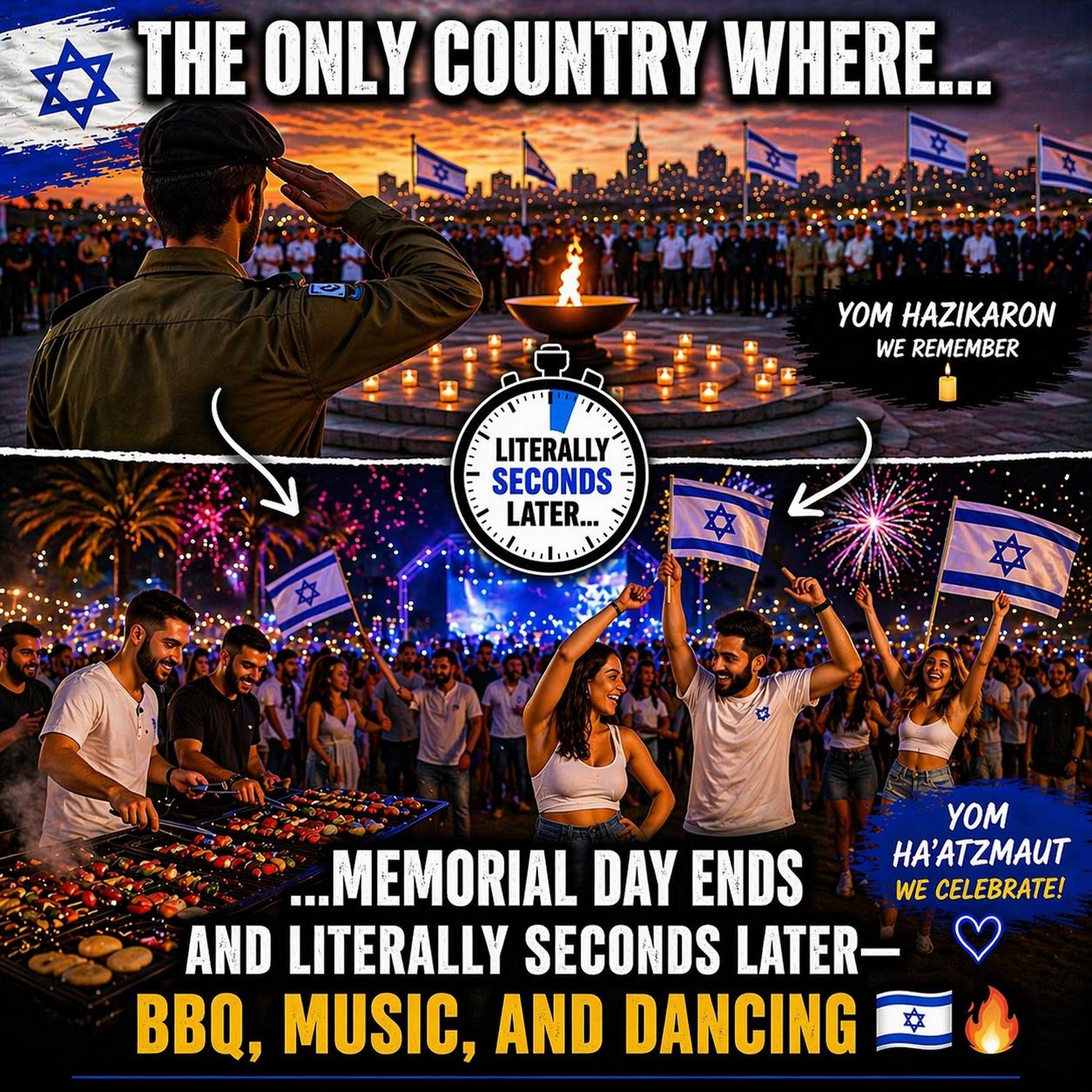
The timing of the festivities imbued them with a particularly poignant significance. Independence Day in Israel is uniquely preceded by Memorial Day, a period dedicated to honoring the memory of soldiers and civilians who have lost their lives in the defense of the nation. The transition between these two observances is both abrupt and deeply symbolic, encapsulating the dual realities of sacrifice and sovereignty.
Jerusalem Mayor Moshe Lion addressed this dynamic in remarks that were reported by Israel National News. He emphasized the intrinsic connection between remembrance and renewal, noting that the joy of independence is inseparable from the sacrifices that made it possible.
“With the conclusion of Memorial Day and the beginning of the 78th Independence Day of the State of Israel,” Lion stated, “we move together from moments of pain and remembrance to moments of joy and national pride.” His words captured the emotional trajectory experienced by many Israelis during this period—a journey from grief to gratitude, from reflection to celebration.
The mayor further underscored the role of collective memory in shaping national identity. “We remember and honor the fallen,” he said, “thanks to whom we merited freedom and independence, and by whose strength we continue to build, create, and rejoice.” This acknowledgment of the past served as a foundation for the festivities, lending them a depth and seriousness that transcended mere spectacle.
In his address, Lion also highlighted Jerusalem’s unique position as a nexus of historical, cultural, and spiritual significance. “Jerusalem is filled tonight with light, celebration, and hope,” he declared, describing the city as a place that “connects a glorious past, a vibrant present, and a future of faith and growth.”
This characterization resonates strongly with the themes embodied in the Independence Day celebrations. The illuminated landmarks, as described by Israel National News, functioned as visual metaphors for continuity and resilience, linking the ancient heritage of the city with the modern achievements of the state.
The interplay between past and present was evident not only in the choice of locations but also in the design of the displays themselves. Traditional symbols such as the national flag were rendered through cutting-edge projection technology, while historic sites were reimagined as platforms for contemporary expression. The result was a multifaceted narrative that celebrated both the endurance of Jewish history and the dynamism of Israeli society.
The widespread participation in the festivities further underscored their significance. Residents and visitors alike gathered at various vantage points throughout the city to witness the displays, creating a shared experience that reinforced a sense of communal belonging.
Israel National News reported that the atmosphere was characterized by a palpable sense of excitement and pride, as individuals from diverse backgrounds came together to mark the occasion. The illuminated landmarks served as focal points for this collective engagement, drawing people into a unified celebration that transcended individual differences.
This aspect of the event is particularly noteworthy in a city as complex and multifaceted as Jerusalem. The ability to foster a sense of unity through shared cultural and national symbols speaks to the enduring power of such celebrations to bridge divides and cultivate solidarity.
Beyond their immediate visual impact, the Independence Day illuminations offered an opportunity for reflection on the broader trajectory of the State of Israel. Seventy-eight years after its establishment, the nation continues to navigate a complex array of challenges, both internal and external. Yet the very act of celebration, as depicted by Israel National News, serves as a testament to its resilience and vitality.
The illuminated walls, bridges, and public spaces can be seen as embodiments of this resilience, standing as both literal and figurative pillars of the nation. They represent the capacity to endure, to adapt, and to flourish in the face of adversity.
Mayor Lion’s closing remarks encapsulated this sentiment succinctly: “From remembrance we draw strength, and from unity—great joy at the privilege of being a free people in our land.” This articulation of strength and unity as complementary forces reflects a broader ethos that has come to define the Israeli experience.
As the evening progressed and the illuminated displays continued to captivate audiences across Jerusalem, it became increasingly evident that the celebration was about more than marking an anniversary. It was an affirmation of identity, a reaffirmation of values, and a declaration of hope for the future.
Through the lens of Israel National News, the events of the evening emerge as a vivid illustration of how a nation can honor its past while celebrating its present and envisioning its future. The lights that adorned Jerusalem’s landmarks were not merely decorative; they were expressive, conveying a message of continuity, resilience, and aspiration.
In a world often characterized by uncertainty and division, such moments of collective celebration assume heightened significance. They remind us of the enduring capacity of communities to come together, to find meaning in shared history, and to look forward with confidence and hope.
In Jerusalem, on this luminous evening, that capacity was on full display—etched in light across ancient stone and modern steel, and reflected in the faces of those who gathered to witness it.



