






























|
Getting your Trinity Audio player ready...
|
By: Tzirel Rosenblatt
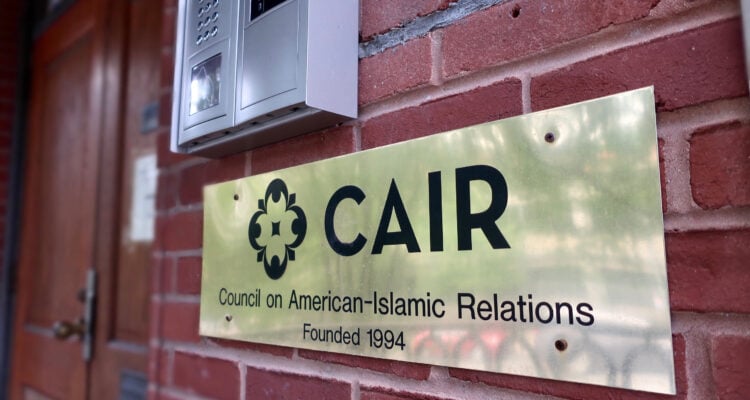
In a consequential legal development with far-reaching political and national security implications, a federal judge in Texas has ordered chapters of the Council on American-Islamic Relations to disclose sensitive financial and travel-related records as part of an ongoing lawsuit challenging the state’s controversial designation of the organization as a foreign terrorist entity. The ruling, which partially favors Texas officials, has intensified an already charged confrontation over civil liberties, national security, and the boundaries of state authority.
According to a report on Friday at World Israel News, U.S. District Judge Alan D. Albright of the Western District of Texas issued the order on Tuesday, granting in part motions to compel filed by Governor Greg Abbott and Texas Attorney General Ken Paxton. The decision compels the CAIR Foundation and affiliated chapters to produce documentation that may shed light on foreign financial connections and international activities.
The ruling marks a pivotal moment in litigation that began in the aftermath of a sweeping proclamation issued by Abbott in November 2025, in which both CAIR and the Muslim Brotherhood were designated as “foreign terrorist organizations” and “transnational criminal organizations” under Texas law.
The controversy traces back to Abbott’s proclamation, a move that immediately triggered legal action from CAIR chapters in Dallas-Fort Worth and Austin. As the World Israel News report detailed, the plaintiffs filed suit just two days after the designation, asserting that the measure was implemented “without due process and in violation of federal law.”
In their complaint, the CAIR chapters sought judicial intervention to block enforcement of the designation and requested compensatory damages, arguing that the state’s actions inflicted reputational and operational harm.
The World Israel News report noted that the lawsuit raises fundamental constitutional questions, including the extent to which a state government can independently classify organizations as terrorist entities and the procedural safeguards required in such determinations.
Judge Albright’s ruling focuses on the discovery phase of the litigation, a critical stage during which both sides seek to obtain evidence to support their claims. In granting the motions to compel, the court has required CAIR to disclose a range of records related to foreign funding and international engagement.
Specifically, the CAIR Foundation must provide documentation identifying certain foreign donors and recipients of funds, as well as communications connected to foreign financial support. The World Israel News report emphasized that this aspect of the ruling could prove particularly significant, as it may illuminate the nature and extent of CAIR’s international financial relationships.
In addition, the court ordered the production of travel records for Nihad Awad, CAIR’s co-founder and executive director. These records must detail Awad’s travel to multiple countries—including Egypt, Gaza, Iran, Jordan, Lebanon, Qatar, Saudi Arabia, Turkey, and the United Arab Emirates—over the period from 2019 through 2023.
World Israel News reported that the inclusion of these travel disclosures reflects the state’s effort to establish a broader evidentiary framework regarding CAIR’s global interactions.
The ruling has been met with strong approval from conservative activists and Republican officials, many of whom view it as a vindication of concerns about transparency and national security.
Amy Mek, founder of the RAIR Foundation, praised the decision in emphatic terms. “This is a massive victory for transparency and national security,” she stated, according to World Israel News. The RAIR Foundation has long positioned itself as an organization dedicated to investigating what it describes as threats posed by “Islamic supremacists, radical leftists and their allies.”
Similarly, Brandon Hall, a Republican member of the Texas State Board of Education, issued a sharply worded statement targeting CAIR.
“Your days of masquerading as a ‘Muslim civil rights organization’ are over, CAIR,” Hall declared. “We will never stop until we push your terrorist organization out of Texas.”
The World Israel News report highlighted that such rhetoric underscores the deeply polarized nature of the debate, with supporters of the designation framing it as a necessary measure to protect public safety, while critics view it as an overreach that risks stigmatizing an entire community.
At the heart of the dispute lies a complex legal question: whether a state government possesses the authority to designate organizations as foreign terrorist entities independently of federal processes.
The World Israel News report noted that the federal government, through agencies such as the State Department, traditionally maintains exclusive jurisdiction over such designations. Abbott’s proclamation, therefore, represents a novel and potentially precedent-setting assertion of state power.
Legal experts cited by World Israel News suggest that the outcome of the case could have significant ramifications for the balance of authority between state and federal governments, particularly in matters involving national security and foreign policy.
The implications of the Texas designation have already begun to extend beyond state borders. Following Abbott’s move, Ron DeSantis announced a similar designation in Florida, labeling both CAIR and the Muslim Brotherhood as foreign terrorist organizations.
World Israel News reported that this development signals a potential trend among states seeking to adopt more assertive positions on issues traditionally handled at the federal level.
The replication of such measures raises the prospect of a fragmented legal landscape, in which organizations may face differing classifications depending on jurisdiction.
While the court’s ruling represents a setback for CAIR in the discovery phase, the organization continues to challenge the underlying designation. As World Israel News has reported, CAIR maintains that the proclamation is unlawful and constitutionally defective.
The plaintiffs argue that the designation was enacted without adequate procedural safeguards and infringes upon rights protected under federal law. They have sought not only to block enforcement but also to obtain damages for the alleged harm caused by the state’s actions.
CAIR’s legal strategy is likely to focus on demonstrating that the designation lacks a sufficient evidentiary basis and violates principles of due process.
The case encapsulates a broader tension between national security concerns and civil liberties—a tension that has become increasingly pronounced in the post-September 11 era.
Supporters of the Texas designation argue that enhanced scrutiny of organizations with potential foreign ties is essential to safeguarding public safety. They contend that transparency regarding funding and international activities is a legitimate and necessary objective.
Critics, however, warn that such measures risk conflating legitimate advocacy with security threats, potentially undermining constitutional protections and fostering discrimination.
World Israel News has consistently highlighted this dichotomy, noting that the resolution of the case may influence how similar issues are approached in the future.
As the litigation proceeds, the discovery process ordered by Judge Albright is expected to play a central role in shaping the case. The information disclosed by CAIR could either bolster the state’s position or reinforce the organization’s claims of unjust treatment.
World Israel News reported that no final determination has yet been made regarding the legality of the designation itself. The court’s ruling at this stage is limited to procedural matters, leaving the substantive issues to be resolved in subsequent proceedings.
Nevertheless, the decision represents a significant milestone, signaling that the court is willing to allow Texas officials to pursue evidence related to their claims.
The unfolding legal battle between Texas officials and CAIR stands as one of the most consequential disputes in recent years at the intersection of state authority, national security, and civil rights.
As the World Israel News report emphasized, the case is likely to have implications far beyond Texas, potentially shaping the legal framework governing the designation of organizations and the scope of state power in security matters.
For now, the focus remains on the discovery process and the revelations it may yield. Yet the broader questions raised by the case—about the balance between security and liberty, the limits of governmental authority, and the role of transparency in public life—will continue to resonate long after the immediate litigation is resolved.
In an era defined by complex and evolving threats, the outcome of this case may well influence the contours of American law and policy for years to come.



