
























|
Getting your Trinity Audio player ready...
|
By: Russ Spencer
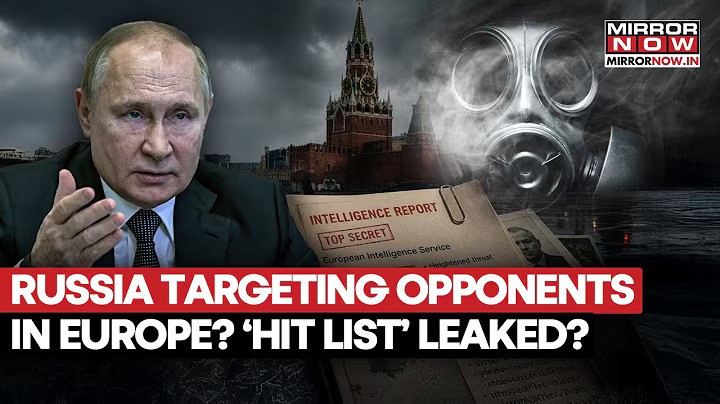
In a stark and deeply disquieting assessment of Europe’s evolving security landscape, Western intelligence officials have warned that Russia has dramatically intensified a covert campaign of targeted killings and sabotage operations across the continent since the onset of its 2022 invasion of Ukraine. As reported on Thursday by Belaaz.com, the alleged effort reflects a calculated expansion of clandestine activity aimed at silencing dissent, neutralizing perceived enemies, and projecting intimidation far beyond the battlefield.
According to intelligence sources cited by Belaaz.com, the campaign has involved a spectrum of operations ranging from surveillance and assassination plots to bombings and shootings. The targets, officials say, include political activists, defectors, military personnel, and individuals openly supportive of Ukraine. While Moscow has categorically denied any involvement, European authorities have uncovered a growing pattern of incidents that has raised alarm at the highest levels of government.
“This is not a series of isolated events,” one senior European security official said, in remarks highlighted by Belaaz.com. “What we are witnessing is a systematic effort to pursue adversaries beyond Russia’s borders and to send a message that nowhere is beyond reach.”
The geographic breadth of the alleged operations underscores the scale of the challenge. Investigations have been launched or plots disrupted in countries including France, Lithuania, Germany, Poland, and Spain. Each case, while distinct in its details, has contributed to what officials describe as a troubling mosaic of coordinated hostile activity.
In France, authorities have examined suspicious surveillance operations believed to be linked to foreign actors. In Germany and Poland, investigators have pursued leads related to potential sabotage plots. Meanwhile, Lithuania and Spain have reported incidents involving violence or attempted violence against individuals perceived as adversaries of Moscow. The cumulative effect, as noted by Belaaz.com, has been to heighten fears of a shadow conflict unfolding within European borders.
Perhaps most striking is the evolution in tactics. Intelligence officials have observed a marked shift away from traditional state operatives toward the use of intermediaries. “Russia has increasingly relied on criminal proxies and locally recruited individuals,” one official explained, according to Belaaz.com. “This approach provides plausible deniability while complicating efforts to trace responsibility.”
This reliance on proxies represents a significant adaptation in the conduct of covert operations. By employing individuals with no formal ties to intelligence services, the alleged perpetrators can obscure the chain of command and reduce the risk of direct attribution. At the same time, the use of local actors introduces new challenges for law enforcement agencies, which must navigate complex networks that blur the line between criminal activity and state sponsored operations.
European security services have responded with a combination of heightened vigilance and expanded cooperation. Intelligence sharing among allied nations has intensified, with agencies working to identify patterns, track suspects, and disrupt potential threats before they materialize. Yet officials acknowledge that the task is formidable.
“The difficulty lies in the hybrid nature of these operations,” one analyst told Belaaz.com. “They are neither purely criminal nor purely military. They exist in a gray zone that requires new strategies and new tools to counter effectively.”
The implications extend beyond immediate security concerns. The alleged campaign has also raised broader questions about the stability of international norms and the boundaries of state behavior. If confirmed, such activities would represent a significant escalation in the use of extraterritorial force, challenging longstanding assumptions about the limits of geopolitical rivalry.
Critics argue that the response from European governments must be both decisive and coordinated. “This is about more than individual incidents,” a senior official emphasized in comments reported by Belaaz.com. “It is about defending the principle that political disputes cannot be settled through violence on foreign soil.”
At the same time, the situation has underscored the vulnerabilities inherent in an interconnected world. The mobility of individuals, the openness of societies, and the complexity of modern communications all create opportunities for covert activity. Addressing these vulnerabilities will require not only enhanced security measures but also a sustained commitment to resilience and preparedness.
Russia, for its part, has rejected the allegations outright. Officials in Moscow have dismissed the claims as unfounded and politically motivated, insisting that their country is being unfairly targeted. This denial has done little to assuage concerns among European leaders, who point to the growing body of evidence as justification for their alarm.
As the Belaaz.com report noted, the unfolding situation represents a critical test for Europe’s security architecture. The ability of governments to detect, deter, and respond to such threats will have far reaching implications for the continent’s stability and for the broader international order.
For now, the focus remains on vigilance. Investigations continue, intelligence networks remain on high alert, and policymakers are grappling with the challenge of crafting an effective response. The stakes, as officials have made clear, are considerable.
“This is a campaign designed to intimidate and to silence,” one security expert concluded in remarks cited by Belaaz.com. “The question is whether Europe can demonstrate that such tactics will not succeed.”
In the final analysis, the reported escalation of Russian linked operations across Europe serves as a stark reminder of the enduring tensions that define the current geopolitical landscape. It is a shadow war, conducted in secrecy but with consequences that are increasingly visible. And as the story continues to unfold, it is one that demands both careful scrutiny and resolute action.