
































|
Getting your Trinity Audio player ready...
|
By: Fern Sidman
In a poignant and historically resonant development that underscores the enduring moral reckoning with Europe’s darkest chapter, the Musée d’Orsay has inaugurated a new permanent exhibition dedicated to artworks once owned by Jewish families and looted by the Nazi regime during the Second World War. As reported on Wednesday in The Algemeiner, this initiative represents both a cultural milestone and a solemn act of remembrance, aimed at restoring not only stolen masterpieces but also fragments of obliterated lives.
The newly unveiled gallery, titled “To whom do these works belong?”, seeks to confront visitors with a question that is as morally urgent as it is historically complex. According to museum officials, the exhibition will serve as a dynamic space where art, memory, and investigative scholarship intersect. “Over time, the room is intended to evolve to present to the public the discoveries resulting from this research, some of which could allow new restitutions,” the museum stated. “It thus constitutes a space of memory, transparency and active research, at the heart of contemporary issues related to the history of the collections.”
As The Algemeiner has emphasized in its coverage, the exhibition reflects a broader international effort to grapple with the cultural plunder that accompanied the Holocaust. Tens of thousands of artworks were systematically confiscated or forcibly sold under duress, often as Jewish families were stripped of their livelihoods, deported, and ultimately murdered. The recovery and restitution of these works remain incomplete, with countless pieces still shrouded in ambiguity regarding their rightful ownership.
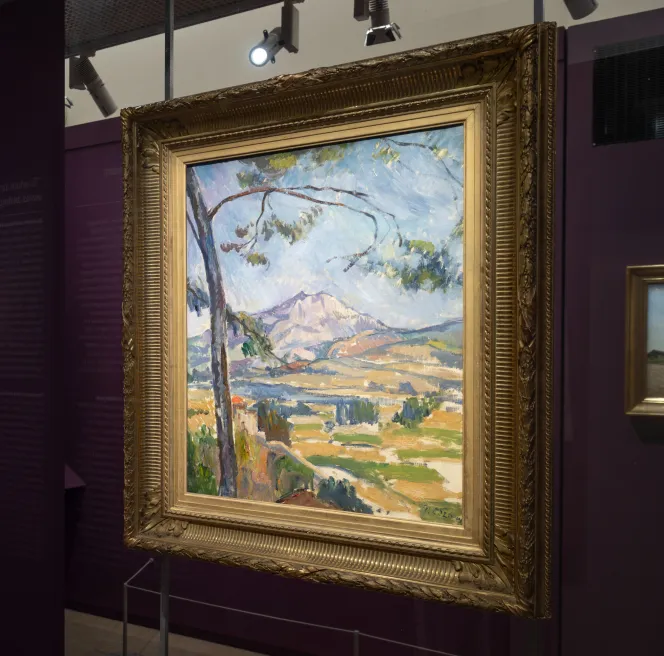
At the heart of the exhibition are thirteen carefully selected works, each bearing silent witness to a story of dispossession. Among them is the evocative 1879 painting “Dinner at the Ball” by Edgar Degas. As The Algemeiner report noted, the painting once belonged to Fernand Ochsé, a Jewish merchant and art collector whose life was brutally extinguished in Auschwitz alongside his wife. The artwork, like so many others, was seized during the Nazi occupation of France, becoming part of a vast machinery of cultural theft.
Musee d’Orsay
Equally significant is the inclusion of “Madame Alphonse Daudet,” an 1876 portrait by Pierre-Auguste Renoir. These masterpieces, while celebrated for their artistic brilliance, now carry an added layer of historical gravity. They are no longer merely objects of aesthetic admiration but vessels of memory, embodying the lives and legacies of those from whom they were taken.
The exhibition draws from a collection known as Musées Nationaux Récupération, or National Museums Recovery works, which consist of artworks returned to France after the war but whose original owners have not yet been definitively identified. As The Algemeiner has reported, approximately 60,000 looted artworks were repatriated to France by 1950. Of these, 224 remain in the custody of the Musée d’Orsay, awaiting further provenance research to determine their rightful ownership.
The task of uncovering these histories falls to a dedicated cadre of provenance investigators and art historians. Their work is painstaking, often requiring the reconstruction of fragmented archival records, personal testimonies, and wartime documentation. The exhibition itself is designed to reflect this ongoing process, with rotating installations that will evolve as new discoveries are made.
Funding for this ambitious endeavor has been provided in part by the American Friends of Musées d’Orsay et de l’Orangerie, a nonprofit organization committed to supporting the museum’s research initiatives. Over the coming years, the organization will finance a specialized team led by Dr. Ines Rotermund-Reynard, a noted expert in provenance studies. Their mandate extends beyond the 224 MNR works to include approximately 200 additional pieces acquired by the museum after 1933, a period marked by escalating persecution and expropriation of Jewish property across Europe.
As The Algemeiner report underscored, the importance of such efforts cannot be overstated. Each successful restitution represents not only a legal resolution but also a symbolic act of justice. To return an artwork to the descendants of its original owner is to acknowledge a historical wrong and to affirm the enduring dignity of those who suffered under Nazi tyranny.
Yet the challenges are formidable. Many original owners perished without leaving heirs, while others were displaced across continents, their family histories scattered by war and exile. In some cases, competing claims and incomplete documentation complicate the restitution process. Nevertheless, the commitment to pursue these investigations reflects a broader ethical imperative within the museum community.
The creation of the new gallery also signals a shift in how cultural institutions engage with their own histories. Rather than presenting artworks in isolation from their provenance, the Musée d’Orsay is embracing a more transparent and self-critical approach. By foregrounding the question of ownership, the exhibition invites visitors to confront the moral dimensions of art collecting and the responsibilities that accompany it.
In this regard, the initiative aligns with a growing international movement toward accountability and restitution. Museums across Europe and North America have begun to reexamine their collections, often uncovering troubling histories of acquisition. As The Algemeiner report noted, such efforts are essential to restoring public trust and ensuring that cultural heritage is preserved with integrity.
The emotional resonance of the exhibition is further amplified by its human dimension. Behind each painting lies a story of loss, resilience, and, in some cases, survival. The narrative of Fernand Ochsé, for instance, is emblematic of countless Jewish collectors whose lives were upended by the Holocaust. By situating his story alongside the artwork he once cherished, the museum transforms an abstract historical tragedy into a deeply personal experience.
Visitors to the gallery are thus confronted with a dual reality. On one hand, they encounter masterpieces of artistic achievement. On the other, they are reminded of the human cost embedded within these works. This juxtaposition serves as a powerful educational tool, fostering a deeper understanding of the Holocaust and its enduring legacy.
As The Algemeiner has emphasized in its reporting, the exhibition also raises broader questions about memory and responsibility. How should societies remember the atrocities of the past? What obligations do institutions have to rectify historical injustices? And how can art serve as a medium for both remembrance and reconciliation?
The Musée d’Orsay’s initiative does not claim to provide definitive answers. Instead, it offers a space for reflection and dialogue, encouraging visitors to engage with these questions in a meaningful way. By doing so, it contributes to a larger cultural and moral conversation that extends far beyond the walls of the museum.
In the years ahead, the success of the exhibition will be measured not only by the number of restitutions achieved but also by its impact on public awareness. As new research findings are incorporated into the gallery, the narrative will continue to evolve, reflecting the ongoing nature of this historical reckoning.
Ultimately, the opening of “To whom do these works belong?” represents a significant step forward in the quest for justice and remembrance. It is a testament to the enduring power of art to illuminate the past and to inspire a more conscientious future. And as The Algemeiner report highlighted, it serves as a reminder that the pursuit of truth, however complex, remains an essential endeavor in honoring the memory of those who were lost.



