





























|
Getting your Trinity Audio player ready...
|
A legal proceeding unfolding in Belgium has ignited a firestorm of condemnation from international leaders, religious advocates, and Jewish communities worldwide, as authorities move forward with indictments against three practitioners of a central Jewish religious rite. The case, reported by VIN News on Wednesday, has been widely characterized as a troubling infringement on religious liberty and an alarming escalation in the criminalization of longstanding Jewish practices.
At the heart of the controversy are three mohalim—ritual circumcision practitioners—based in Antwerp, a city long recognized as one of Europe’s most significant centers of traditional Jewish life. The indictments follow a series of dramatic events that began with police raids, arrests, and the confiscation of religious instruments, culminating now in formal legal charges that many observers regard as both unprecedented and deeply unsettling.
According to detailed accounts provided by VIN News, the controversy traces its origins to May 2024, when Belgian law enforcement authorities conducted coordinated raids on the homes of several mohalim in Antwerp. During these operations, officers reportedly seized ceremonial knives and demanded access to records of infants who had undergone circumcision.
Among those detained were Rabbi Aharon Eckstein and Rabbi Moshe David Landau, both respected figures within the local community. Although they were later released, the raids sent shockwaves through Antwerp’s Jewish population, raising fears that a cherished religious tradition was being placed under legal siege.
This is a shameful stain on Belgium.
The prosecution of these religious figures (mohels), one of whom is American, is WRONG and won’t be tolerated.
Belgium will be thought of now as anti Semitic by world. Until this is resolved – there is no way around it.
The Trump… https://t.co/XBLp35aPH2
— Ambassador Bill White (@BillWhiteUSA) May 6, 2026
The situation intensified in January 2024, when a lawsuit was filed against multiple individuals involved in the circumcision ritual. The complaint, described by VIN News as provocative and inflammatory, extended beyond the mohalim themselves to include rabbis and Hasidic leaders who had participated in ceremonies as sandaks—the individuals who hold the infant during the ritual.
The complainant alleged that these participants were “accomplices to a crime,” a characterization that many within the Jewish community found both bewildering and offensive.
Circumcision, known as brit milah, is not merely a cultural custom but a foundational commandment in Jewish religious life, observed continuously for millennia. Its significance extends far beyond the physical act, symbolizing a covenant that lies at the very core of Jewish identity.
The attempt to subject this practice to criminal prosecution has therefore been perceived as an existential challenge to the continuity of Jewish life in Belgium. As the VIN News report emphasized, the case raises profound questions about the balance between regulatory frameworks and the protection of religious freedom.
The decision to file indictments has drawn swift and forceful criticism from senior officials, including Israel’s Foreign Minister Gideon Sa’ar, who did not mince words in his response.
“Belgium has announced the filing of an indictment against the three mohels who were arrested last year in Antwerp,” Sa’ar declared. “By doing so, Belgium joins a short and shameful list, alongside Ireland, of countries that use criminal law to persecute Jews for practicing Judaism.”
He continued with a stark denunciation: “This is a mark of shame on Belgium. Circumcision is a cornerstone of the Jewish faith. Many countries in Europe and around the world have created legal frameworks to facilitate circumcision and Jewish religious freedom within their borders. I call on the Belgian government to act immediately to find an appropriate solution.”
These remarks reflect a broader international consensus that the case represents a troubling departure from established norms.
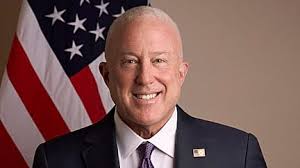
The controversy has also drawn attention from the United States, where US Ambassador to Belgium Bill White has emerged as a vocal critic of the proceedings. In a series of public statements, he characterized the case in unequivocal terms.
“Antisemitism is unacceptable in any form and must be rooted out of our society,” White wrote, calling on Belgium “to do a much better job on this issue.”
In a subsequent statement, he went further, describing the case as “a ridiculous and antisemitic prosecution of three Jewish religious figures in Antwerp,” and emphasizing that the accused were “religious practitioners carrying out an ancient tradition.”
White’s intervention, as reported by VIN News, underscores the extent to which the issue has transcended national boundaries, becoming a matter of international concern.
In addition to his criticism, the ambassador directed a pointed appeal to Belgian Health Minister Frank Vandenbroucke, urging the establishment of a legal framework that would explicitly permit the practice of circumcision.
“This is done in all civilized countries,” White asserted, adding that Belgium must take concrete steps to ensure the religious freedom of its Jewish citizens.
His remarks highlight a key dimension of the controversy: the absence of a clear and consistent legal structure governing religious circumcision in Belgium. While many countries have enacted provisions to accommodate the practice, Belgium’s regulatory environment has remained ambiguous, creating conditions ripe for conflict.
The dispute has also taken on a personal dimension, with White recounting a contentious interaction with Minister Vandenbroucke.
In a striking allegation, the ambassador claimed that during their first meeting, the minister refused to shake his hand or be photographed with him. He further invoked the historical relationship between the United States and Belgium, referencing America’s role in liberating the country during the World Wars.
These comments, reported by VIN News, add a layer of diplomatic tension to an already fraught situation, illustrating how the issue has strained not only domestic relations but also international partnerships.
Within Antwerp’s Jewish community, the reaction has been one of profound concern—and indignation. For many residents, the indictments represent not only a legal challenge but a symbolic assault on their identity and way of life.
The targeting of religious practitioners, combined with the earlier raids and confiscations, has created an atmosphere of uncertainty and apprehension. Community leaders have expressed fears that the case could set a precedent with far-reaching implications, potentially emboldening similar actions elsewhere in Europe.
The Antwerp case is not occurring in isolation. Across Europe, debates over religious practices have increasingly intersected with broader discussions about integration, secularism, and human rights. In some instances, these debates have led to restrictions that disproportionately affect minority communities.
As the VIN News report noted, the criminalization of circumcision would place Belgium at odds with the prevailing approach in most democratic societies, where accommodations are made to respect religious diversity.
At its core, the issue raises fundamental questions about the nature of religious freedom in contemporary Europe. Can a society that values pluralism reconcile regulatory concerns with the protection of deeply rooted traditions? And what obligations do governments have to ensure that minority communities can practice their faith without fear of prosecution?
For critics of the Belgian proceedings, the answers are clear. They argue that the indictments represent a failure to uphold the principles of tolerance and inclusion that underpin democratic societies.
As the legal process moves forward, the outcome remains uncertain. What is clear, however, is that the case has already had a profound impact, galvanizing advocacy efforts and prompting renewed scrutiny of policies affecting religious minorities.
Ambassador White has indicated his intention to travel to Antwerp to meet with the accused and their families, a gesture that underscores the human dimension of the case. His planned visit is likely to further amplify international attention and will ensure pressure on Belgian authorities.
The indictment of the Antwerp mohalim represents a defining moment for Belgium, one that will test its commitment to religious freedom and its willingness to confront the implications of its legal framework.
As the VIN News report highlighted, the case is about more than the fate of three individuals. It is about the preservation of a tradition that has endured for thousands of years, and the assurance that such traditions can continue to be practiced without fear.
In the words of Gideon Sa’ar, the issue demands immediate action. Whether Belgium will heed that call remains to be seen. What is certain, however, is that the world is watching, and the stakes could not be higher.



