


























|
Getting your Trinity Audio player ready...
|
Ceasefire Diplomacy Reignites as Senior Hamas Delegation Prepares for Cairo Talks Amid Renewed Push for Gaza Agreement
Egypt and Qatar Advance Revised Framework as Negotiators Seek Path Forward in Protracted Gaza Conflict
By: Fern Sidman
A senior delegation from the Hamas terrorist organization are expected to travel to Cairo next weekend for what could become another pivotal round of negotiations aimed at reviving ceasefire efforts in the Gaza Strip, according to reports cited by Israel National News. The anticipated meetings come as regional mediators intensify efforts to bridge longstanding gaps between Israel and Hamas and explore a revised framework designed to advance a potential agreement after months of continuing hostilities.
According to information reported on Sunday by Israel National News, Egyptian and Qatari mediators have presented both parties with what has been described as a “new and revised proposal” intended to reinvigorate stalled diplomatic efforts and create a pathway toward a renewed cessation of fighting.
The latest diplomatic initiative emerges against the backdrop of a conflict that has reshaped the strategic landscape of the Middle East, generated significant humanitarian concerns, and complicated regional and international diplomatic calculations. As Israel National News has reported throughout the conflict, efforts to achieve a durable ceasefire have repeatedly encountered obstacles stemming from profound disagreements regarding security arrangements, governance issues, hostage concerns, military operations, and the future political structure of Gaza.
According to a senior Hamas terrorist official quoted by the Saudi-based Asharq outlet and referenced by Israel National News, Egypt and Qatar have intensified mediation efforts and placed before the parties a series of ideas intended to serve as the foundation for renewed negotiations.
The official indicated that the proposal seeks to establish a revised framework capable of addressing unresolved disputes that contributed to the collapse or suspension of previous arrangements.
Egypt and Qatar have served as central intermediaries throughout the conflict, leveraging their longstanding communication channels with both Israeli and Hamas representatives. Their diplomatic role has often been viewed as essential because direct negotiations between Israel and Hamas remain extremely limited.
The Israel National News report noted that Cairo has repeatedly hosted talks involving intelligence officials, diplomats, and representatives from multiple regional actors seeking to facilitate agreements concerning ceasefires, hostage releases, humanitarian access, and broader security understandings.
The anticipated arrival of senior Hamas terrorist officials in Cairo suggests that mediators believe sufficient groundwork has been laid to justify another significant negotiating effort.
According to the Hamas terrorist official cited in reports carried by Israel National News, the organization remains willing to proceed within the framework of the previously signed ceasefire agreement, provided that certain conditions are met.
The official asserted that the Hamas terrorist organization expects Israel to fulfill commitments associated with the first stage of the agreement before discussions regarding implementation of a second stage can proceed.
Among the most contentious issues expected to arise during future negotiations is the question of disarmament.
As Israel National News reported, discussions concerning a second phase of any broader agreement have included proposals related to the disarmament of Hamas and other terrorist organizations operating within Gaza, as well as questions surrounding the future deployment of Israeli forces inside the territory.
These issues have consistently represented some of the most difficult aspects of negotiations because they touch directly upon the core security concerns of both sides.
For Israel, preventing future attacks and dismantling terrorist capabilities remains a stated strategic objective.
For Hamas, questions concerning weapons, military infrastructure, and organizational survival remain central to its negotiating posture.
The senior Hamas terrorist official also used the reported comments to criticize Israeli policies and military actions.
According to the report at Israel National News, the official accused Israel of failing to fully implement aspects of previous agreements and objected to the resumption of military operations in Gaza.
The official further criticized the expansion of areas under Israeli military control and expressed dissatisfaction with international diplomatic efforts.
Among the grievances reportedly cited were concerns regarding humanitarian aid access, the effectiveness of mediation initiatives, and broader international responses to developments inside Gaza.
These complaints underscore the profound mistrust that continues to characterize the relationship between the parties and illustrate why repeated ceasefire efforts have struggled to evolve into durable political settlements.
Israel has consistently argued that military operations remain necessary to degrade Hamas’s capabilities and prevent future attacks, particularly following the October 7th assault that triggered the war.
Israeli officials have maintained that long-term security arrangements must ensure that Gaza cannot again serve as a base for large-scale terrorist operations against Israeli civilians.
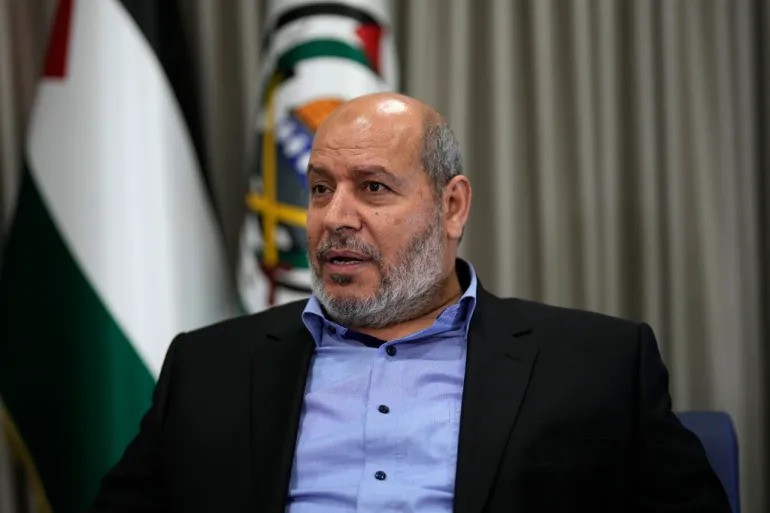
Further comments were issued by Hamas terrorist spokesman Hazem Qassem, who argued that recent Israeli statements reflected a departure from earlier ceasefire understandings. Qassem pointed specifically to remarks attributed to Prime Minister Benjamin Netanyahu concerning future Israeli security control over significant portions of Gaza.
The terrorist spokesman also referenced comments by Defense Minister Israel Katz regarding ongoing military operations and future strategic plans.
Qassem claimed that such statements indicated a fundamental shift away from the framework envisioned by previous ceasefire discussions. Israeli officials, however, have repeatedly emphasized that any future arrangement must guarantee security and prevent Hamas from rebuilding its military infrastructure.
Israeli leaders have argued that the lessons of October 7 require a fundamentally different security architecture than existed prior to the war. As Israel National News has frequently reported, this security-first approach remains a defining feature of Israeli policy discussions regarding Gaza’s future.
The forthcoming Cairo discussions carry implications extending far beyond Gaza itself.
Regional governments continue to monitor developments closely because the conflict has affected broader geopolitical dynamics across the Middle East.
Egypt, which shares a border with Gaza, has particular interests in preventing instability from spilling across its frontier. Qatar, meanwhile, has invested substantial diplomatic capital in mediation efforts and has often served as a key communication channel with Hamas leadership.
Israel National News has consistently highlighted the broader regional dimension of ceasefire negotiations, noting that developments in Gaza frequently influence wider discussions involving normalization efforts, regional security arrangements, and international diplomatic initiatives.
A successful agreement could potentially reduce tensions across multiple fronts. Conversely, failure could contribute to renewed escalation and prolong an already devastating conflict.
The negotiations are also unfolding amid continuing humanitarian concerns.
Questions regarding aid distribution, civilian welfare, reconstruction planning, and access to essential services remain central issues in diplomatic discussions.
International organizations and regional governments have repeatedly called for expanded humanitarian access while emphasizing the need to address the needs of Gaza’s civilian population.
At the same time, Israeli officials have stressed the importance of ensuring that humanitarian assistance is not diverted for military purposes.
These competing priorities have complicated efforts to establish mechanisms that satisfy both humanitarian objectives and security requirements.
Despite the renewed diplomatic activity, significant obstacles remain. Previous ceasefire efforts have often generated optimism only to encounter setbacks arising from disagreements over implementation, verification mechanisms, security guarantees, and political conditions.
The fundamental issues that have divided the parties for years remain unresolved.
Questions concerning governance in Gaza, future security arrangements, the status of armed groups, humanitarian access, reconstruction, and long-term political frameworks continue to challenge negotiators.
Nevertheless, the decision by senior Hamas terrorist officials to travel to Cairo suggests that mediators believe meaningful discussions remain possible. Israel National News reported that both Egypt and Qatar continue to invest substantial effort in seeking a formula capable of advancing negotiations and reducing the likelihood of further escalation. Whether the proposed revised framework can overcome entrenched differences remains uncertain.
What is clear, however, is that regional and international stakeholders continue to view diplomacy as an essential avenue for addressing one of the Middle East’s most complex and consequential conflicts.
As preparations continue for next weekend’s meetings in Cairo, attention across the region will focus on whether the latest initiative can succeed where previous efforts have struggled. The outcome may help determine not only the immediate future of Gaza but also the broader trajectory of regional stability in the months ahead.



