


























|
Getting your Trinity Audio player ready...
|
Violent antisemitic attacks in the United Kingdom are fueling growing fear within the British Jewish community, prompting public warnings, security concerns, and calls for urgent government action.
By: Tzirel Rosenblatt
In what many Jewish leaders, community advocates, and public commentators increasingly describe as one of the gravest crises confronting British Jewry in modern times, the United Kingdom is witnessing a deeply troubling escalation in antisemitic incidents that has shaken the nation’s Jewish population and ignited renewed concerns regarding public safety, social cohesion, and the future of Jewish life in Britain.
From synagogue attacks and street assaults to vandalism, intimidation campaigns, arson incidents, and increasingly brazen rhetoric targeting Jews, the atmosphere within many Jewish communities across the United Kingdom has become one of anxiety and apprehension. What was once dismissed by some as isolated extremism is now widely viewed as a broader societal problem with potentially profound consequences.
Against this backdrop, an emotional and widely circulated statement by Jon McKnight, a Red Carpet Events Director and Royal Interviewer, has resonated deeply across social media and professional circles. Writing on LinkedIn on April 30, 2026, McKnight announced that he had added a Star of David emoji to his profile headline in solidarity with British Jews amid the escalating wave of antisemitic hostility.
“I’ve just made a small change to my LinkedIn profile and a big change to my life,” McKnight wrote. “I’ve added a Star Of David emoji to my LinkedIn headline.”
What made the gesture particularly striking was McKnight’s clarification that he himself is not Jewish.
“Not because I’m Jewish – I’m not – but because I want people to treat me in the same way they would if I were Jewish,” he stated.
His comments quickly gained attention because they articulated what many within Britain’s Jewish community have been expressing with increasing urgency for months: that fear has become embedded in daily life.
“But whatever the consequences,” McKnight continued, “they will be as nothing compared with the daily fear, the terror that my Jewish friends and the rest of the community are experiencing right here, right now, in Great Britain in the 21st Century.”
His words reflected a growing national debate over whether Britain is adequately confronting the surge in antisemitism that has intensified following rising geopolitical tensions, mass demonstrations, online radicalization, and increasingly confrontational anti-Israel activism that many Jewish organizations say has crossed into outright anti-Jewish hostility.
Across London, Manchester, Leeds, and other areas with significant Jewish populations, visible security measures have become increasingly normalized. Synagogues, Jewish schools, community centers, and kosher establishments operate behind reinforced barriers, monitored entrances, surveillance systems, and private security patrols.
McKnight referenced this reality directly.
“Worshipping and being educated behind high fences, voluntary security patrols on the streets, and politicians talking and talking about how much they care and intend, one day, to do something,” he wrote.
For many British Jews, these conditions no longer feel temporary.
Security volunteers affiliated with communal protection organizations have become a constant presence outside Jewish institutions, particularly during religious services and school hours. Parents routinely discuss safety protocols with children before synagogue attendance. Some Jewish students reportedly conceal religious symbols in public settings to avoid confrontation.
Community advocates warn that these are not isolated anxieties but manifestations of a broader climate of intimidation.
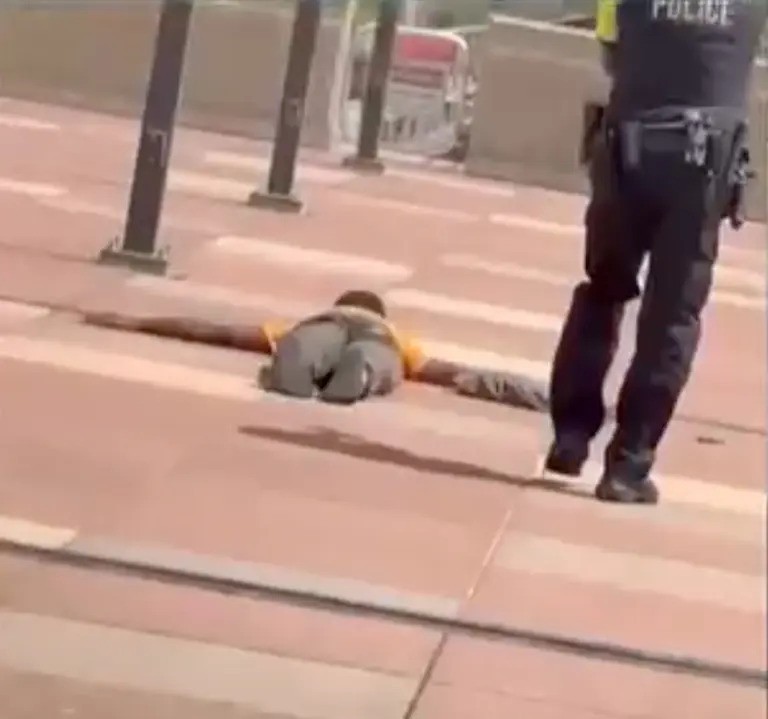
In recent months, Britain has witnessed a succession of alarming incidents involving antisemitic violence and vandalism. Jewish cemeteries have reportedly been desecrated. Swastikas have appeared on public property and Jewish institutions. Demonstrators at anti-Israel rallies have been accused of employing inflammatory rhetoric, while social media platforms have amplified extremist narratives at unprecedented speed.
Perhaps most disturbing for many observers is the normalization of hostility in spaces once considered socially unacceptable for such conduct.
Jewish leaders across the United Kingdom have repeatedly emphasized that the crisis extends beyond physical security. The deeper concern involves the psychological erosion of belonging.
Many British Jews increasingly speak of uncertainty regarding their long-term future in the country. Discussions once confined to fringe anxieties — including whether Jewish families should emigrate or reduce public expressions of identity — are now occurring more openly.
McKnight’s statement captured that fear in stark language.
“Stabbings. Arson attacks. Murder. Vilification. Daily doubts as to whether it’s safe to go to school, to the shops, to the synagogue – or even safe to remain in this country.”
The emotional weight of that observation reverberated widely because it reflected a sentiment many British Jews privately acknowledge but hesitate to articulate publicly.
Communal organizations have reported elevated levels of distress, particularly among younger families and elderly Holocaust survivors who view contemporary antisemitic rhetoric through the lens of historical trauma. Mental health professionals within the Jewish community have also noted rising levels of anxiety associated with public visibility, online harassment, and fears surrounding anti-Jewish violence.
The issue has become particularly acute in educational environments. Jewish students at universities across Britain have reported feeling isolated amid increasingly hostile campus atmospheres, especially during periods of heightened Middle East tensions.
Several student organizations have accused university administrations of failing to distinguish between legitimate political debate and rhetoric that veers into antisemitic intimidation.
A recurring frustration voiced by community advocates concerns what they perceive as insufficient governmental urgency.
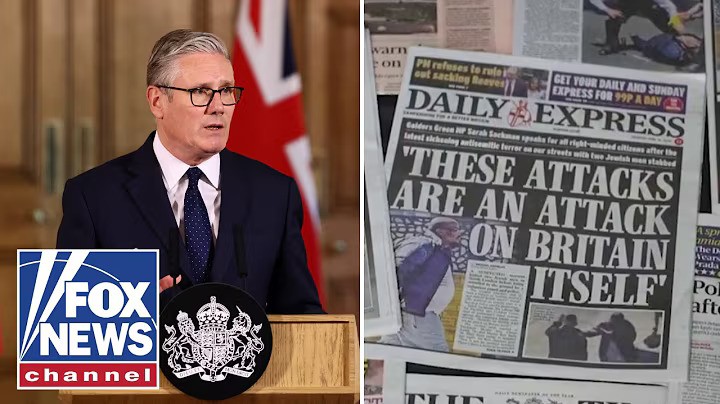
Successive British governments have condemned antisemitism publicly, yet critics argue that official statements have too often failed to translate into decisive enforcement or meaningful deterrence.
McKnight alluded to this frustration in unusually blunt terms.
“Every attack, every insult, every threat is yet another nail in the coffin of British society – and the Government, indeed, all of us – need to act before the lid’s nailed down for good.”
The statement resonated because it framed antisemitism not merely as a Jewish issue, but as a national moral crisis.
“This is nothing to do with politics,” McKnight emphasized. “It’s to do with decent people living decently in a decent country, yet being attacked and intimidated because of their cultural or religious identity.”
That distinction is central to the current debate in Britain. Jewish organizations increasingly argue that antisemitism must not be minimized as merely a byproduct of geopolitical tensions or ideological polarization. Rather, they insist it represents a direct assault on the principles of democratic pluralism and civil society itself.
Critics contend that authorities have sometimes appeared reluctant to confront extremist rhetoric aggressively for fear of inflaming political sensitivities or alienating activist constituencies.
Others argue that law enforcement agencies face immense operational challenges balancing free expression protections with the need to combat hate speech and incitement.
Nevertheless, frustration within the Jewish community continues to grow.
Another defining characteristic of the current antisemitism crisis is the role of digital platforms in amplifying hostility.
Social media has dramatically accelerated the spread of conspiracy theories, inflammatory propaganda, and coordinated harassment campaigns targeting Jews. Public figures, journalists, academics, and Jewish advocates routinely face online abuse following commentary related to Israel or antisemitism.
McKnight acknowledged that even his symbolic gesture of solidarity might provoke backlash.
“Some may vilify me. Some may quietly disconnect or stop following me. Others may make their displeasure known in the Comments.”
Yet he insisted that such risks pale beside the dangers confronting British Jews daily.
His willingness to publicly identify as what he termed an “Honorary Jewish man” became, for many observers, an act of civic solidarity at a time when many non-Jewish Britons have remained silent.
“So, today, 30 April 2026, I am choosing to identify as an Honorary Jewish man,” he wrote, “and I urge others to do likewise, to show our Jewish friends and the wider community that they are not alone.”
The crisis unfolding in Britain mirrors broader trends across Europe, where Jewish communities in France, Germany, Belgium, and elsewhere have also reported rising antisemitic incidents in recent years.
European Jewish organizations increasingly warn that antisemitism has evolved into a multifaceted phenomenon drawing energy from extremist ideologies across the political spectrum, including far-right nationalism, radical Islamist movements, and segments of the far-left.
Britain’s Jewish population, estimated at roughly 300,000 people, now finds itself confronting many of the same anxieties experienced elsewhere on the continent: whether visible Jewish identity can be maintained safely in public life.
For older generations, the symbolism is deeply painful. Britain historically viewed itself as a nation of tolerance and stability, particularly compared to the darker chapters of continental European history.
That perception is now being tested.
“I would not want to live in a country that no longer had Jewish people in it,” McKnight wrote, “that had been deserted by them because they no longer felt it safe to remain.”
The statement reflected a growing fear that if antisemitism continues escalating unchecked, Britain risks damaging not only its Jewish community but also its broader democratic identity.
At its core, the current crisis represents a defining moral and civic test for the United Kingdom.
The issue extends beyond policing, legislation, or political rhetoric. It concerns whether Britain can preserve the social trust necessary for minority communities to live openly and securely without fear of intimidation.
Jewish leaders increasingly argue that silence from broader society enables extremism to flourish. They stress that antisemitism rarely remains confined to Jews alone; historically, it has often served as an early warning sign of broader democratic decay.
McKnight’s statement resonated precisely because it framed solidarity not as a political act, but as a moral obligation.
“I refuse to let Britain become a place in which it feels unsafe to be Jewish,” he declared.
For many readers, those words carried particular weight because they came not from a politician, activist, or communal leader, but from an ordinary public figure who felt compelled to speak openly amid what he perceived as a dangerous national trajectory.
Whether Britain ultimately succeeds in reversing the current tide of antisemitism remains uncertain. But what is increasingly clear is that the country has entered a moment of reckoning — one that will shape not only the future of British Jewry, but also the moral character of British society itself.



