

























|
Getting your Trinity Audio player ready...
|
By: Fern Sidman
A volatile and potentially consequential escalation unfolded overnight in the Persian Gulf, as United States naval forces and elements of the Iranian Revolutionary Guard Corps (IRGC) engaged in a significant exchange of fire near the strategically indispensable Strait of Hormuz. The confrontation, which involved missiles, drones, and fast-attack vessels, has intensified fears of a broader regional conflict even as officials insist that formal hostilities have not resumed.
According to extensive reporting on Friday by JFeed, the incident began at approximately 9:45 PM, when massive explosions were reported in the vicinity of Bandar Abbas and Qeshm Island—two critical nodes in Iran’s maritime infrastructure. The sudden eruption of violence in such a sensitive corridor immediately raised alarms among regional governments and global markets alike.
In a detailed statement issued the following morning, the United States military confirmed that the confrontation was precipitated by what it described as a coordinated Iranian attack on American naval assets operating in international waters.
According to the Pentagon’s account, Iranian forces launched a multi-pronged assault involving ballistic projectiles, unmanned aerial vehicles, and fast-moving attack boats targeting three U.S. Navy destroyers transiting the strait.
“None of our ships were hit,” the Pentagon emphasized, a point underscored repeatedly in official communications, as reported by JFeed. The statement added that American forces successfully intercepted the incoming threats before executing precision counter-strikes.
The U.S. response, described as both measured and decisive, targeted key elements of Iran’s military infrastructure. These included missile and drone launch sites, command and control centers, and intelligence, surveillance, and reconnaissance hubs.
The JFeed report noted that the Pentagon’s language sought to strike a careful balance—projecting strength while signaling restraint. “While we do not seek further escalation, we remain fully prepared to defend our forces,” the statement concluded.
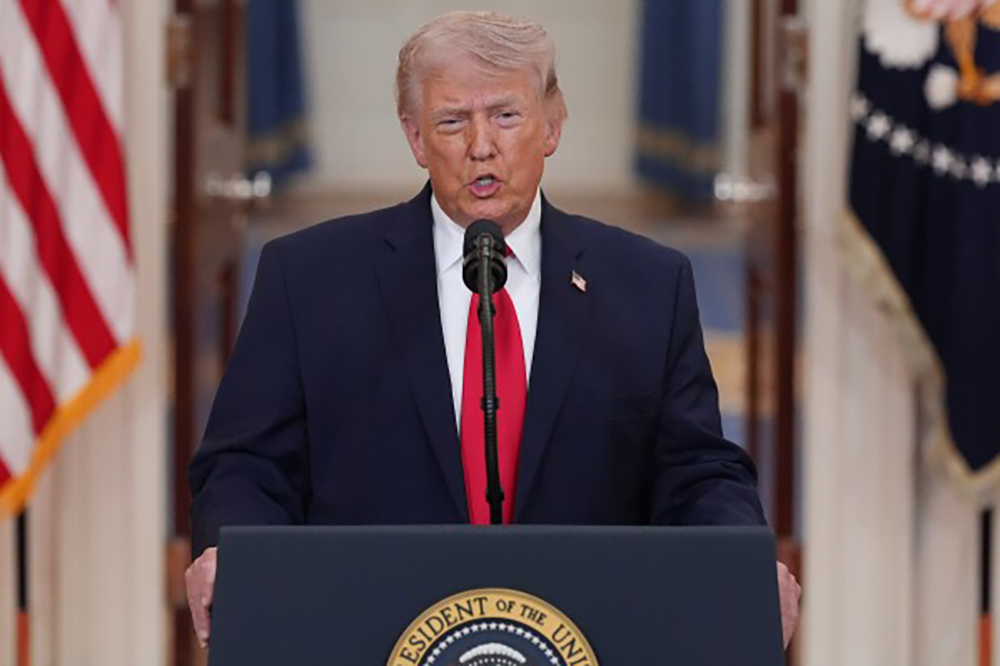
President Trump addressed the incident in both a televised interview and a series of posts on his Truth Social platform, offering a characteristically blunt and vivid account of the events.
Describing the U.S. response as “love taps,” Trump insisted that the ceasefire technically remains in effect, even in the wake of the intense exchange.
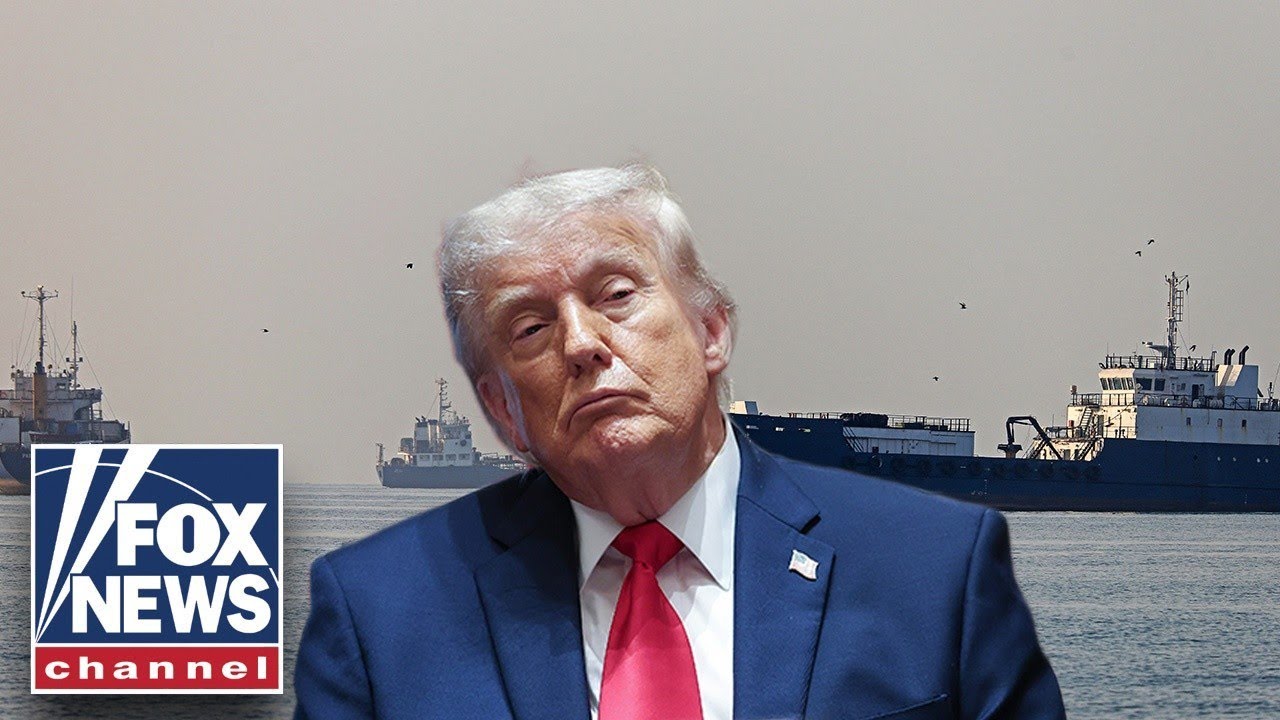
“Three World Class American Destroyers just transited, very successfully, out of the Strait of Hormuz, under fire,” Trump wrote, as cited by JFeed. “There was no damage done to the three Destroyers, but great damage done to the Iranian attackers.”
He elaborated further, detailing the destruction inflicted on Iranian forces. “Many small boats were destroyed and went to the bottom of the sea quickly and efficiently. Missiles were easily shot down, and drones were burned in mid-air,” he stated.
The President’s rhetoric then shifted to a sharply critical tone directed at Iran’s leadership.
“A normal country would have allowed the destroyers to pass, but Iran is not a normal country,” Trump declared. “It is led by madmen who would undoubtedly use nuclear weapons if given the chance. They will never have that chance.”
He concluded with a stark warning: “Just as we repelled them today—we will eliminate them much harder and with much more violence if they do not sign a deal.”
JFeed highlighted that Trump’s remarks combine an assertion of immediate tactical success with a broader strategic message aimed at compelling Iran to return to negotiations.
Iranian officials responded swiftly, issuing statements that both contested the American narrative and reaffirmed Tehran’s readiness to escalate.
A spokesperson for the Iranian Armed Forces accused the United States of violating the ceasefire, declaring that Iran would “respond powerfully and without hesitation to any attack.”
However, as the JFeed report observed, Iranian media outlets offered conflicting accounts of the incident. The Tasnim News Agency claimed that U.S. forces were forced to retreat, while the Fars News Agency described the engagement as limited to “warning shots” directed at vessels in the strait.
Adding to the ambiguity, Iranian sources asserted that two “hostile” drones had been shot down and that a pier on Qeshm Island sustained damage during the exchange.
The JFeed report noted that these divergent narratives reflect both the opacity of the situation and the strategic messaging efforts on both sides, each seeking to shape perceptions of the confrontation’s outcome.
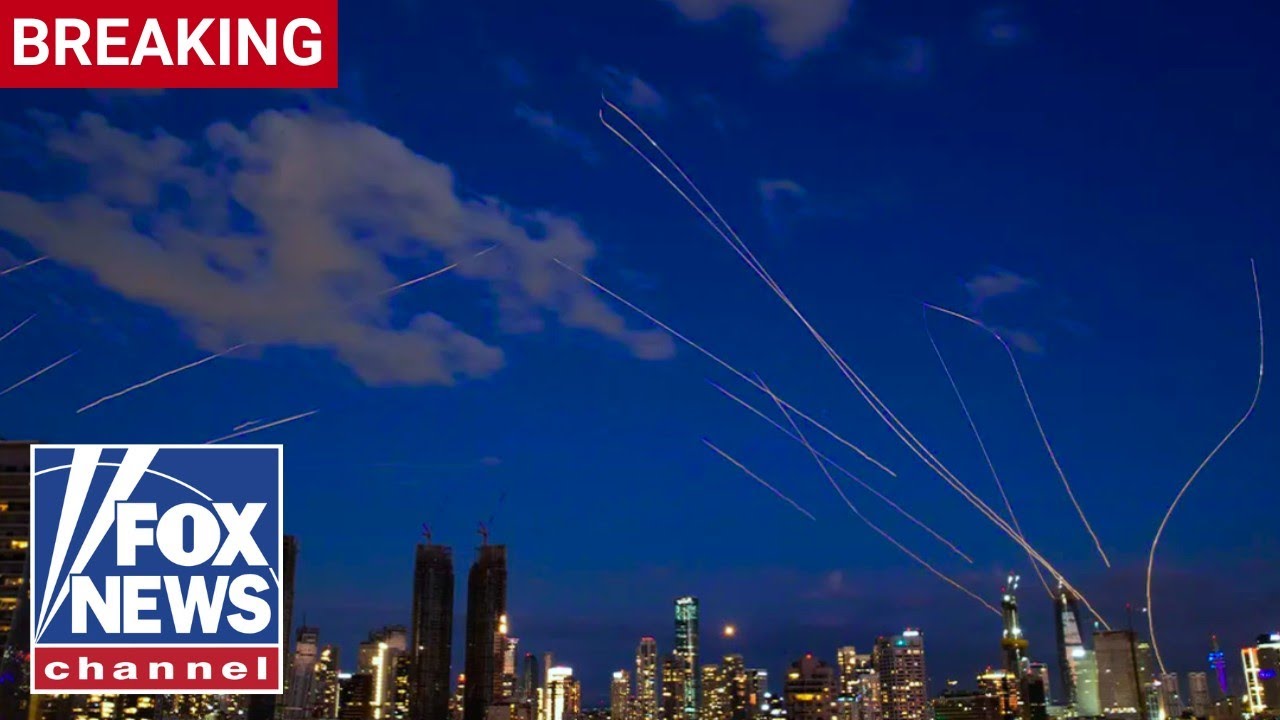
The impact of the incident extended beyond the immediate theater of operations. Authorities in the United Arab Emirates reported the activation of air defense systems in response to unidentified aerial threats, though the precise nature of the targets remains unclear.
JFeed reported that the activation of defensive measures in the UAE underscores the broader regional implications of the clash, as neighboring states brace for potential spillover effects.
The Strait of Hormuz, through which a significant portion of the world’s oil supply is transported, remains a focal point of global economic and strategic interest. Any disruption to its security has immediate ramifications for energy markets and international stability.
Amid the escalating tensions, The Wall Street Journal reported that the Trump administration is considering relaunching “Operation Freedom,” a military initiative designed to ensure the free passage of commercial vessels through the Strait of Hormuz.
According to the information provided in the JFeed report, the operation had previously been paused due to concerns expressed by Gulf allies. However, recent developments appear to have shifted the strategic calculus.
Saudi Arabia and Kuwait have reportedly lifted restrictions on U.S. military operations, allowing the United States to utilize regional bases and airspace in support of the initiative. This would enable American forces to provide armed escorts for commercial shipping, effectively countering any Iranian attempts to disrupt maritime traffic.
The JFeed report emphasized that the potential resumption of “Operation Freedom” represents a significant escalation in U.S. involvement, signaling a willingness to assert control over the waterway if necessary.
In the midst of widespread speculation, Israeli security officials have categorically denied any involvement in the explosions or the broader confrontation.
JFeed reported that Israeli authorities were keen to distance themselves from the incident, likely in an effort to prevent further escalation and avoid entanglement in a rapidly evolving situation.
This stance reflects Israel’s broader strategic posture, which seeks to contain threats while avoiding direct confrontation unless deemed essential.
The events in the Strait of Hormuz illustrate the fragile equilibrium that currently defines relations between the United States and Iran. On one hand, both sides appear intent on avoiding a full-scale war. On the other, the frequency and intensity of military engagements suggest that the margin for error is narrowing.
The JFeed report noted the dual-track nature of the current strategy: a combination of military deterrence and diplomatic engagement. The challenge lies in maintaining this balance without allowing isolated incidents to spiral into broader conflict.
As the dust settles from the latest confrontation, the broader implications remain uncertain. The exchange of fire between U.S. forces and the IRGC has underscored the volatility of the region and the high stakes involved in maintaining stability in one of the world’s most critical waterways.
For now, the message from Washington is clear: the United States will defend its forces and ensure the free flow of commerce through the Strait of Hormuz. From Tehran, the response is equally resolute: any perceived aggression will be met with force.
Between these positions lies a narrow and precarious path—one that will require careful navigation in the days ahead. Whether the current tensions subside or escalate further will depend on the decisions made in the immediate future, decisions that carry profound implications for regional and global security alike.



