


























|
Getting your Trinity Audio player ready...
|
Park Slope Food Co-op’s Israel Boycott Vote Sparks Fierce Backlash From Jewish Advocacy Organizations
By: Fern Sidman
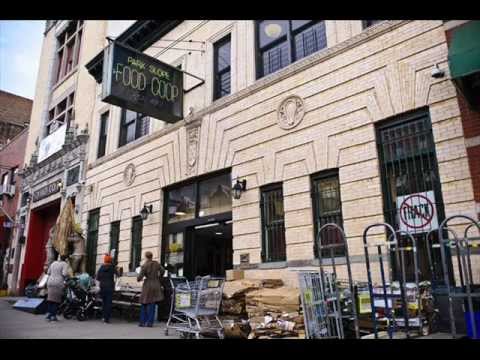
A deeply polarizing vote by the Park Slope Food Co-op to boycott Israeli products has ignited an intensifying firestorm across New York City’s political and Jewish communal landscape, with major Jewish advocacy organizations condemning the measure as an endorsement of the global Boycott, Divestment, and Sanctions movement and warning that the decision risks normalizing antisemitism under the guise of political activism.
The controversy, extensively covered in a report that appeared on Wednesday in The Algemeiner, erupted Tuesday night after approximately 7,000 members of the famed Brooklyn food cooperative participated in a marathon virtual meeting that culminated in a decisive vote to prohibit the sale of Israeli-produced goods within the co-op’s stores. According to the final tally, 67% supported the boycott, while 31% opposed it and 2% abstained.
The vote represented one of the most contentious moments in the co-op’s long and politically charged history.
The Park Slope Food Co-op, founded in 1973 and long associated with progressive political causes, has for years served as a microcosm of broader ideological struggles unfolding throughout New York City’s liberal circles. Yet critics now argue that the latest decision crossed a dangerous threshold by targeting the world’s only Jewish state while simultaneously fostering an atmosphere of hostility toward Jewish members inside the organization itself.
According to the information provided in The Algemeiner report, the approved measure stipulates that the co-op will “not sell goods produced in Israel (pre-1967 borders) or in Israeli settlements in the Occupied Palestinian Territory.”
In practical terms, the boycott affects fewer than a dozen Israeli-made items sold within the co-op, including various specialty food products and household goods. Yet opponents insist the symbolic implications vastly outweigh the relatively minor economic impact.
Jewish advocacy organizations reacted swiftly and forcefully.
“This does nothing to help Israelis and Palestinians make peace,” Avi Posnick, executive director of the northeast office of StandWithUs, told The Algemeiner. “Instead, it actively promotes the agenda of violent extremists, while fueling hostility and division among members of the co-op.”
Posnick further praised members of “Co-op 4 Unity,” a coalition that organized opposition to the boycott effort and warned against what it viewed as the infiltration of extremist political activism into a community institution originally intended to foster cooperation and inclusivity.
“We stand with Co-op 4 Unity, who worked tirelessly to stop their co-op from being co-opted by a global hate movement,” Posnick declared.
He added a broader appeal directed toward the public at large: “We encourage all people of good will to reject campaigns of hate and instead support genuine efforts toward justice and peace between Israelis and Palestinians.”
The battle over the boycott had already generated mounting legal and ethical concerns even before Tuesday night’s dramatic vote.
Last week, the Louis D. Brandeis Center for Human Rights Under Law issued a formal demand letter warning the co-op that conduct surrounding the campaign may have violated laws prohibiting antisemitic discrimination, as was reported in The Algemeiner.
The letter documented allegations of intimidation, inflammatory rhetoric, and what Jewish members described as an increasingly hostile environment during deliberations over the boycott proposal.
Among the examples cited was a statement reportedly made during a committee meeting asserting that “Jewish supremacism is a problem in this country.” Jewish civil rights advocates argued that such language invoked longstanding antisemitic tropes portraying Jews as uniquely manipulative, oppressive, or conspiratorial.
The Brandeis Center further alleged that meetings became increasingly “tense” and “combative,” to the point that some Jewish members reportedly avoided participation entirely out of concern for their personal safety and emotional well-being.
Those fears proved significant enough that the co-op ultimately moved the decisive meeting to Zoom after Jewish attendees expressed apprehension about appearing in person.
Kenneth Marcus, executive director of the Brandeis Center and former Assistant U.S. Secretary of Education for Civil Rights, delivered an especially blistering condemnation after the vote passed.
“The Park Slope Food Co-op’s vote to adopt a BDS boycott is a deeply disappointing and dangerous outcome,” Marcus told The Algemeiner.
“BDS is an inherently antisemitic and discriminatory campaign whose purpose is the isolation and ultimate elimination of the Jewish state,” he continued, “and as we have seen time and again, it does not stay contained to Israel. It metastasizes into open hostility toward Jewish people everywhere, even those with no connection to Israel.”
Marcus emphasized that the co-op’s own leadership had acknowledged tensions and hostility within the organization prior to the vote, making the outcome all the more alarming in the eyes of Jewish advocacy groups.
“A grocery store should never become a springboard for extremist political campaigns,” he stated.
The Brandeis Center also signaled that legal action remains under active consideration.
“The Brandeis Center is actively evaluating all available legal claims arising from the discriminatory nature of this boycott and the procedural irregularities that allowed it to pass,” Marcus said. “We have stopped BDS before, including Ben & Jerry’s. We intend to stop it here too.”
The reference to Ben & Jerry’s invoked one of the most prominent legal and political battles involving anti-Israel boycotts in recent years. That dispute generated intense national debate regarding whether corporate efforts to single out Israel constituted political activism or unlawful discrimination.
The Park Slope controversy now appears poised to become another major front in that broader conflict.
The BDS movement itself remains one of the most polarizing phenomena in contemporary international politics.
Formally launched in 2005, the movement advocates economic, cultural, and political boycotts against Israel. Supporters characterize the campaign as a nonviolent mechanism for pressuring Israel over Palestinian rights and territorial disputes.
Critics, however, argue that BDS fundamentally rejects Israel’s legitimacy as a Jewish state and functions as a discriminatory effort aimed at isolating and ultimately dismantling the country.
Many major Jewish organizations, bipartisan American lawmakers, and several European governments have condemned the movement as antisemitic.
The Algemeiner report noted that the Park Slope vote unfolds against a backdrop of escalating tensions throughout New York City following the October 7 Hamas massacre and the subsequent Gaza war.
Those tensions have manifested through repeated anti-Israel demonstrations, clashes outside synagogues, heated campus activism, vandalism incidents, and surging antisemitic hate crimes.
Earlier this month, anti-Israel demonstrators marched through Brooklyn’s heavily Jewish Flatbush neighborhood and protested outside Young Israel of Midwood synagogue over allegations related to land sales in Judea and Samaria.
Footage circulated widely online appeared to show one masked female demonstrator grabbing a Jewish girl by the hair as she attempted to move through the crowd. When nearby teenagers objected, protesters allegedly responded aggressively, surrounding and confronting them in a threatening manner.
For many Jewish New Yorkers, such scenes have become increasingly alarming.
According to recent New York Police Department statistics cited in coverage surrounding the controversy, Jews accounted for approximately 60% of confirmed hate-crime victims in New York City last month despite comprising only around 10% of the city’s population.
The city has also witnessed multiple recent incidents involving swastika graffiti, antisemitic vandalism, and threats directed toward Jewish institutions and individuals.
Against that atmosphere, opponents of the Park Slope boycott argue that singling out Israeli products inevitably exacerbates hostility toward local Jews, regardless of organizers’ stated intentions.
Supporters of the boycott, meanwhile, insist the measure represents legitimate political expression aimed at opposing Israeli government policy rather than targeting Jewish identity.
Yet critics counter that the movement’s broader ideological framework makes such distinctions increasingly difficult to sustain.
Particularly troubling to many Jewish observers is the way anti-Israel activism increasingly overlaps with rhetoric that appears to question Jewish collective legitimacy altogether.
For decades, Park Slope has served as a symbol of Brooklyn’s affluent progressive culture — a neighborhood associated with activism, multiculturalism, and left-wing political engagement.
Now, however, the co-op vote has exposed profound fractures within those communities.
Some longtime members reportedly lamented that a community institution once designed to foster neighborhood solidarity has instead become consumed by ideological warfare.
The sheer scale of participation illustrated the intensity of feeling on both sides.
Ordinary co-op meetings reportedly attract only a fraction of the turnout seen Tuesday night. Yet this vote mobilized thousands of members and transformed what might otherwise have remained a localized dispute into a national controversy drawing scrutiny from major Jewish organizations, civil rights advocates, legal analysts, and political observers.
The outcome may also carry broader implications beyond Brooklyn.
Jewish advocacy groups increasingly view local institutional boycotts as part of a wider effort to mainstream anti-Israel activism within American civic life. Critics fear such campaigns normalize exclusionary politics directed against Israel while simultaneously deepening social hostility toward Jewish communities more generally.
Supporters, by contrast, regard these efforts as part of a growing moral movement challenging Israeli policies and expanding political pressure through grassroots activism.
What remains undeniable is that the Park Slope Food Co-op vote has become far more than a dispute over a handful of imported grocery items.
Instead, it now stands as a vivid symbol of the larger ideological, political, and cultural battles reshaping New York City and much of the United States in the aftermath of October 7.
And as The Algemeiner emphasized in its report, the fierce reaction from Jewish advocacy organizations suggests the repercussions of Tuesday night’s vote are likely only beginning.



