
































|
Getting your Trinity Audio player ready...
|
NYC Public School Students Hit 7-Year Low in SAT Scores, Widening Achievement Gap Raises Alarm
By: Jerome Brookshire
New York City public school students have posted their lowest average SAT scores in at least seven years, a startling development that underscores deep-seated challenges in the city’s education system. According to data obtained by The New York Post, the city’s students scored well below both the statewide and national averages, prompting renewed concern from education experts, former school officials, and parents.
The most dramatic drop was seen in math scores, where NYC students averaged just 473—71 points below the rest of New York State and 32 points below the national average. Reading and writing scores fared slightly better, holding steady at 482, but still fell well short of the state average of 553 and national average of 519.
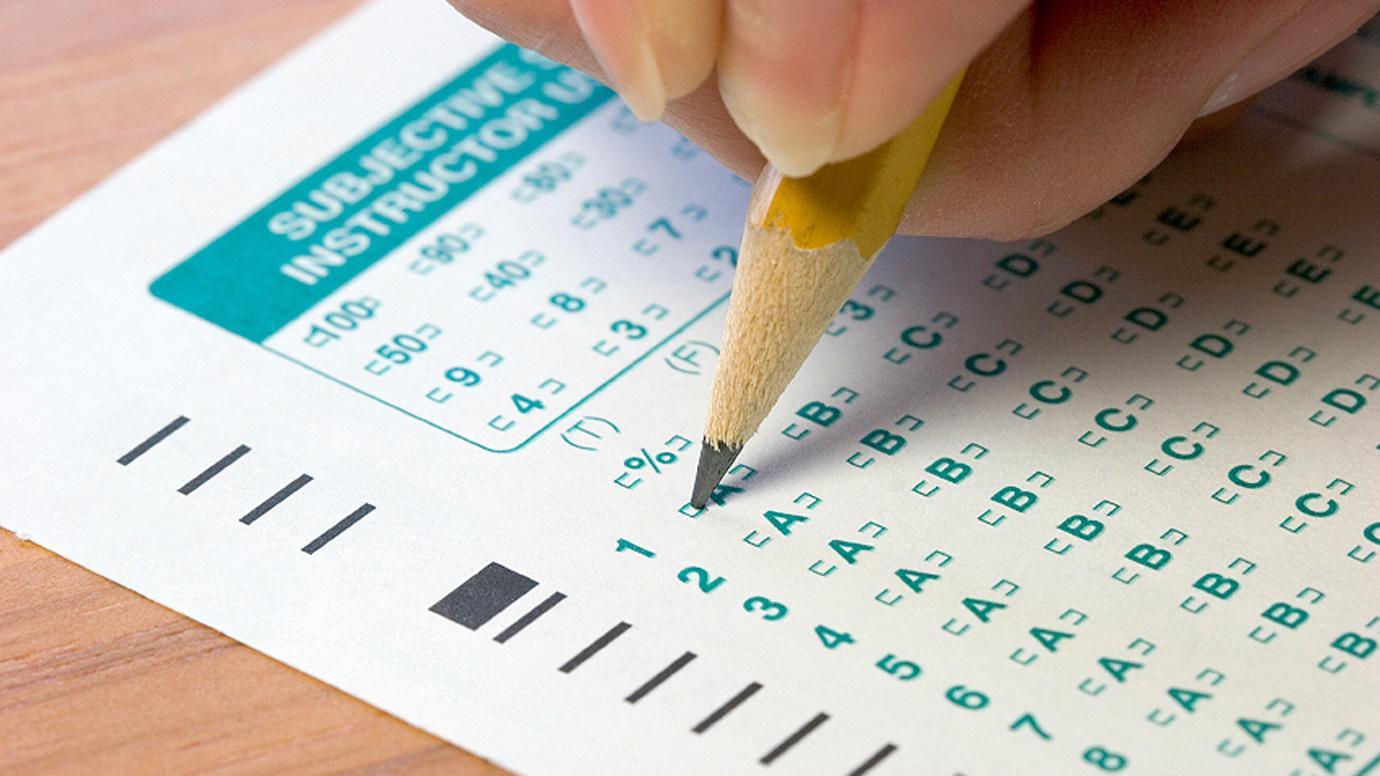
The SAT, which is scored out of 1600 with each of its two sections capped at 800, remains a central component in college admissions, especially as many colleges begin to re-adopt standardized testing requirements following pandemic-era suspensions.
“This is another wake-up call for New York City Public Schools to concentrate on improved instruction in core subjects,” said David Bloomfield, a professor of education at Brooklyn College and the CUNY Graduate Center, in remarks to The New York Post. “The trajectory of these scores should be deeply concerning.”
Even more troubling, noted The New York Post, is the widening racial achievement gap, particularly in mathematics. While Asian students in NYC averaged 582—down just four points from the previous year—and white students averaged 536, their Black and Hispanic peers lagged significantly behind. Hispanic students scored an average of 430, a five-point decline from 2023, while Black students averaged 426, down two points.
The gap between white and Black students now stands at 110 points, and the disparity between the NYC average and the rest of the state has ballooned to 118 points.
“Those are the factors that I think account for the disparity in SAT scores,” said Eric Nadelstern, a former deputy chancellor for instruction under Mayor Bloomberg. “The population of students in New York City compared to the rest of the state, and to the rest of the country, is poorer, has more kids of color, more special ed students, and more immigrants whose first language is not English.”
Nadelstern also highlighted the impact of COVID-19, noting that students who took the SAT last year began high school in the midst of pandemic-induced lockdowns, significantly disrupting their early high school instruction.
As The New York Post report detailed, the percentage of NYC students taking the SAT has also declined slightly, from 71.5% in 2023 to 70.9% in 2024. The only group to increase its participation rate was Asian students.
Reading and writing scores were less volatile but still revealed troubling trends. While Asian students improved in this area year-over-year, and Black students saw a slight bump from 446 to 449, other groups declined. White students dropped from 555 to 549, and Hispanic students dipped from 446 to 445.
Nationally, reading and writing averages dropped one point, while the rest of New York State increased by one point, widening the performance gulf between the city and surrounding districts.
These results are a reminder that we need to keep expanding access to academic support—especially for students who haven’t traditionally had it,” said Frances Kweller, founder of Kweller Prep, a tutoring service with locations in Manhattan and Queens. Speaking to The New York Post, she emphasized the need for increased in-school support systems, particularly in underserved communities.
That sentiment was echoed by Brooklyn Tech 11th-grader Avish Jain, a Kweller Prep student who is using test prep to increase his scholarship chances. “I wish more support was available in schools,” he told The New York Post.
Despite a pandemic-era shift toward “test-optional” admissions policies, many top-tier institutions are now reversing course, citing a strong correlation between SAT scores and college success, according to a recent trend observed by The New York Post.
“Colleges are moving back to ‘test required’ precisely because they have seen a direct correlation between SAT and ACT performance and college readiness and success,” said Linda Quarles, a Brooklyn Tech parent and vice president of the Citywide Council on High Schools.
Leo Niyazov, a fellow Brooklyn Tech student aiming for admission to West Point, told The New York Post that a solid SAT score remains crucial: “Even though many colleges are test-optional now, West Point still requires the SAT. A strong SAT score helps strengthen my whole application.”
Notably, the New York City Department of Education declined to comment when contacted by The New York Post—a silence that many see as emblematic of the broader leadership vacuum in addressing the city’s academic decline.
Meanwhile, the College Board, which administers the SAT, transitioned the exam to a fully digital format in spring 2024, a shift that may further complicate performance trends in future reporting.
The dismal SAT results represent more than just a statistical setback—they reflect the systemic challenges confronting the nation’s largest public school system. As The New York Post has documented, the crisis is compounded by persistent inequality, linguistic barriers, and lingering pandemic aftershocks.
Without targeted intervention, experts warn, these scores could foreshadow not only further educational decline but long-term damage to college access and economic opportunity for thousands of students across New York City.
For now, the numbers don’t lie—and they demand urgent attention. As Bloomfield put it succinctly to The New York Post: “If this isn’t a call to action, I don’t know what is.”



