



























|
Getting your Trinity Audio player ready...
|
By: Hal C Clarke
New York City lawmakers are advancing legislation aimed at expanding voting access for detainees held at Rikers Island, in an effort to address what officials describe as persistent barriers preventing eligible individuals from participating in elections, according to reporting by the New York Post.
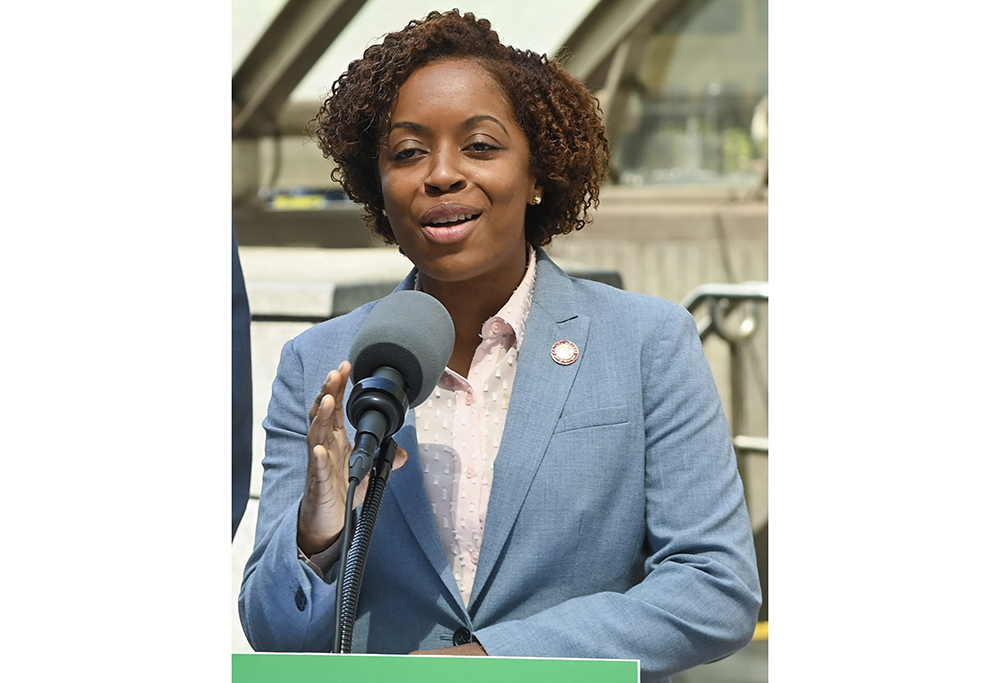
The proposal, introduced by Council Member Selvena Brooks-Powers, focuses on improving the absentee ballot process for incarcerated individuals—most of whom have not been convicted of a felony and therefore retain the legal right to vote. According to the New York Post, approximately 83% of those detained on Rikers Island are eligible voters, yet participation rates remain strikingly low, with fewer than 10% casting ballots in recent elections.
At the center of the legislation is a requirement that the city’s Department of Correction work more closely with the Board of Elections to help inmates correct errors on absentee ballots—a process known as “ballot curing.” Under current conditions, many detainees never receive notifications that their ballots contain mistakes because those notices are often sent to home addresses rather than to the jail facility itself. As a result, ballots that could otherwise be counted are frequently disqualified due to correctable technical issues, the New York Post reported.
The bill would establish clearer procedures and timelines for notifying incarcerated voters of such errors and assisting them in resolving issues before deadlines pass. It would also require the Department of Correction to publish annual data detailing how many ballots are requested, delivered, and ultimately counted—an effort aimed at increasing transparency and accountability in the process.
A companion measure, backed by Public Advocate Jumaane Williams, would further mandate regular public reporting on voter registration and ballot distribution within city jails. Supporters argue that these reforms are necessary to ensure that incarcerated individuals are not effectively disenfranchised due to administrative shortcomings.
Data cited by the New York Post underscores the scale of the problem. During the June 2024 primary election, 364 detainees requested absentee ballots, but only 155 were successfully delivered, and just 72 were ultimately counted. These figures have fueled concerns among advocates that the current system is failing to facilitate meaningful access to the ballot box for eligible voters behind bars.
However, the proposal has drawn pushback from correction officials. Representatives from the Department of Correction have argued that ballot curing falls under the jurisdiction of the Board of Elections, not the jail system, raising questions about how responsibilities should be divided between agencies.
Advocacy groups and some lawmakers are also pushing for broader reforms beyond absentee voting. Proposals under discussion include the establishment of in-person polling sites within Rikers Island facilities, which supporters say would more effectively ensure participation by meeting detainees where they are. Critics of the current system contend that relying exclusively on absentee ballots creates unnecessary obstacles that suppress voter turnout among incarcerated populations.



