













|
Getting your Trinity Audio player ready...
|
Bill Donohue Says Mayor’s Refusal to Participate Breaks With Decades of Tradition as Debate Intensifies Over New York’s Relationship With Its Jewish Community
By: Jeff Gorman
A growing political controversy surrounding New York City Mayor Zohran Mamdani’s decision not to participate in the upcoming Israel Day on Fifth parade intensified on Friday after Bill Donohue, president of the Catholic League, issued a sharply worded public statement accusing the mayor of slighting Jewish New Yorkers and abandoning a civic tradition observed by every mayor of the city for more than six decades.
According to a report on Friday at The Jewish News Syndicate (JNS), Donohue’s criticism represents the latest chapter in an increasingly heated debate regarding Mamdani’s relationship with New York’s Jewish community, his views on Israel, and the symbolic significance of the annual parade, one of the largest celebrations of Israel and Jewish identity outside the Jewish state.
The dispute has unfolded against a backdrop of heightened concerns about antisemitism, political polarization, and ongoing tensions related to the Israel-Hamas war. As JNS reported, the controversy was reignited after Mamdani confirmed that he would not participate in this year’s parade, citing positions he had articulated during his political campaign.
For many observers, the issue extends far beyond attendance at a single public event. Instead, it has become a broader debate about political symbolism, civic leadership, community relations, and the obligations of elected officials to represent constituencies whose political views may differ sharply from their own.
Central to Donohue’s criticism was the historical significance of the parade itself.
According to the JNS report, Donohue emphasized that New York City mayors have traditionally participated in the annual Israel Day parade regardless of their political affiliations or personal perspectives on Middle Eastern affairs.
“For 61 straight years, every mayor of New York City has marched in the annual Israel Day Parade,” Donohue stated.
The parade has long occupied a unique place within New York City’s civic calendar. It serves not only as a celebration of Israeli culture and American-Israeli friendship but also as a reflection of the city’s deep ties to one of the largest Jewish populations in the world.
The JNS report noted that generations of mayors have viewed attendance as an expression of solidarity with a significant segment of New York’s population rather than an endorsement of any specific Israeli government or policy platform.
For critics of Mamdani’s decision, breaking with that tradition carries symbolic implications that extend beyond the event itself.
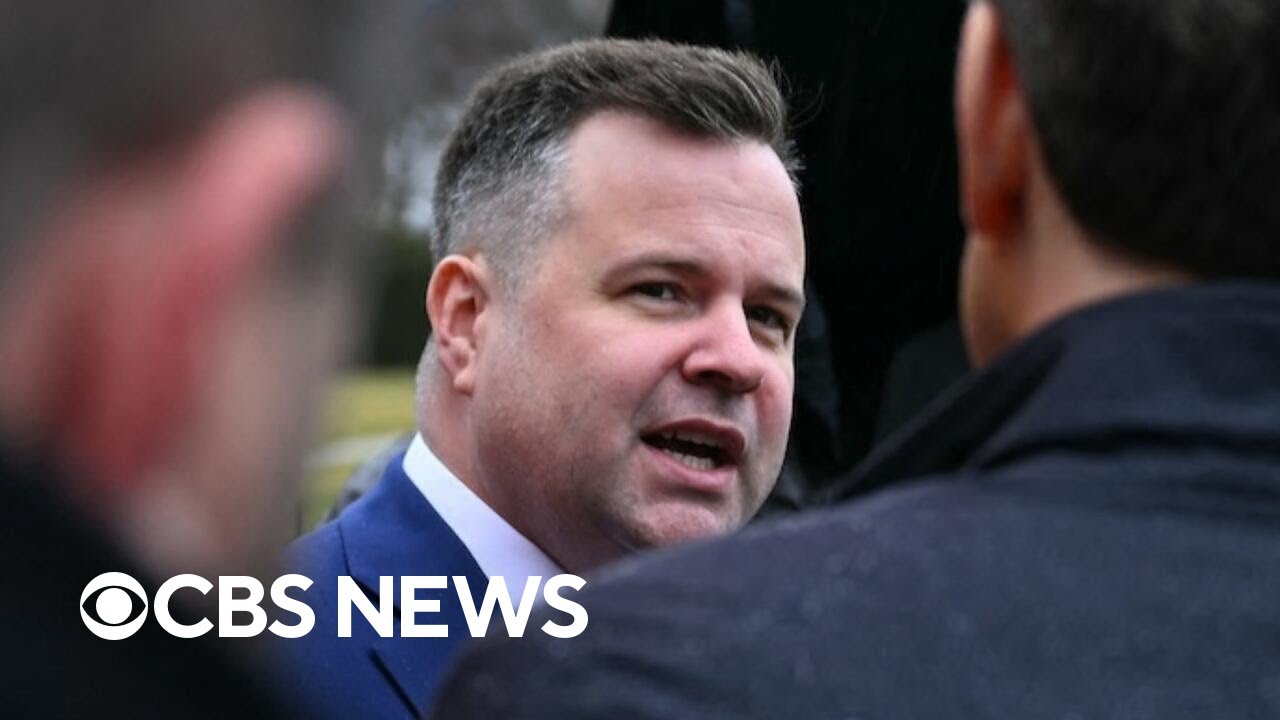
At a press conference held at New York Police Department headquarters, Mamdani sought to address concerns surrounding his decision.
According to the JNS report, the mayor stressed that his absence from the parade should not be interpreted as opposition to the event’s security needs or logistical requirements.
“My lack of attendance should not be mistaken for a refusal to provide security or the necessary permits for its safety,” Mamdani said.
The mayor emphasized that city government would continue fulfilling its responsibility to ensure that parade participants, spectators, and organizers receive appropriate protection.
Donohue, however, dismissed the statement as insufficient. “How magnanimous of him,” Donohue remarked.
The Catholic League president argued that providing security and permits was not a discretionary act but rather a legal obligation of municipal government. “Had he tried to deny a permit, he would have gotten a licking in court,” Donohue stated. “Ditto had he tried to prohibit a police presence.”
JNS reported that Donohue’s comments reflected a broader sentiment among critics who contend that ensuring public safety is a basic governmental responsibility rather than a substitute for symbolic participation.
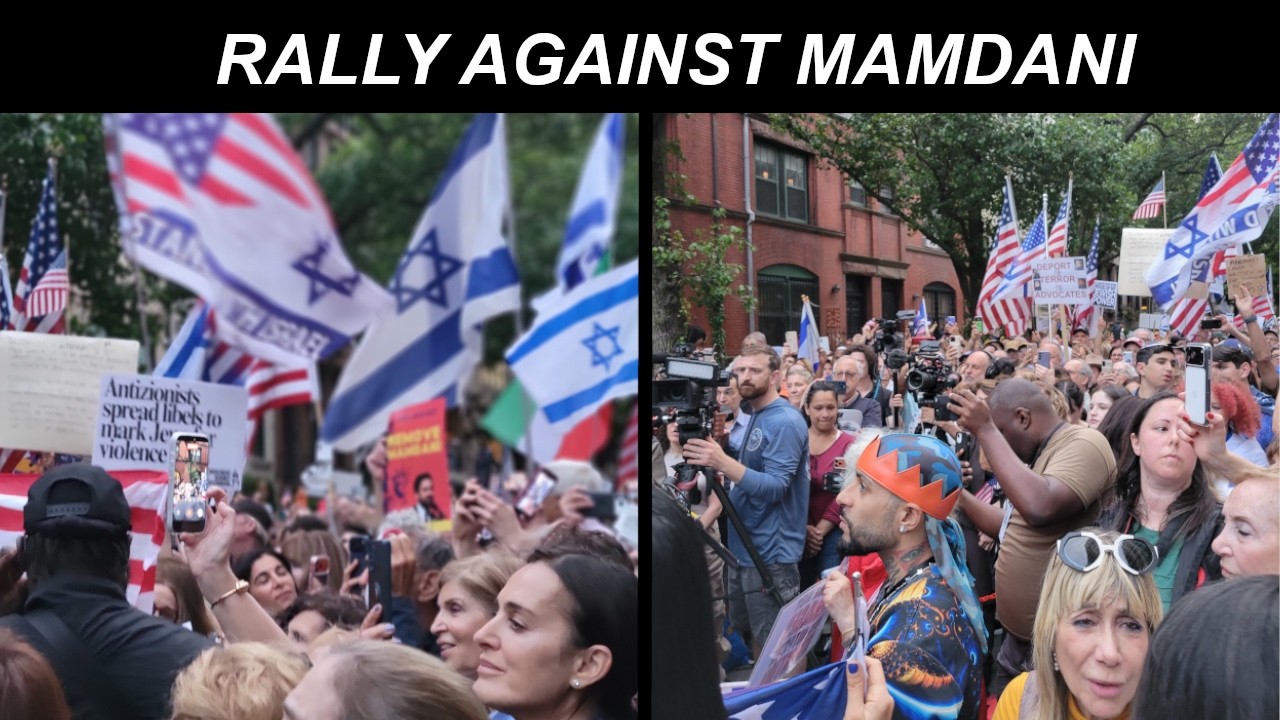
Donohue also referenced his own participation in a protest earlier in the week outside Gracie Mansion, the mayoral residence.
The demonstration, which drew critics of Mamdani’s positions on Israel and antisemitism, sought to highlight concerns among some Jewish and interfaith leaders regarding the mayor’s policies and public statements.
According to the JNS report, Donohue said he was proud to have addressed participants at the rally.
The event reflected growing efforts by various organizations and activists to pressure City Hall to take stronger positions regarding antisemitism and anti-Israel rhetoric.
Organizers argued that recent developments have left many Jewish residents concerned about their standing within the city’s political landscape.
One of Donohue’s most pointed criticisms concerned what he characterized as inconsistencies regarding security measures. According to the JNS report, he referenced previous debates involving buffer-zone legislation around houses of worship and educational institutions.
“As for safety concerns, it is ironic that this same man who fought a law providing a buffer zone around houses of worship—he yielded only when the vote was veto-proof—and vetoed a similar law for schools, made sure that on Tuesday the streets near his mansion had a huge buffer zone,” Donohue said.
He further noted that substantial police barriers were established around Gracie Mansion during the anti-Mamdani demonstration. “The police had barricades all over, keeping anti-Mamdani protesters away,” he stated.
Supporters of the mayor have argued that security arrangements are determined based on specific circumstances and threat assessments, while critics contend that the contrast raises legitimate questions regarding policy consistency.
JNS reported that disputes surrounding buffer-zone legislation have become increasingly prominent amid growing concerns about demonstrations targeting religious institutions throughout New York.
Perhaps the most controversial portion of Donohue’s statement involved his assessment of whether Mamdani would have been an appropriate participant in the parade.
“Quite frankly, the sight of Mamdani marching in a Jewish parade is on a par with the imperial wizard of the KKK marching in an African American parade,” Donohue stated. “The mind boggles.”
The comparison immediately drew attention because of its stark language and historical references.
JNS reported that the statement quickly circulated across social media and political circles, becoming one of the most discussed aspects of the controversy.
Donohue also pointed to this year’s parade theme as further justification for his position.
“Mamdani is a particularly lousy fit to march in this year’s Israel Day Parade,” he said. “Why? Because the theme is ‘Proud Americans, Proud Zionists.’”
Donohue argued that the theme itself underscores philosophical differences between parade organizers and the mayor’s publicly stated positions regarding Israel and Zionism.
“He’s made it abundantly clear that he is not a proud American, and his hatred of Zionists is undeniable,” Donohue claimed.
JNS reported that the controversy surrounding the parade cannot be separated from broader political dynamics that have transformed public discourse in New York and nationally.
Questions regarding Israel, Zionism, antisemitism, Palestinian rights, and Middle Eastern policy have increasingly become central issues in municipal politics.
The aftermath of the October 7 attacks and the subsequent war in Gaza has intensified those debates, often exposing deep divisions among voters, activists, elected officials, and community organizations.
For many Jewish residents, concerns about rising antisemitism have become a defining political issue.
Donohue also revisited another longstanding criticism involving Mamdani’s relationship with New York’s Irish Catholic community.
JNS reported that he noted that the mayor had historically avoided participation in the city’s St. Patrick’s Day Parade. “He did so reluctantly at the last hour this year,” Donohue stated.
He argued that previous absences had already generated frustration among many Irish Catholics. “That’s why many Irish Catholics like me didn’t want him to show up,” Donohue said.
The Catholic League president further criticized remarks Mamdani made during a March 17 breakfast event.
“He proved me right when he hosted a breakfast event on March 17 wherein he took the time not to honor St. Patrick but to condemn what he said was the ‘genocide’ in Palestine,” Donohue stated. “He just can’t get Jew-hatred out of his head.”
“Let’s face it,” he added. “There is no way Mamdani could march in a parade that celebrates Zionism without inflaming his radical Muslim fans.”
As the Israel Day on Fifth parade approaches, the dispute surrounding Mamdani’s absence is likely to remain a prominent topic of discussion.
JNS has reported extensively on the growing tensions between the mayor and various Jewish organizations, many of which argue that symbolic gestures carry significant importance during periods of heightened concern about antisemitism.
Whether the controversy fades after the parade or becomes another defining chapter in the evolving relationship between City Hall and New York’s Jewish community remains to be seen. What is already clear, however, is that the discussion has expanded far beyond attendance at a single public event, touching upon deeper questions of representation, civic symbolism, and political leadership in one of the world’s most diverse urban centers.



