





























|
Getting your Trinity Audio player ready...
|
Amid Surging Antisemitic Threats, NJ Gov. Sherrill Cuts Security Funds for BMG; Lakewood’s Largest Yeshiva
By: Fern Sidman
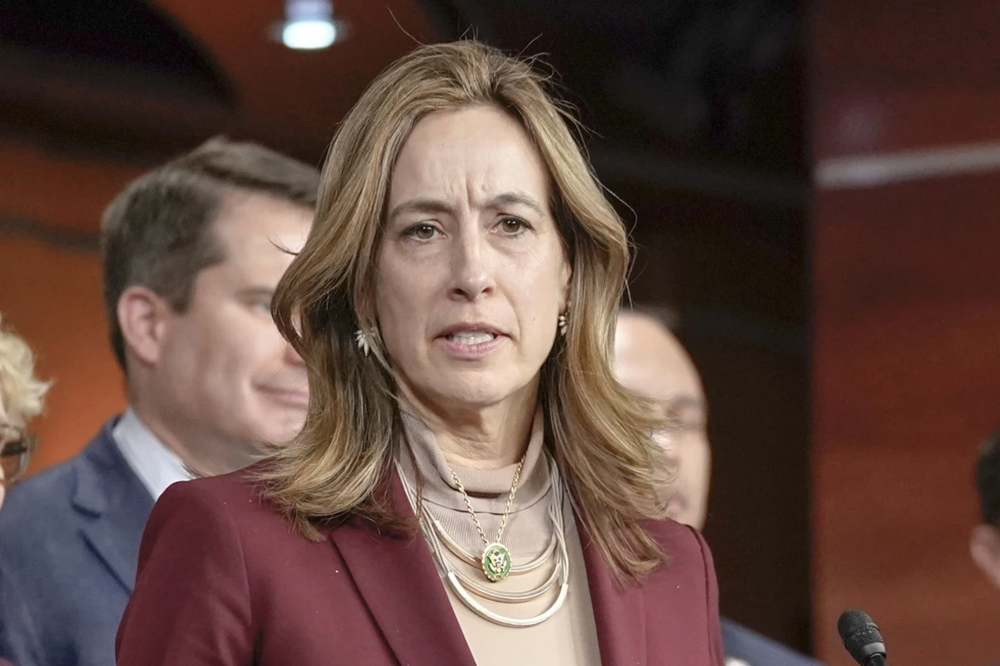
At a moment when the specter of antisemitism is no longer an abstract concern but an increasingly visible and dangerous reality, a controversial fiscal decision in New Jersey has provoked profound unease and sharp criticism. Governor Mikie Sherrill has proposed a sweeping state budget that, among other measures, eliminates dedicated security funding for one of the most prominent Jewish educational institutions in the United States. The decision, as reported on Monday by Lakewood Alerts, has ignited a fierce debate about priorities, political intent, and the responsibilities of government in safeguarding vulnerable communities.
At the center of the controversy lies the removal of a $2 million allocation previously earmarked for security and anti-terrorism measures at Beth Medrash Govoha, a sprawling yeshiva in Lakewood that enrolls more than 10,000 students. For years, this funding had been a consistent component of state budgets under former Governor Phil Murphy, reflecting a bipartisan recognition of the unique security challenges faced by large Jewish institutions in an era marked by escalating threats.
The proposed cut does not exist in isolation. Sherrill’s budget also reduces the state’s Nonprofit Security Grant Program by $3 million, lowering its total allocation from $10 million to $7 million. This program has served as a critical lifeline for religious institutions and community organizations, enabling them to invest in surveillance systems, security personnel, and physical infrastructure designed to deter and respond to potential attacks. The simultaneous reduction of both targeted and broad-based security funding has amplified concerns that the state is retreating from a posture of vigilance at precisely the wrong time.
The timing of these decisions is particularly striking. In recent years, New Jersey had moved decisively in the opposite direction, increasing security funding in response to a documented rise in antisemitic incidents. Synagogues, schools, and community centers have faced an array of threats, ranging from vandalism and harassment to credible plots of violence. This trend mirrors developments across the United States and beyond, where Jewish communities have found themselves increasingly targeted in both physical and digital spaces.
Nationally, the resurgence of antisemitism has been both alarming and multifaceted. It has manifested in acts of violence, such as the attack on the Tree of Life synagogue in Pittsburgh, as well as in a steady drumbeat of harassment and intimidation. Online platforms have amplified extremist rhetoric, while geopolitical tensions have often served as catalysts for localized hostility. In this context, security funding is not merely a budgetary line item; it is a tangible expression of the state’s commitment to protecting its citizens.
Against this backdrop, the decision to eliminate funding for Beth Medrash Govoha raises serious questions. As detailed in the Lakewood Alerts reports, the yeshiva is not only the largest institution of its kind in the United States but also a central pillar of the Lakewood community. Its size and visibility inherently make it a potential target, necessitating robust security measures. The withdrawal of dedicated funding, critics argue, undermines these efforts and sends a troubling signal about the state’s priorities.
Governor Sherrill has defended her budget as a necessary response to fiscal constraints, emphasizing the need to prioritize core expenditures. While such considerations are undeniably important, they must be weighed against the potential consequences of reduced security in a climate of heightened risk. The characterization of these cuts as merely “discretionary” fails to account for the lived realities of communities that face credible threats on a regular basis.
Moreover, the preservation of other funding streams—such as transportation and education programs—while security allocations are reduced invites scrutiny. It suggests a selective approach to budgetary austerity, one that raises the possibility of political calculation. Critics have argued that the cuts may reflect a broader reluctance to engage with issues affecting specific communities, particularly those that do not align neatly with prevailing political narratives.
The implications of this decision extend beyond New Jersey. Across the United States, Jewish institutions have increasingly relied on public funding to supplement their own security efforts. Programs like the Nonprofit Security Grant Program have been instrumental in enabling organizations to adapt to evolving threats. Reductions in such funding risk creating a patchwork of vulnerability, where some institutions are better equipped than others to protect themselves.
Internationally, the resurgence of antisemitism has taken on equally concerning dimensions. In Europe, incidents involving vandalism, assault, and the desecration of Jewish sites have become more frequent. In the Middle East, longstanding tensions continue to reverberate globally, influencing attitudes and behaviors in distant communities. The cumulative effect is a sense of uncertainty and apprehension that transcends national boundaries.
Within this broader context, the actions of state governments carry significant symbolic weight. They signal not only policy priorities but also societal values. A decision to reduce security funding for Jewish institutions, even if motivated by fiscal considerations, risks being interpreted as a diminution of the importance placed on their safety. Such perceptions can have lasting consequences, eroding trust and exacerbating feelings of vulnerability.
The report by Lakewood Alerts has highlighted the depth of concern within the Lakewood community and beyond. Community leaders have expressed apprehension about the potential impact of the cuts, emphasizing the importance of maintaining robust security measures. Their concerns are not theoretical; they are grounded in a lived experience shaped by an awareness of both historical and contemporary threats.
It is also worth considering the broader societal implications of such decisions. Antisemitism, while targeting a specific community, often serves as an indicator of wider social tensions. Its resurgence can signal a breakdown in the norms of tolerance and coexistence that underpin a healthy society. Addressing it, therefore, is not merely a matter of protecting one group but of preserving the integrity of the social fabric as a whole.
In this light, the reduction of security funding appears not only imprudent but also shortsighted. It fails to account for the evolving nature of threats and the necessity of proactive measures. It also risks undermining the progress that has been made in recent years, as governments have sought to respond to the growing prevalence of antisemitic incidents.
The debate over Governor Sherrill’s budget is likely to continue as lawmakers, community leaders, and the public grapple with its implications. It will involve complex considerations of fiscal responsibility, political accountability, and moral obligation. Yet at its core, the issue is fundamentally straightforward: whether the state will maintain its commitment to protecting those who are most at risk.
In the final analysis, the decision to cut security funding for Beth Medrash Govoha and to reduce the broader grant program represents a critical juncture. It forces a reckoning with the priorities that define public policy and the values that guide governance. As the warnings of rising antisemitism grow louder, the need for vigilance becomes ever more urgent.
The question that remains is whether New Jersey will heed those warnings—or whether it will allow fiscal considerations, however pressing, to overshadow the imperative of ensuring safety and security for all its citizens.



