































|
Getting your Trinity Audio player ready...
|
From Compassion to Clinical Excellence: How Montefiore Medical Center Became a Pillar of Modern Medicine in NYC
By: Ariella Haviv
In a metropolis defined by its relentless pace, extraordinary diversity, and unyielding demands on public infrastructure, few institutions have demonstrated the enduring relevance, adaptability, and humanitarian purpose of Montefiore Medical Center. Widely recognized today as one of the most comprehensive and respected healthcare systems in the United States, Montefiore stands not merely as a provider of medical services, but as a defining force in the evolution of patient-centered care, medical education, and community health.
For many residents of New York City—particularly in the Bronx—Montefiore is synonymous with reliability, expertise, and compassionate treatment. Its hospitals and clinics form a vast and indispensable network, delivering care to millions of individuals each year. Yet behind this immense scale lies a remarkable origin story, one that reflects a profound moral commitment to dignity, inclusion, and the sanctity of human life.
Montefiore’s founding in 1884 was not the result of conventional institutional expansion, but rather a deliberate and principled response to a glaring inequity in the healthcare system of the time. Chronic illness patients—those requiring prolonged care and attention—were often denied admission to hospitals that prioritized shorter-term, more immediately profitable cases. These individuals, already burdened by illness, were effectively excluded from meaningful medical treatment.
In response, a group of Jewish philanthropists established a hospital with a singular mission: to care for those whom others would not. The institution was named in honor of Moses Montefiore, a towering figure of the nineteenth century whose philanthropic endeavors extended across continents and communities. His legacy of generosity, advocacy, and humanitarianism became the guiding ethos of the institution that bore his name.
From its earliest days, Montefiore distinguished itself through an unwavering commitment to patient dignity. It was not merely a place of treatment, but a sanctuary for individuals who had been marginalized by the prevailing healthcare system. This foundational principle continues to resonate throughout the organization’s operations to this day.
Over the course of more than a century, Montefiore has evolved from a modest institution into a sprawling healthcare system of extraordinary scope and sophistication. Today, it encompasses multiple hospitals, an extensive network of outpatient centers, and a workforce numbering in the tens of thousands. Its facilities are strategically distributed to serve one of the most densely populated and medically complex regions in the nation.
The scale of Montefiore’s operations is matched only by the breadth of its services. From routine preventive care to highly specialized medical interventions, the institution offers a comprehensive spectrum of healthcare solutions. Its ability to manage millions of patient interactions annually is a testament not only to its operational capacity but also to the trust it has cultivated within the communities it serves.
At the heart of Montefiore’s success lies its unwavering dedication to excellence in patient care. The institution has consistently demonstrated an ability to combine cutting-edge medical technology with a deeply humanistic approach to treatment. Patients are not regarded as mere cases or statistics, but as individuals with unique needs, histories, and aspirations.
This philosophy is embodied in the work of Montefiore’s physicians, nurses, and support staff, whose expertise and professionalism are widely regarded as among the finest in the field. These healthcare professionals are not only highly trained but also deeply committed to the well-being of their patients. Their ability to navigate complex medical challenges with precision and empathy has earned Montefiore a reputation for clinical excellence that extends far beyond New York City.
The nursing staff, in particular, plays a critical role in shaping the patient experience. Their dedication to attentive, compassionate care ensures that patients receive not only the highest standard of medical treatment but also the emotional support necessary for recovery and healing. This holistic approach to care is a defining characteristic of the Montefiore model.
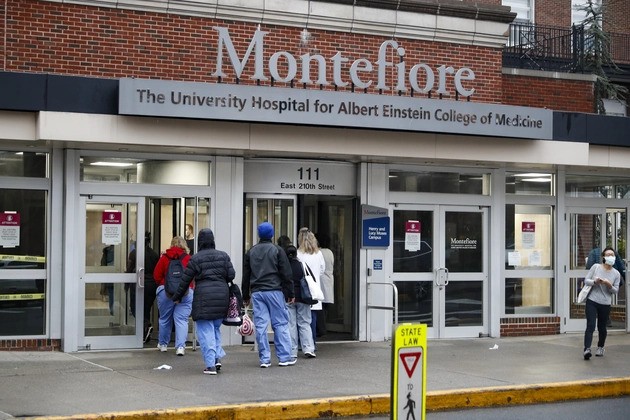
Montefiore’s influence extends well beyond its immediate patient population through its role as a leading center of medical education. As the primary teaching hospital for the Albert Einstein College of Medicine, it serves as a training ground for the next generation of physicians and healthcare professionals.
This affiliation ensures that Montefiore remains at the forefront of medical innovation, integrating the latest research findings into clinical practice. Students and residents are exposed to a rigorous and dynamic educational environment, where they are challenged to develop both technical proficiency and ethical discernment.
The impact of this educational mission is profound. Many of the physicians who train at Montefiore go on to practice across the United States and beyond, carrying with them the principles and practices that define the institution. In this way, Montefiore’s influence extends far beyond its geographic boundaries, shaping the broader landscape of healthcare delivery.
One of the most distinctive aspects of Montefiore’s approach is its pioneering work in the field of population health. Rather than focusing solely on the treatment of individual patients, the institution has embraced a broader vision of healthcare that encompasses entire communities.
This approach involves proactive management of health outcomes, addressing not only medical conditions but also the social determinants of health that contribute to them. By integrating clinical care with community-based initiatives, Montefiore seeks to improve overall health outcomes while reducing disparities.
The success of this model has attracted national attention, with healthcare systems across the country studying and, in many cases, emulating Montefiore’s strategies. Its ability to coordinate care across multiple settings and disciplines represents a significant advancement in the delivery of healthcare services.
Montefiore’s enduring connection to the Bronx is perhaps its most defining feature. The borough, characterized by its diversity and resilience, presents a unique set of healthcare challenges. High population density, economic disparities, and a wide range of medical needs require an institution capable of delivering both scale and sensitivity.
Montefiore has risen to this challenge with remarkable effectiveness. Its programs are designed not only to treat illness but also to promote wellness, prevent disease, and empower individuals to take control of their health. Community outreach initiatives, educational programs, and partnerships with local organizations are integral to this effort.
This commitment to community extends beyond the provision of medical services. Montefiore actively engages with the social and cultural fabric of the Bronx, recognizing that health is influenced by a wide range of factors, including housing, education, and access to resources.
The journey from a small hospital serving marginalized patients to a global leader in healthcare is a testament to Montefiore’s ability to adapt, innovate, and remain true to its founding principles. Its history is marked by a continuous process of transformation, driven by a commitment to excellence and a deep sense of responsibility to the communities it serves.
Today, Montefiore stands as a beacon of what modern healthcare can achieve when guided by both scientific rigor and moral purpose. Its achievements are not merely measured in numbers—though those are impressive—but in the countless lives it has touched and improved.
As healthcare continues to evolve in response to new challenges and opportunities, Montefiore is uniquely positioned to lead the way. Its integrated approach, emphasis on education, and commitment to community health provide a robust foundation for future innovation.
The institution’s ability to anticipate and respond to emerging trends ensures that it will remain a vital force in the healthcare landscape. Whether through advances in medical technology, improvements in patient care, or new models of community engagement, Montefiore is poised to continue shaping the future of medicine.
The story of Montefiore Medical Center is one of extraordinary vision, unwavering dedication, and transformative impact. From its origins as a refuge for the underserved to its current status as a cornerstone of modern healthcare, it embodies the highest ideals of the medical profession.
In a city as dynamic and demanding as New York, institutions like Montefiore are not merely important—they are indispensable. Through its commitment to excellence, compassion, and innovation, Montefiore continues to fulfill its founding mission while setting new standards for what healthcare can and should be.



