


























|
Getting your Trinity Audio player ready...
|
Complaint Alleges Williams College Regularly Leaves Orthodox Jewish Student Locked Out of Dorm in Freezing Conditions
By: Arthur Popowitz
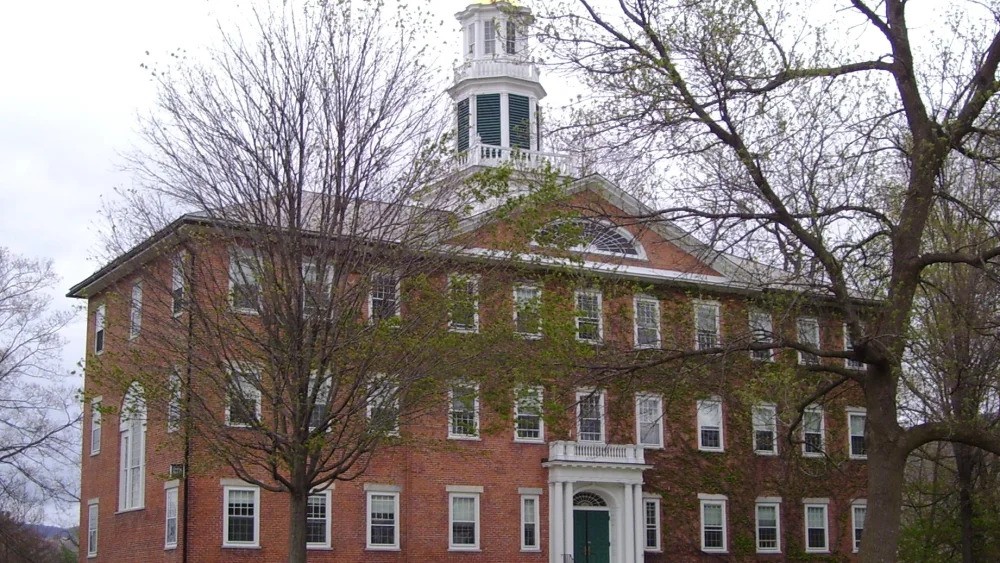
A prestigious American institution long associated with academic excellence and intellectual rigor now finds itself at the center of a serious legal and ethical controversy. Williams College, one of the nation’s oldest and most respected private colleges, has been accused of failing to provide fundamental religious accommodations to an Orthodox Jewish student—allegations that have prompted formal legal action and raised broader concerns about religious freedom in higher education.
According to a report on Thursday at The Jewish News Syndicate (JNS), the complaint was filed with the United States Department of Housing and Urban Development by the Louis D. Brandeis Center for Human Rights Under Law. The filing outlines a series of grievances centered on what it describes as the college’s refusal to accommodate the student’s religious practices, effectively placing him in a position where observance of his faith conflicts with his ability to participate fully in campus life.
At the heart of the dispute lies a seemingly straightforward request: the student sought permission to use a physical key to access his dormitory during Shabbat, the weekly day of rest observed in Orthodox Judaism. Because the use of electronic devices—including key cards—is prohibited during this time, the student argued that a traditional key was necessary to maintain both his religious commitments and his basic access to housing.
The complaint, as cited in the JNS report, alleges that the college denied this request, citing unspecified security concerns. The refusal has had tangible and, at times, severe consequences. Without a functional means of entry, the student has reportedly been forced to wait outside his residence hall—sometimes for extended periods—until another individual arrives and can grant him access.
In practical terms, this has meant standing outdoors in harsh weather conditions, occasionally for more than an hour. Such circumstances, the complaint argues, are not merely inconvenient but fundamentally incompatible with the expectation that students should have reliable access to their living spaces.
In response to the student’s request, the college suggested an alternative arrangement: during Shabbat, he could approach a campus office, knock on the door, and request an escort to his residence hall. While presented as a solution, this proposal has been sharply criticized by the Brandeis Center as impractical and inadequate.
As described in the complaint and reported by JNS, the suggested workaround introduces a series of uncertainties. It relies on the availability of staff, requires additional time and effort, and does not guarantee timely access. For a student already navigating the constraints of religious observance, such an arrangement adds layers of complexity rather than resolving the underlying issue.
Rachel Balaban, senior litigation counsel at the Brandeis Center, emphasized the broader implications of this situation. She noted that the student’s repeated attempts to secure a reasonable accommodation had gone unanswered, leaving him in a position where adherence to his faith came at the cost of basic comfort and safety.
The issue was escalated to the highest levels of the institution, culminating in a meeting between the student and Maud Mandel, who also holds academic expertise in Jewish studies. According to the complaint, Mandel declined the request for a physical key, reportedly stating that its use would trigger a security alarm.
This explanation has raised questions about the flexibility of institutional policies and the extent to which accommodations can be made within existing systems. Critics argue that the refusal reflects a rigid adherence to protocol at the expense of individual rights, particularly when those rights are grounded in religious practice.
The college has not publicly responded in detail to the allegations, and as of the latest reporting by JNS, its position remains largely defined by the explanations provided within the complaint.
Beyond issues of access, the complaint also addresses the student’s dietary needs, which are governed by the requirements of kosher observance. According to the filing, the college failed to provide meals that met these standards, instead offering vegan alternatives that were described as nutritionally insufficient and, at times, inedible.
The distinction between kosher and vegan diets, while sometimes superficially similar, is significant. Kosher dietary laws involve specific preparation methods, ingredient sourcing, and supervision, none of which are inherently addressed by a vegan menu. The complaint further alleges that the vegan meals provided to the student were inferior in quality and variety compared to those offered to other students.
Compounding these concerns are reports that pre-packaged kosher meals available on campus caused the student to become ill on multiple occasions. These meals, prepared in a facility that does not adhere to Orthodox standards, were reportedly unsuitable for his needs, leaving him with limited options for safe and acceptable food.
As a result of these shortcomings, the student has been compelled to seek meals off campus, relying on local establishments and community resources. According to the JNS report, he has turned to nearby restaurants and a Chabad center to obtain food that aligns with his religious requirements.
While these alternatives provide a temporary solution, they also impose additional burdens, including travel, cost, and time. For a residential student, the expectation is that basic needs—including meals—will be met within the campus environment. The necessity of seeking external options underscores the extent to which the student’s needs have not been accommodated internally.
The complaint further asserts that the student disclosed his dietary and religious requirements to the college prior to accepting its offer of admission. In response, he was allegedly advised that if the available accommodations were insufficient, he should reconsider attending the institution.
This aspect of the case raises important questions about transparency and responsibility. If the college was aware of the student’s needs in advance, the argument follows, it had an opportunity to address them proactively. The suggestion that the student should simply choose another institution, rather than seeking accommodation, has been characterized by critics as dismissive and exclusionary.
The Brandeis Center’s complaint is grounded in the provisions of Title VIII of the Civil Rights Act of 1964, commonly known as the Fair Housing Act. This legislation prohibits discrimination in housing-related services on the basis of religion, among other protected characteristics.
According to the complaint, the college’s actions constitute a violation of this law by providing services that are unequal and inferior to those available to other students. The denial of a functional key and adequate food options, it argues, effectively limits the student’s ability to access and benefit from his housing.
Balaban emphasized that the issue extends beyond a single individual, suggesting that other students in similar circumstances may face comparable challenges. The case, therefore, has the potential to set a precedent with broader implications for religious accommodation in higher education.
The controversy at Williams College is emblematic of a larger conversation about the intersection of religious freedom and institutional policy. As universities strive to create inclusive environments, they are increasingly confronted with the need to balance standardized systems with individualized accommodations.
In this context, the case raises fundamental questions about what it means to provide equal access. Is equality achieved through uniformity, or does it require flexibility to account for diverse needs? The answer, as this situation illustrates, is far from straightforward.
JNS has highlighted that similar issues have arisen at other institutions, suggesting that the challenges faced by this student are not isolated. The outcome of the complaint may therefore influence how colleges and universities approach religious accommodations in the future.
At its core, the dispute is about more than keys and meals; it is about the ability of individuals to live in accordance with their beliefs without facing undue hardship. For the student involved, the stakes are both practical and deeply personal, encompassing his daily life as well as his identity.
The Brandeis Center’s intervention reflects a broader commitment to ensuring that such rights are upheld. By bringing the matter to the attention of federal authorities, the organization seeks not only to address the immediate concerns but also to establish clearer standards for the treatment of religious minorities.
As the complaint proceeds through the appropriate channels, the outcome remains uncertain. What is clear, however, is that the case has already sparked significant discussion about the responsibilities of educational institutions and the rights of students.
For Williams College, the situation represents a critical test of its policies and values. For the broader academic community, it serves as a reminder that the pursuit of inclusivity requires more than rhetoric; it demands concrete actions that respect and accommodate the diverse realities of those it seeks to serve.



