






















|
Getting your Trinity Audio player ready...
|
By: Ariella Haviv
In a rapidly escalating dispute that underscores the growing intersection between technology, commerce, and politics, Sticker Mule has issued a forceful demand to Google, insisting that the tech giant immediately correct what it describes as a deeply misleading and damaging labeling error. At the center of the controversy is a misclassification within Google’s Ads Transparency Center that falsely attributed the company’s business advertisements to a political campaign.
Smullen’s FEC complaint against me backfired on him as everyone knows I am self funding and Sticker Mule has no other owners. All money belonging to both operations is mine. His complaint is meritless and an intentional attack on Sticker Mule.
The ads it refers to were… pic.twitter.com/0LfS1ARHAq
— Anthony Constantino (@constantino) March 31, 2026
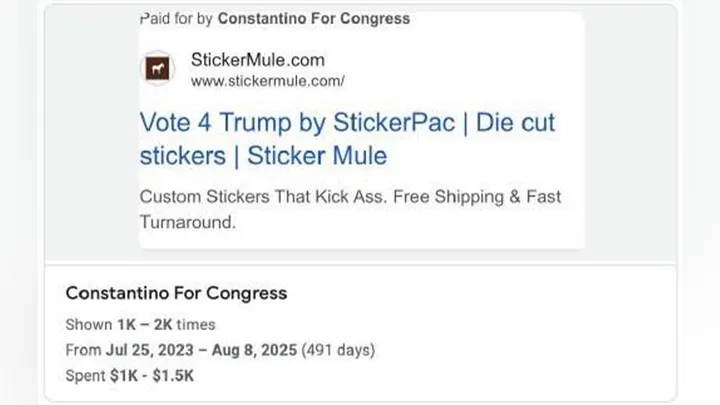
According to aa report on Thursday at Fox Business, the issue arose when Sticker Mule’s commercial advertisements were tagged as “Paid for by Constantino for Congress,” despite having no connection to campaign financing. The error has drawn sharp criticism from the company’s leadership, who argue that the mislabeling not only misrepresents the nature of their advertising but also threatens the integrity of their brand.
The company’s response has been swift and unequivocal. In a legal letter obtained by Fox Business, Sticker Mule characterized the labeling as “erroneous” and “misleading,” calling for its immediate and permanent removal. The letter emphasized that the company has never utilized campaign funds to finance its advertisements, nor have its promotional materials been used to advance the candidacy of its chief executive.
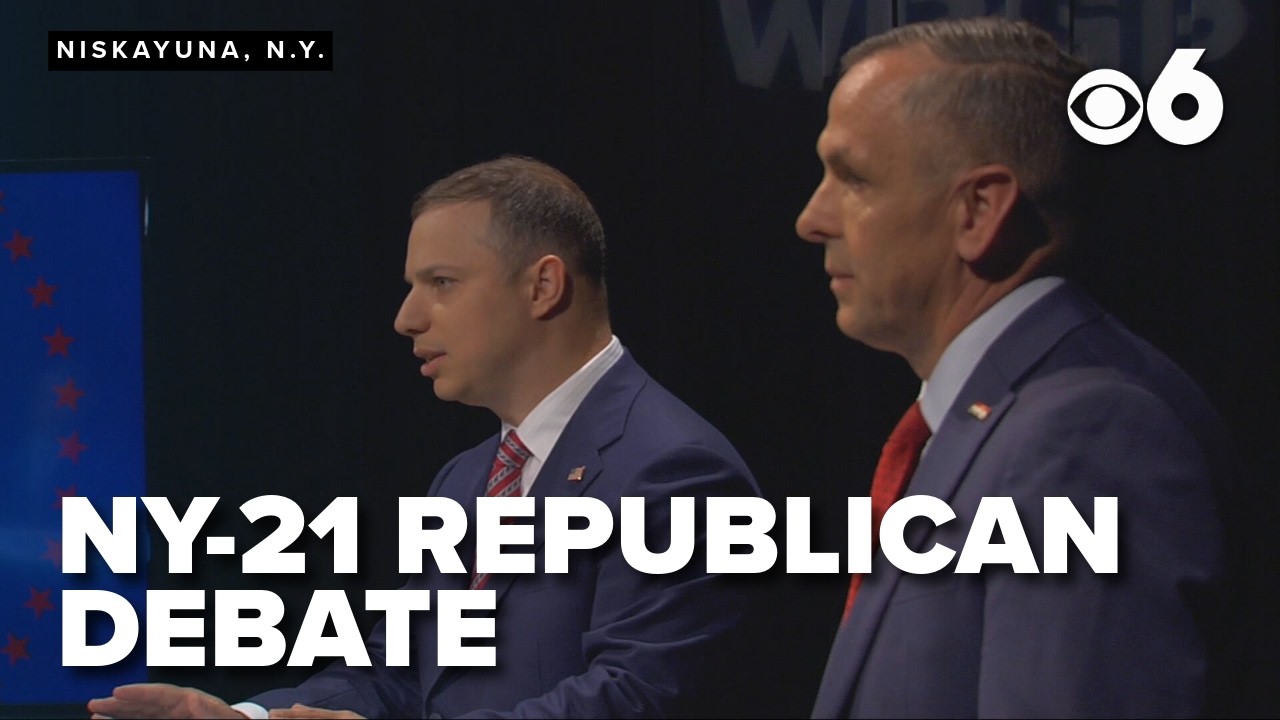
That chief executive, Anthony Constantino, is currently running for Congress in New York’s 21st District. His candidacy, which has garnered significant attention—including a high-profile endorsement from President Trump—has positioned him as a prominent figure in both business and political circles. Yet the controversy surrounding Google’s labeling error has introduced an unexpected challenge, one that Constantino and his company are confronting with notable resolve.
From the outset, Sticker Mule has maintained that the issue stems not from any impropriety on its part but from a technical malfunction within Google’s systems. As reported by Fox Business, the company believes the error may have been triggered during the ad verification process, possibly when an individual was simultaneously logged into both business and campaign advertising accounts. Such a scenario, while plausible in a complex digital ecosystem, highlights the potential for significant consequences when automated systems fail.
Indeed, the implications of this mislabeling extend far beyond a simple clerical error. In an era where transparency in political advertising is subject to intense scrutiny, the erroneous attribution of business ads to a political campaign can create confusion among consumers, distort public perception, and, perhaps most critically, damage corporate reputation. For Sticker Mule—a company that has built its identity on innovation, reliability, and customer trust—such an outcome is unacceptable.
To its credit, Google has reportedly acknowledged the issue and implemented a temporary fix after it was initially flagged. However, Sticker Mule’s leadership has made it clear that a temporary solution is insufficient. The company is now demanding a comprehensive response, including a detailed explanation of the root cause, written confirmation that the issue has been permanently resolved, and assurances that similar errors will not occur in the future.

As the Fox Business report noted, the stakes are considerable. Should Google fail to address these demands satisfactorily, Sticker Mule has indicated that it may escalate the matter to federal regulators, including the Federal Trade Commission and the Federal Election Commission. Such a move would elevate the dispute from a technical disagreement to a matter of regulatory oversight, with potential implications for how digital advertising platforms manage and verify political content.
The timing of the controversy is particularly significant, coinciding with a complaint filed with the Federal Election Commission in March 2026. The complaint alleges that Constantino improperly used campaign funds to promote his business—a claim that he has categorically denied. According to the Fox Business report, Constantino has dismissed the allegations as “meritless,” attributing them to the same Google labeling error that has affected his company’s advertisements.
Constantino’s response has been both direct and emphatic. In a public statement, he explained that the ads cited in the complaint date back to 2023, prior to the existence of his congressional campaign. This timeline, he argues, conclusively refutes any suggestion of improper financial overlap between his business and political activities. Moreover, he has accused his primary opponent, Robert Smullen, of perpetuating false claims, noting that legal action has already been taken to address what he describes as misleading statements.
The contrast between the two candidates’ narratives has intensified the political dimension of the dispute. Smullen, for his part, has rejected Constantino’s explanation, asserting that the evidence points to a violation of federal law. Yet as the Fox Business report observed, the credibility of these claims is inextricably linked to the resolution of the underlying technical issue. If Google’s labeling error is indeed responsible for the confusion, it would fundamentally undermine the basis of the complaint.
Against this backdrop, Constantino’s campaign has continued to gain momentum. His endorsement by President Trump has provided a significant boost, reinforcing his standing among supporters and signaling his alignment with a broader political movement. In remarks reported by Fox Business, Constantino expressed both gratitude and confidence, noting the president’s track record of successful endorsements and expressing optimism about his prospects in the general election.
Yet beyond the immediate political implications, the controversy raises broader questions about the responsibilities of technology companies in an increasingly interconnected world. Platforms such as Google wield enormous influence over the flow of information, and their systems play a critical role in shaping public understanding. When those systems malfunction, the consequences can be far-reaching, affecting not only individual users but entire organizations.
In this context, Sticker Mule’s response can be seen as both principled and necessary. By demanding accountability and transparency, the company is not merely defending its own interests but also advocating for higher standards within the digital advertising ecosystem. Its insistence on a thorough and permanent resolution reflects a commitment to integrity that resonates with its broader corporate ethos.
Moreover, the episode highlights the challenges faced by entrepreneurs who straddle the worlds of business and politics. Constantino’s dual role as a corporate leader and political candidate places him at the intersection of two highly scrutinized domains, where even minor discrepancies can attract disproportionate attention. Navigating this terrain requires not only strategic acumen but also a steadfast commitment to transparency and ethical conduct.
As the situation continues to evolve, all eyes will remain on Google’s response. The company’s handling of the issue will likely influence not only its relationship with Sticker Mule but also broader perceptions of its reliability as a platform for both commercial and political advertising. For its part, Sticker Mule has made its position unmistakably clear: errors of this magnitude cannot be tolerated, and accountability is non-negotiable.
In the final analysis, this dispute is about more than a mislabeled advertisement. It is about the integrity of systems, the responsibility of corporations, and the resilience of a company determined to protect its reputation. As Fox Business reported, the outcome of this confrontation may well set a precedent for how similar issues are addressed in the future.
For Anthony Constantino and Sticker Mule, the message is unequivocal: accuracy matters, transparency matters, and when those principles are compromised, decisive action is not only justified—it is essential.