




























|
Getting your Trinity Audio player ready...
|
By: Larry Domnitch
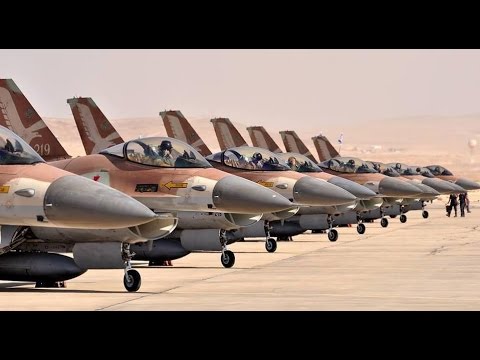
It was a magnificent operation by the Israeli Air Force defying all odds. On June 7, 1981, eight F16 jets neutralized the Iraqi Osirak nuclear reactor. The reactor was located twelve miles Southeast of Baghdad.
Iraqi dictator Saddam Hussein was an avowed enemy of Israel who had harbored a deep hatred towards the Jewish State. He had often spoken of his desire to wage war against Israel and had aided Palestinian terrorist groups. Hussein was on a path towards nuclear capability; his regime would become a nuclear armed power. Hussein was on record after the outbreak of the Iran-Iraq war following Iran’s failed attempt to destroy Iraq’s nuclear reactor on September 30, 1980, stating that its reactor was for the “Zionist entity” and not Iran. He had given speeches where he hinted the aim of the Iraqi nuclear program. In one address on August 19, 1980, Hussein had stated, “In connection with the Zionist entity’s campaign against the use of nuclear technology: The rich and glorious past of Iraq will only be appreciated when it spills its wrath upon the Zionist entity and when such technology is harnessed for the cause of the Arab nations. Iraq will use it for the freeing of Palestine and no other purpose.”
In February 1980, the reactor was activated. The International Atomic Energy Agency and others claimed it was not being used for military purposes since the IAEA had oversight of the reactor, being that Iraq was a signatory to the nuclear non-proliferation treaty in 1972. But Israeli intelligence believed the reactor was on the verge of becoming weaponized.
Exhaustive diplomatic pressure by Israel failed. Covert actions by the Israelis delayed but did not stop the program. Time was limited. The Israelis knew the reactor would be active by the summer or fall of 1981 making an attack far more destructive potentially causing fall-out over nearby Baghdad.
The decision was made. On June 7, ten jets took off from the Etzion base in Sinai, with two of the jets, F15s, acting as support. The choice was to bomb on Sunday since it was a day off from work for foreign workers, in order to minimize casualties. The operation, code named Opera, had begun.
Iraq’s ally, Jordan’s King Hussein of Jordan, while on vacation on his royal yacht in the Gulf of Aqaba, saw the low flying Israeli jets to avoid radar detection, racing just above in the sky. Suspecting their intended target was the Osirak reactor, he attempted to contact his government with instructions to warn Iraq but due to a communication failure, the message was not received. The jets flew at a low altitude to avoid radar detection. As they approached their target, air defense gunners near the reactor were in a nearby cafeteria having supper. The radars were shut down.
Just before sunset, at 6:30 p.m. on June 7, which was the beginning of the Shavuot holiday, the planes dropped their loads. Within eighty seconds, the mission objective was accomplished.
All planes returned safely. The entire operation lasted slightly over three hours. One of the pilots later stated, regarding the mission’s success, that it was “Too good to be true”
World reaction was furious. Condemnations poured in from the United Nations, individual nations, and by most of the international media. The U.N. Security Council passed Resolution 487 of condemnation on June 19, 1981, calling the action “A clear violation of the Charter of the United Nations and the norms of international conduct.” Secretary General of the United Nations, Kurt Waldheim, called it “a clear contravention of international law.” According to the New York Times, it was an “Act of inexcusable and short-sighted aggression.” The Los Angeles Times went so far to call it “state sponsored terrorism.”
The United States administration, along with participating in UN condemnations, delayed a shipment of F-16 fighter jets for a few months as a punitive measure.
Israel saw a significant threat and preferred the wrath of world leaders to the consequences of a continued Iraqi nuclear program. In Jerusalem there was great relief.
One can only imagine the dangers Israel and the world could have faced had Israel not acted.
Over time, it became apparent from various intelligence sources and defectors that there was indeed a nuclear weapons program and eventually there was some expressed appreciation for the attack. In 1991 then U.S, Secretary of Defense, Dick Cheney stated that the Israeli attack succeeded in “Making our job much easier in (operation) Desert Storm” following the Iraqi incursion into Kuwait in 1990. Pennsylvania Senator, Arlen Specter, speaking in support of repealing the U.N. security resolution condemning Israel for the strike stated, “There is a strong possibility that Saddam Hussein would have had nuclear weapons in hand.” Specter stated that the attack,” May have saved the lives of millions of people, including thousands of servicemen and women deployed in the Persian Gulf region after Iraq’s invasion of Kuwait in 1990.”
Just before the Gulf War broke out in January 1991, Hussein, who had used chemical weapons in the past against the Kurds, and Iranian troops during the Iran/Iraq war, threatened to incinerate half of Israel. As Israelis were sealing their safe rooms and receiving gas masks, there wasn’t the peril of Hussein possessing nuclear weapons.
The doctrine established by then Israeli Prime Minister, Menachem Begin was that any regime in the region that is hostile towards Israel would be prevented from acquiring weapons of mass destruction or nuclear weapons.
Israeli Prime Minister Menachem Begin, who had courageously ordered this daring mission, later sent a statement to U.S. Ambassador to Israel, Samuel Lewis, in which he affirmed, “Our action was an act of salvation, an act of national self-defense in the most lofty sense of the concept. We saved the lives of hundreds of thousands of civilians, including tens of thousands of children.”
The danger was averted.




1 Comment
Neal
May 29, 2026A great example here. Israel acted and the world issued condemnations and not much else. A few months later the bombing was forgotten and nations went on with their business while so many countries were happy that Iraq’s nuclear reactor was destroyed. A great lesson for Israel. Do what you have to do and in the long run EVERYTHING will be all right.