






















|
Getting your Trinity Audio player ready...
|
By: Fern Sidman – Jewish Voice News
In a decisive shift that underscores both the urgency of the moment and the evolving contours of the post-war landscape, Israel has begun advancing preliminary steps connected to President Trump’s emerging Gaza blueprint, according to report on Wednesday at World Israel News. The movement comes amid intensifying American pressure and a grim decline in the number of surviving hostages held by Hamas within the Gaza Strip. Taken together, these developments signal that Jerusalem is preparing for what defense officials describe as the “next phase” of the U.S.-backed plan — even as Hamas remains intransigent and refuses to disarm.
The Israeli recalibration represents the most concrete indication to date that the government is preparing for a transitional governance structure in parts of Gaza, one that aligns with Washington’s insistence on re-establishing order in the coastal enclave while thwarting Hamas’s return to power. As the World Israel News report emphasized, the complexity of this undertaking is immense: Israeli strategists must simultaneously maintain military pressure on Hamas’s remaining battalions, secure the release of the remaining hostages — many of whom are presumed dead — and begin implementing the architecture of a new civil-administrative reality in Gaza.
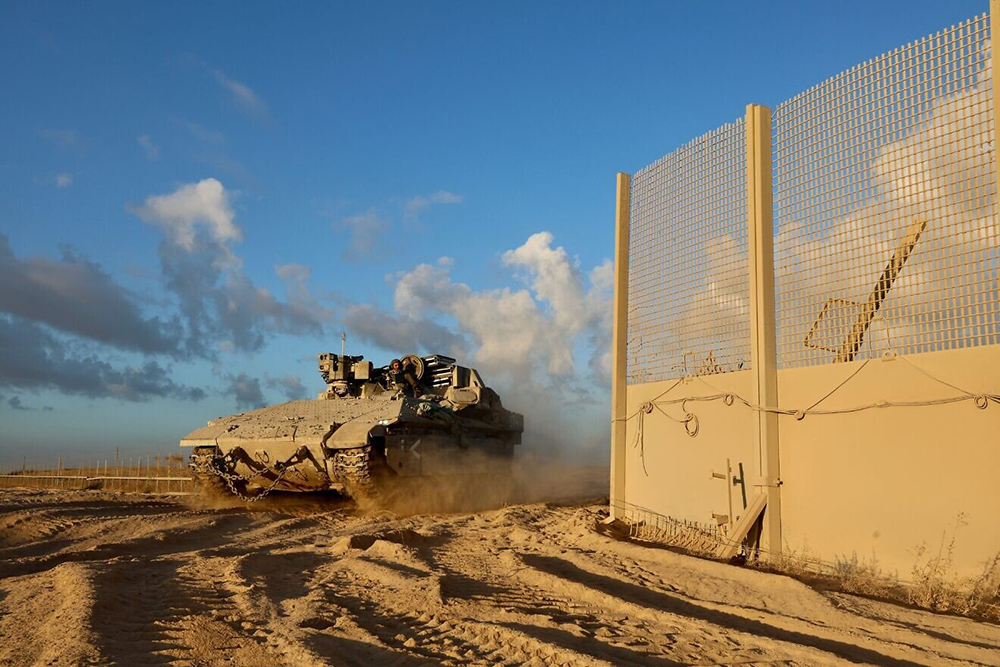
Defense sources told World Israel News that the Israel Defense Forces (IDF) are preparing to deploy heavy engineering equipment into Rafah in the coming days — potentially as early as next week. This machinery will be used to clear large sections of rubble, the detritus of months of intense urban warfare and subterranean operations targeting Hamas’s formidable tunnel network.
The IDF’s initial goal is straightforward but strategically vital: to create open, secure space for the construction of a new humanitarian zone overseen by Israel rather than administered — overtly or covertly — by Hamas.
Officials described the move as central to ensuring that residents who have been trapped under Hamas’s coercive control can be relocated to an area free of the group’s influence. More importantly, the zone marks the first tangible, implementable component of Trump’s Gaza concept — a plan that envisions layered governance, robust foreign involvement, and strict Israeli security oversight during the early stages.
According to the information provided in the World Israel News report, groups working alongside Israeli forces have already been informed of the impending clearance operations. The deliberate coordination is intended to prevent population displacement from becoming chaotic and to ensure that the emerging zone remains insulated from infiltration attempts by surviving Hamas cells.
Under the U.S. framework, the humanitarian zone is not merely a temporary encampment but a prototype for what American officials are calling “New Gaza” — a section of the Strip that will, for now, remain under Israeli control but is ultimately expected to be managed by a multinational security contingent.
Several governments have expressed tentative willingness to contribute troops to the mission, World Israel News reported. Yet the enthusiasm stops short of the most dangerous districts: no foreign military has volunteered to deploy into areas where Hamas still possesses operational capability, entrenched tunnel networks, or the political infrastructure to mount resistance.
This reality places the burden squarely on Israel to first create conditions of stability, security, and territorial clarity before foreign allies will assume more active roles. The humanitarian zone, therefore, serves as both a testing ground and a diplomatic bridge — demonstrating that Israel is committed to shaping a viable future for Gaza while also ensuring that the enclave’s reconstruction does not inadvertently empower Hamas or other Iranian-backed factions.
According to the report at World Israel News, the Trump team has pressed Israel to embrace a forward-looking plan that ensures Gaza does not return to the conditions that allowed Hamas to maintain a de facto governing structure for nearly two decades. Trump’s blueprint is described by advisers as “non-negotiable in principle,” though its implementation requires incremental Israeli action, particularly in establishing zones that can be internationally staffed and monitored.
Jerusalem’s move to clear rubble in Rafah is therefore seen not as a concession but as a strategic alignment: Israel is shaping realities on the ground in ways that secure its interests while demonstrating responsiveness to American expectations.
In recent days, IDF units operating in Rafah have been engaged in the meticulous and perilous work of terrain preparation. As the World Israel News report detailed, troops have focused on removing unexploded ordnance — remnants of airstrikes, Hamas booby-traps, and improvised explosive devices — as well as sealing tunnel shafts with concrete.
Sealing the tunnels is essential not only to eliminate immediate threats but also to prevent Hamas from reconstituting its forces or using subterranean passages to infiltrate humanitarian areas or attack Israeli troops.
Military officials stress that these efforts are part of a broader objective: the systematic dismantling of Hamas’s military and administrative infrastructure. Even if political negotiations advance, Hamas’s refusal to lay down its weapons means Israel is preparing for a protracted campaign to neutralize the group’s ability to wage war.
One notable carve-out in the IDF’s preparations concerns the Janina neighborhood of Rafah. Intelligence assessments indicate that dozens of Hamas operatives — including senior commanders — remain entrenched in underground positions within Janina. This enclave, World Israel News reported, is effectively sealed off and presents a distinct operational challenge, separate from the humanitarian zone.
Israeli officials have made clear that Janina will be dealt with through an independent operational track. The decision not to integrate it into the current humanitarian preparations reflects both the dangers posed by concentrated Hamas resistance and Israel’s determination to eliminate all remaining pockets of the organization’s military apparatus.
The creation of “New Gaza” has far-reaching implications. If the humanitarian zone succeeds — functioning without Hamas interference, facilitating humanitarian aid, and enabling limited local governance — it could serve as a model for additional zones across the Strip. Over time, these areas may be linked, forming a broader non-Hamas-administered territory that could eventually transition to a stable, internationally supported civil authority.
However, challenges loom. While several nations have expressed support, none have committed troops to areas with active Hamas presence. Hamas remains ideologically and strategically opposed to any arrangement that diminishes its influence. Many civilians fear retaliation from Hamas collaborators or are wary of aligning with externally backed governance. Iran and its terrorist proxies will almost certainly view “New Gaza” as an existential threat to their influence in the Palestinian arena.
Still, as the World Israel News report noted, the humanitarian zone reflects Israel’s determination to chart a path forward even amid uncertainty.
Israel’s accelerated preparations in Rafah mark a profound turning point in the ongoing Gaza conflict. The convergence of intensifying U.S. pressure, diminishing hopes for hostage rescue, and evolving military realities has pushed Jerusalem to adopt measures that serve both strategic necessity and diplomatic imperatives.
These steps signal that Israel is no longer waiting for Hamas to capitulate or for full regional consensus to emerge. Instead, it is actively shaping the next phase of Gaza’s future — a phase defined by humanitarian administration under Israeli oversight, opportunities for foreign involvement, and a firm commitment to preventing the resurgence of Hamas rule.
Whether “New Gaza” becomes a sustainable model for the enclave’s post-war reality will depend on many variables. But for now, Israel is moving forward — clearing rubble, sealing tunnels, and carving out the first outline of what could become a radically reimagined Gaza, free of Hamas domination and aligned with a broader American-driven vision for stability in the region.



