
















|
Getting your Trinity Audio player ready...
|
By: Jason Ostedder
In one of the most dramatic legal and political episodes to grip Israel’s defense establishment in recent memory, Maj. Gen. (res.) Yifat Tomer-Yerushalmi, the recently resigned Israel Defense Forces Military Advocate General, was arrested on Sunday night after disappearing for several hours amid a deepening criminal probe into an unauthorized leak that has rocked the military’s top ranks.
As The Jewish News Syndicate (JNS) reported on Monday, Tomer-Yerushalmi—until recently one of the IDF’s highest-ranking legal officers—was found late Sunday at a beach in Herzliya, hours after her family had reported her missing and after police discovered her abandoned car less than a mile south of the shoreline. The vehicle contained notes believed to be farewell messages, one of which read, “Children, I love you, be strong,” according to several Hebrew-language outlets cited in the JNS report. The note prompted fears that she had intended to take her own life.
Her disappearance triggered a full-scale search involving police, IDF personnel, and local emergency units, culminating in her location just before nightfall. The Israel Police later confirmed in an official statement that “the missing person has been found safe and sound.” Yet relief quickly gave way to renewed controversy: after a brief medical evaluation, Tomer-Yerushalmi was formally arrested on charges of leaking classified material and other serious criminal offenses, JNS reported.
Also detained was Col. Matan Solomosh, the former Chief Military Prosecutor, marking the first time in years that two senior figures from the IDF’s legal command have been arrested simultaneously.
The Jerusalem District Court on Monday rejected an appeal filed by Tomer-Yerushalmi, upholding a lower court’s decision to extend her detention by an additional three days, as was reported by Israel National News. The ruling marks the latest development in a rapidly evolving investigation that has gripped the nation’s defense and legal communities.
According to the information provided in the Israel National News report that appeared on Monday, Tomer-Yerushalmi’s defense team had petitioned for her release to house arrest, citing her cooperation with investigators and challenging what they described as procedural and factual errors in the court’s prior ruling. However, the District Court dismissed the appeal, concluding that there remained “a reasonable suspicion of obstruction of justice.”
In its decision, the court called attention to the severity of the allegations—and the possibility that evidence could be tampered with—justified continued detention. The ruling effectively affirmed the Magistrate’s Court’s earlier finding that further custodial questioning was essential at this stage of the probe.
As Israel National News reported, Tomer-Yerushalmi’s attorneys sharply criticized the decision, arguing that the lower court had invoked “dangerousness” as a basis for her detention—a criterion the prosecution itself had not claimed applied to their client.
“This appeal is filed due to a clear error in the decision of the lower court,” the defense team wrote, “which ordered her detention on the grounds of ‘dangerousness,’ even though the respondent [the State] did not claim that she posed any danger.”
Legal analysts cited by Israel National News noted that while “dangerousness” is often invoked in cases involving violent or national-security offenses, its application in a corruption-related investigation against a retired senior legal officer is highly unusual. The court, however, maintained that the focus was on potential interference with the investigation, rather than physical danger.
Both Tomer-Yerushalmi and Solomosh are expected to appear again before the Tel Aviv Magistrate’s Court later this week, where investigators will decide whether to seek an extension of their detention. The Israel Police have emphasized that the investigation remains at a sensitive stage and that further arrests or disclosures may follow.
The Israel National News report noted that the court’s continued focus on obstruction suggests that digital evidence—text messages, phone records, or internal emails—could play a pivotal role in determining culpability. Legal analysts have said that if investigators can prove that Tomer-Yerushalmi attempted to conceal or destroy electronic data, the resulting charges could carry severe penalties under Israel’s penal code.
For now, her defense maintains that she has fully cooperated with authorities and that her disappearance was the result of emotional distress rather than criminal intent.
The story of Yifat Tomer-Yerushalmi has evolved from a procedural investigation into a broader meditation on trust, accountability, and the burden of leadership within the IDF.
What remains unclear is how far the scandal will ripple through Israel’s military and political structures. As Israel National News concluded in its latest analysis, “This case has become more than an investigation into a single act of misconduct. It is a mirror reflecting the tension between law and loyalty, secrecy and transparency, that continues to define the Israeli military ethos.”
Speaking before Sunday’s weekly Cabinet meeting—hours before Tomer-Yerushalmi’s disappearance—Netanyahu said the leaked material “caused immense damage to the image of the State of Israel and the IDF, to our soldiers.” He added that the assault on Israel’s international legitimacy following the video’s release had been “more focused with such intensity” than any he could recall. The prime minister demanded an independent, impartial inquiry, a call that now carries fresh urgency given the deepening scandal.
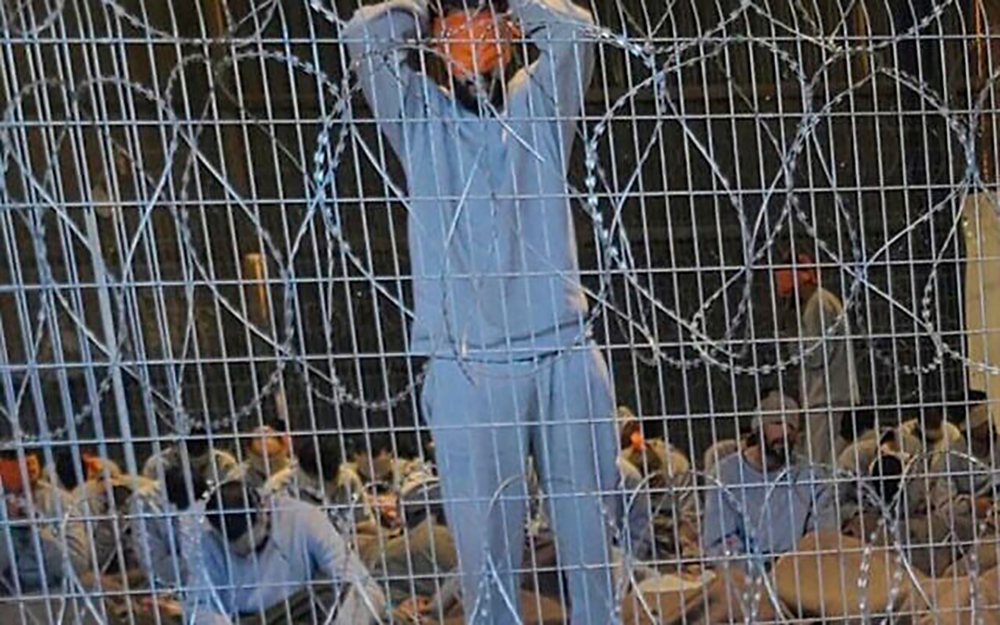
The New York Times reported that five soldiers were indicted in February on charges of abuse and causing severe injury during an assault in July 2024, including breaking the ribs of the detainee, puncturing his left lung and tearing his rectum.
The detainee, a Palestinian man from Gaza, was being held at the time at a prison on the Sde Teiman military base in southern Israel. Neither the detainee nor the five suspects have been publicly identified by name.
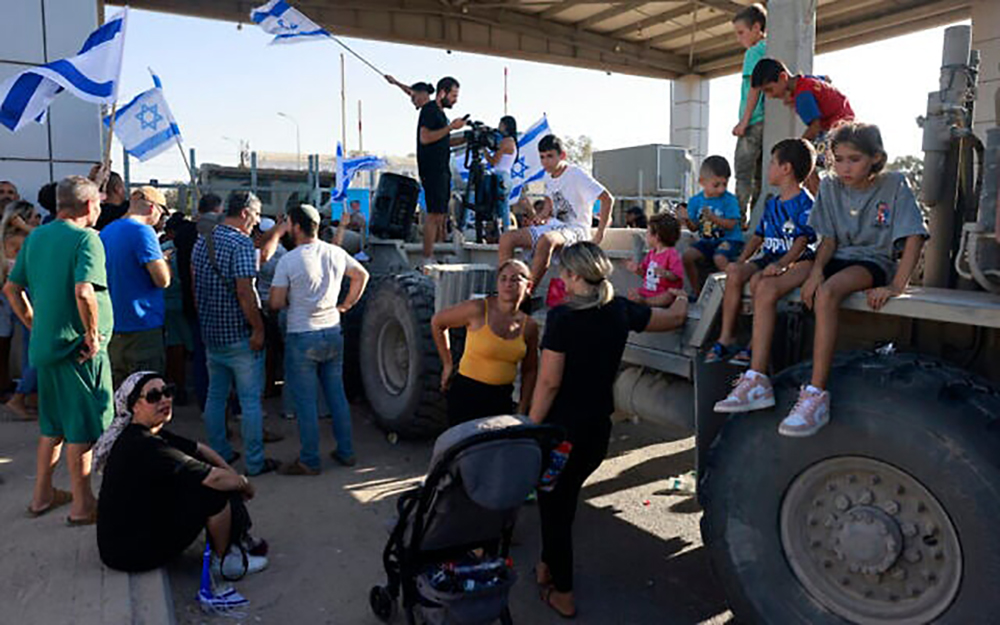
As the JNS report noted, the Sde Teiman case had already divided Israeli society before Tomer-Yerushalmi’s confession. The arrest of nine IDF reservists implicated in the video prompted fury among right-wing lawmakers, who accused the military’s legal branch of betraying soldiers fighting in defense of the nation. Protests erupted outside military courts, and several coalition members publicly called for the dismantling of the Military Advocate General’s office altogether.
Against that backdrop, Tomer-Yerushalmi’s revelation that she herself authorized the footage’s release was received as a stunning act of self-incrimination—one that, in the words of one defense analyst quoted in the JNS report, “obliterated what little trust remained between the IDF’s command structure and its civilian oversight apparatus.”
Her arrest on Sunday appears to mark a decisive turn in the government’s attempt to restore accountability.
The legal fallout has extended well beyond the military. As The Jewish News Syndicate report detailed, Justice Minister Yariv Levin on Saturday night instructed outgoing Attorney General Gali Baharav-Miara to recuse herself from involvement in the case, alleging that she might have obstructed earlier stages of the investigation.
Levin accused Baharav-Miara of providing false statements to the High Court of Justice in September, when she claimed that “all investigative avenues had been exhausted” and that the leaker could not be identified. According to Levin, this declaration “may have been knowingly inaccurate,” given the subsequent discovery of Tomer-Yerushalmi’s involvement.
JNS reported that Levin’s request for Baharav-Miara’s withdrawal followed internal ministry briefings suggesting that the attorney general’s office had delayed key authorizations and “shielded senior legal officials from scrutiny.”
Baharav-Miara, however, rejected the Justice Minister’s order, issuing a statement through her office that described Levin’s demand as lacking “any factual or legal basis.” Her refusal has further inflamed an already tense standoff between Israel’s judicial establishment and the Netanyahu government, which for months has been embroiled in a broader constitutional struggle over judicial reform and executive authority.
The confrontation between the Justice Ministry and the IDF’s legal hierarchy shines a spotlight on what the JNS report called “a widening crisis of confidence across Israel’s legal institutions.” For years, the Military Advocate General’s Office has been caught between two competing imperatives: enforcing military discipline in accordance with Israeli and international law while protecting soldiers from what many perceive as politically motivated investigations.
That delicate balance appears to have collapsed under the weight of this scandal. Senior defense officials told JNS that Tomer-Yerushalmi’s actions—however well-intentioned—represented a catastrophic lapse in judgment that compromised the IDF’s credibility before both domestic and foreign audiences.
“Once the footage was leaked, the narrative was no longer under Israel’s control,” a former intelligence officer said. “Instead of countering propaganda, it gave our enemies ammunition.”
The timing could not have been worse. The leak occurred amid ongoing international scrutiny of Israel’s operations in Gaza, where rights organizations have accused the IDF of excessive force—a charge the government vehemently denies. As the JNS report observed, the episode handed Israel’s critics precisely the imagery they sought, undermining diplomatic efforts to defend its actions.
In a deeply moving and unflinchingly candid interview, Ditza Or, the mother of hostage survivor Avinatan Or revealed how Hamas’s treatment of hostages worsened following false media reports inside Israel, particularly after the now-infamous fabricated video of an alleged rape case at Sde Teiman was publicized.
“When that fake video was broadcast,” she told Israel National News, “many of the hostages were severely beaten.”
Her statement aligns with recent IDF findings that media leaks and misinformation have often directly endangered captives, as Hamas interprets Israeli domestic debates and scandals as provocations, taking vengeance on hostages in response.
According to the information provided in the Israel National News report, intelligence sources have verified that Hamas monitored Israeli media throughout the war, using televised reports and social media to justify reprisals against Israeli prisoners.
Ditza Or did not spare criticism for Israel’s own institutions. Following the resignation of Tomer-Yerushalmi, she called for a direct reckoning with the hostages and their families.
“She needs to go from one hostage to another and apologize for all the abuse he suffered because of her,” Or said. “The damage on all fronts was very serious.”
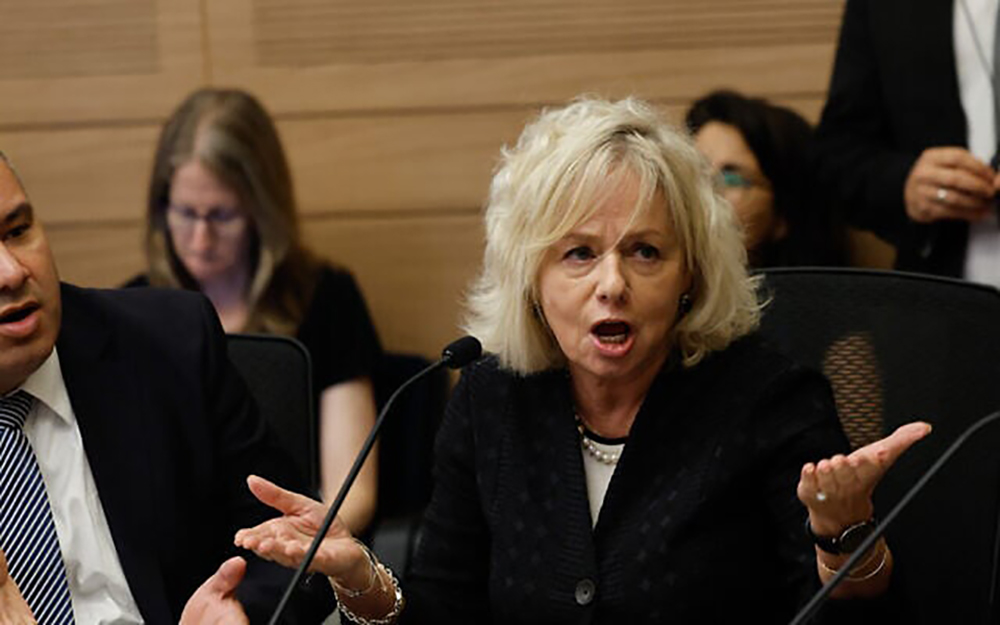
Her comments, reported by Israel National News, reflect growing frustration among families who feel that internal mismanagement and political grandstanding have worsened the plight of both released and remaining captives.
Several hostage family advocacy groups echoed Or’s remarks, calling for an independent commission to review how leaks and false reports have impacted the treatment of hostages in Gaza.
Now free, Avinatan Or faces a long and difficult process of physical and emotional rehabilitation. Yet, according to his mother, his clarity of purpose remains intact.
“It was clear to him that it was the state’s duty to ensure that October 7th would not happen again,” Ditza said in her conversation with Israel National News.
For Ditza Or, the past two years have been an unrelenting test of faith and endurance. Speaking to Israel National News, she said her son’s return was both miraculous and haunting — “the moment I’d prayed for, and the one I feared.”
She continues to advocate for the remaining hostages still held in Gaza, urging Israelis not to allow the country to grow numb. “My son is home,” she said, “but others are not. Until they all return, none of us can truly rest.”
As the Israel National News report noted, her words are more than a mother’s lament — they are a moral indictment and a national call to conscience.
Beyond the political theater, Tomer-Yerushalmi’s disappearance and apparent distress reveal the deeply personal toll of the scandal. Her handwritten note to her children, described by several outlets and cited in the JNS report, evoked the anguish of a woman once celebrated as a trailblazer—the first female to serve as the IDF’s top legal officer—now engulfed in a public crisis of her own making.
Friends and colleagues who spoke anonymously to JNS described her as “brilliant, principled, and under unbearable pressure.” They noted that she had faced months of internal criticism from military hardliners who accused her of excessive legalism and from human-rights advocates who accused her of moral cowardice.
Her eventual resignation, followed by her disappearance, has cast a somber pall over the IDF’s upper echelons. “This is not just a legal crisis; it’s a human one,” a retired brigadier general told JNS. “It shows what happens when institutional responsibility and personal conscience collide in the harshest possible way.”
The saga has also rekindled debate over civil-military relations in Israel and the proper scope of legal oversight in wartime. Analysts quoted by JNS warned that the scandal could have long-term consequences for the IDF’s internal accountability mechanisms, already under political siege.
Meanwhile, the status of Attorney General Baharav-Miara remains uncertain. Though the Israeli Cabinet voted unanimously in August to dismiss her—citing what they described as “persistent failures of judgment”—the High Court of Justice immediately froze that decision pending legal review. Her ongoing standoff with the Justice Minister now adds another layer of complexity to a government already beset by institutional infighting.
As one editorial in JNS observed, “What began as a disciplinary breach within the IDF has now metastasized into a confrontation touching every branch of Israeli governance—executive, judicial, and military alike.”
As the investigation continues, Israel finds itself confronting not only the scandal’s immediate fallout but also deeper questions about transparency, accountability, and the fragility of its civic trust. For the IDF—a military long held as a national pillar of unity and integrity—the revelations have dealt a painful blow.
The story of Yifat Tomer-Yerushalmi is, in the end, one of paradox: a legal guardian who sought to defend the army’s honor through disclosure, only to imperil it through indiscretion; a public servant brought low by the very moral tension that defines the Israeli ethos—the struggle to balance security with justice, secrecy with truth.
As the JNS report observed, “The arrest of Tomer-Yerushalmi marks not just a scandal, but a mirror held up to Israel’s institutions—a reminder of how thin the line has become between principle and peril.”



