



|
Getting your Trinity Audio player ready...
|
By: Fern Sidman
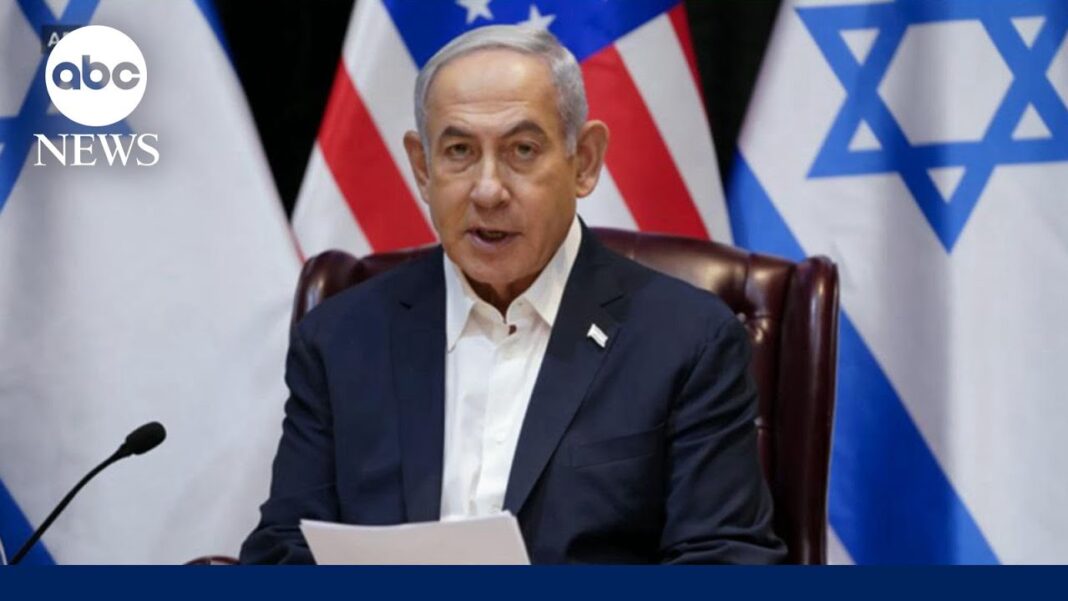
Israeli Prime Minister Benjamin Netanyahu arrived in New York on Thursday for a high-stakes visit that will see him address the United Nations General Assembly and later travel to Washington for a bilateral meeting with President Trump. His visit comes at a fraught diplomatic moment, as several major Western nations move to formally recognize Palestinian statehood—an initiative Netanyahu has forcefully condemned.
Speaking to reporters before boarding his flight, Netanyahu pledged that his remarks at the UN would present what he called the “undeniable truth” of Israel’s struggle against terror and its fight for security. “At the Assembly, I will speak the truth—the truth of Israel’s citizens, the truth of IDF soldiers, the truth of our state,” he said, as quoted in a report that appeared on Thursday on The Jewish News Syndicate (JNS). “I will denounce those leaders who, instead of condemning the murderers, rapists and child-burners, seek to grant them a state in the heart of the Land of Israel. That will not happen.”
Netanyahu’s combative tone follows a series of announcements by Western governments—including France, the United Kingdom, Canada, Australia, Portugal, Belgium, Luxembourg, Malta and Monaco—declaring their recognition of a Palestinian state. For Jerusalem, these diplomatic recognitions represent not just a symbolic affront, but a policy shift that risks rewarding Hamas and other terror factions.
On Wednesday evening, Netanyahu issued one of his most strongly worded denunciations yet, branding the recognitions a “shameful surrender” to terror. “A Palestinian state will not be established,” he insisted, stressing that Israel would not be bound by decisions made in foreign capitals. As JNS reported, the prime minister framed the issue not as a matter of diplomatic negotiation, but as one of moral clarity: recognition of Palestinian statehood in the aftermath of the October 7 massacres, he argued, amounts to validating terrorism.
In addition to his address at the UN General Assembly, Netanyahu will meet with President Trump in Washington early next week. The session will mark their fourth meeting since Trump returned to the Oval Office. Netanyahu said the agenda will focus on consolidating Israel’s recent military gains in Gaza, securing the release of 48 hostages still held by Hamas, and expanding the Abraham Accords-style normalization process with Arab states.
“This meeting with President Trump is about seizing the opportunities created by Israel’s victories,” Netanyahu said before departing Ben Gurion Airport, according to the JNS report. “We must complete our objectives: return of the hostages, the defeat of Hamas, and expanding the circle of peace.”
The bilateral meeting is also expected to touch on Iran, regional stability, and the role of U.S. diplomacy in navigating the contentious issue of Palestinian statehood recognition.
Netanyahu’s speech at the UN General Assembly, scheduled for Friday, is expected to be one of the most closely watched addresses of the annual diplomatic gathering. According to the information provided in the JNS report, Israeli officials say the prime minister will use the platform to highlight both Israel’s military resilience and its moral stance in the face of international criticism.
While Western governments press forward with recognition of Palestine, Israel has emphasized its own counter-narrative: that Hamas continues to hold innocent civilians hostage, uses Gaza’s population as human shields, and rejects any two-state framework. Netanyahu is likely to present evidence of Hamas’s atrocities and highlight the blatant hypocrisy of rewarding a terror regime with statehood status.
Netanyahu’s choice of words is aimed not only at the international community but also at his domestic audience. Israelis are deeply divided over the government’s handling of the war and the ongoing hostage crisis. Still, polls show broad consensus on one key issue: deep skepticism toward Palestinian statehood under current conditions.
By declaring “there will be no Palestinian state,” Netanyahu has placed himself in alignment with that consensus. As the JNS report noted, he has repeatedly emphasized his determination to prevent the emergence of “a terrorist state in the heart of our land,” even as pressure from international partners mounts.
Another theme Netanyahu is expected to stress at both the UN and the White House is his belief that peace cannot be built on concessions to terror, but only on Israel’s strength and security. This message has long been central to his diplomatic approach, and recent events—particularly the October 7 attacks and their aftermath—have reinforced it.
As reported by JNS, Netanyahu argues that the path to normalization with Arab states lies not in recognition of Palestinian statehood but in the realization that Israel is an indispensable security partner in a volatile region. In this light, his meeting with Trump will likely include discussions about expanding the circle of peace agreements and countering Iran’s regional influence.
Netanyahu also sought to tie his international mission to the symbolic timing of the Jewish New Year, offering greetings of security, prosperity, and peace to Israelis and the Jewish people worldwide. “This is also an opportunity to wish you, citizens of Israel and the Jewish people as a whole, a happy new year—a year of security, prosperity, and peace,” he said in his pre-flight remarks, as relayed in the JNS report.
By framing his UN address and Trump meeting within the broader context of the Jewish calendar, Netanyahu sought to emphasize the historic stakes of the moment. For him, the challenges of war, terrorism, and diplomatic confrontation are part of a larger struggle for the survival and flourishing of the Jewish state.
The days ahead will be pivotal for Netanyahu, Israel, and its place on the global stage. His UN address will test whether Israel’s narrative—of resilience against terror and rejection of imposed solutions—can resonate amid a tide of recognition for Palestinian statehood. His meeting with Trump, meanwhile, offers an opportunity to align with Washington on strategy while navigating potential differences on annexation, hostage negotiations, and regional diplomacy.
As JNS has reported, Netanyahu views this moment as one requiring clarity rather than compromise. The recognition of a Palestinian state by foreign governments, he argues, may shape headlines, but it does not determine Israel’s future. That, he insists, will be decided by the security needs and moral convictions of the Israeli people themselves.
In New York and Washington, Netanyahu is set to deliver that message forcefully: Israel will not be coerced into concessions that endanger its survival, and while it seeks peace, it will not do so at the cost of rewarding terro

Bibi should provide a free screening of October 7 footage to all the cowards and then ask for a revote.
He should but the problem is the nay-sayers are already saying the footage that was taken by the Hamas evil people was a movie that Israel created to start a war and kill Gazans. These same idiots say that the Holocaust was a movie. Mel Gibson being one of the deniers. I gets me angry about the world leaders – they are complicit in terrorism. How dare they decide on the fate of the one Democracy in the Middle East – Let them open their own borders to the “poor Gazans and Hamas” and let them fester in their own lands.