






























|
Getting your Trinity Audio player ready...
|
Europe’s Alarming Reckoning: Netherlands Escalates Security Measures as Antisemitism Reaches Entrenched Levels
By: Fern Sidman
In a decisive response to what officials describe as a deeply troubling and persistent escalation in antisemitic hostility, the Netherlands has announced a significant expansion of security funding for Jewish institutions nationwide. The move reflects mounting concern among policymakers, community leaders, and international observers that antisemitism—far from being episodic—is becoming an increasingly normalized and entrenched feature of contemporary European life.
As detailed in a report on Wednesday in The Algemeiner, the Dutch government’s latest initiative represents both an acknowledgment of the severity of the threat and an effort to restore a sense of safety within a community that has been disproportionately targeted in recent years.
During a parliamentary session marked by urgency and gravity, David van Weel, the country’s Minister of Justice and Security, unveiled a plan to increase the national budget allocated for the protection of Jewish institutions. An additional €700,000 will be directed toward security measures in 2026, raising the total annual allocation to €2 million.
This expansion, while substantial, is widely viewed as a necessary adjustment rather than an extraordinary one. According to the report in The Algemeiner, existing funds had already been fully depleted during the current fiscal year, leaving numerous applications for security assistance unmet. The demand for protective resources has outpaced available funding, a development that underscores both the scale and the persistence of the threat.
Van Weel emphasized that the additional resources are intended not merely to enhance physical security, but to address the broader psychological impact of living under constant threat. The reinforcement of protective measures, he suggested, is essential to restoring confidence and ensuring that Jewish communities can function without fear.
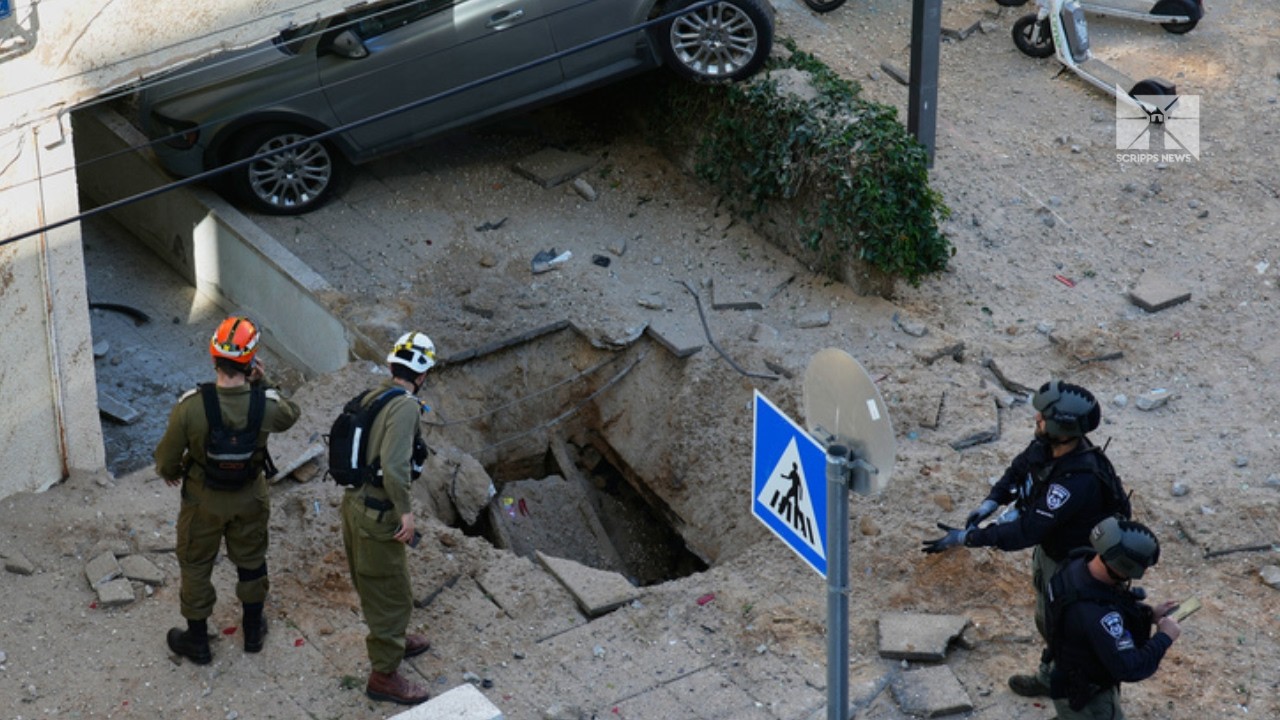
The decision to increase funding comes in the wake of a series of incidents that have heightened alarm across the country. Among the most concerning were multiple explosions targeting Jewish-linked locations, including a synagogue in Rotterdam and a Jewish educational institution in Amsterdam. A third incident occurred near a prominent financial building associated with international commerce.
While investigations into these events are ongoing, their cumulative effect has been to amplify concerns about the safety of Jewish spaces. As The Algemeiner reported, these attacks are not isolated anomalies but part of a broader pattern of hostility that has manifested in both overt acts of violence and more subtle forms of intimidation.
The targeting of institutions central to communal life—places of worship, education, and cultural expression—carries particular significance. Such acts are often interpreted not only as attacks on physical structures but as attempts to undermine the fabric of community identity itself.
Statistical data released by Dutch authorities paints a stark picture of the current landscape. Despite constituting less than 0.3 percent of the national population, Jewish individuals are the victims of a disproportionately large share of hate-related incidents. Antisemitic acts account for approximately 26 percent of all recorded cases of discrimination—a figure that has remained persistently high over recent years.
In 2025 alone, authorities documented 867 incidents of antisemitism, a number nearly identical to the 880 cases recorded in the previous year. This consistency, while seemingly indicative of stability, is in fact a cause for concern. As noted in The Algemeiner report, the lack of a downward trend suggests that efforts to curb antisemitism have yet to achieve meaningful impact.
Eddo Verdoner, who serves as the national coordinator for combating antisemitism, has voiced particular apprehension regarding the normalization of such figures. In his assessment, the danger lies not only in the incidents themselves but in the gradual acclimatization to their frequency.
“We have been recording hundreds of antisemitic incidents each year,” Verdoner observed, warning that society risks becoming desensitized to levels of hostility that should be unequivocally unacceptable. His remarks, cited by The Algemeiner, highlight the psychological dimension of the crisis, in which repeated exposure to discrimination erodes both vigilance and outrage.
The parliamentary session in which the funding increase was announced also served as a platform for broader discussions about the allocation of responsibility for security. Currently, Jewish institutions are required to contribute to the cost of their own protection, a system that has drawn criticism from multiple quarters.
Mirjam Bikker, leader of the ChristenUnie party, articulated a particularly forceful critique. She argued that the expectation for synagogues and schools to finance their own security constitutes a “fundamental reversal of responsibility,” suggesting that the burden should instead rest with the state.
This perspective reflects a broader debate about the role of government in safeguarding minority communities. Proponents of increased public funding contend that ensuring the safety of citizens is a core function of the state, one that should not be delegated to those most at risk.
As The Algemeiner reported, the discussion extends beyond immediate financial considerations to encompass questions of principle and equity. The degree to which the state assumes responsibility for protection is seen as indicative of its commitment to the well-being of all citizens, regardless of their background.
In addition to addressing security at physical sites, lawmakers have also considered proposals aimed at improving conditions within higher education. An antisemitism taskforce has put forward recommendations designed to protect Jewish students and staff, reflecting concerns about the campus environment.
Universities, long regarded as spaces for open dialogue and intellectual exploration, have increasingly become arenas for contentious debate over issues related to identity and geopolitics. In this context, Jewish students have reported experiences ranging from exclusion to overt hostility.
The Algemeiner report noted that the proposed measures seek to establish clearer guidelines for addressing such incidents, as well as to promote awareness and education. The goal is not only to respond to specific events but to foster an environment in which discriminatory behavior is less likely to occur.
The situation in the Netherlands is emblematic of a wider trend observed across Europe and the Western world. Since the events of October 7, 2023, antisemitic incidents have surged in numerous countries, prompting governments to reevaluate their approaches to security and community relations.
This broader context is critical to understanding the Dutch response. The increase in funding and the emphasis on protective measures are not occurring in isolation but as part of a continental effort to address a shared challenge.
The Algemeiner has documented similar developments in other nations, where rising antisemitism has prompted both policy changes and public debate. The convergence of these trends suggests that the issue transcends national boundaries, requiring coordinated and sustained attention.
While physical safety measures—such as surveillance systems, controlled access points, and security personnel—are essential, they address only one aspect of the problem. Equally significant is the psychological impact of living under heightened threat.
For many members of the Jewish community, the need for increased security serves as a constant reminder of vulnerability. The presence of guards and barriers, while reassuring in one sense, also reinforces the perception that danger is ever-present.
Van Weel’s remarks, as reported by The Algemeiner, acknowledge this duality. The objective of the funding increase is not merely to prevent incidents but to restore a sense of normalcy—a condition in which individuals can participate in communal life without apprehension.
The path forward is fraught with complexity. While the infusion of additional funds represents a positive step, it is unlikely to resolve the underlying issues that have given rise to the current situation. Addressing antisemitism requires a multifaceted approach, encompassing education, enforcement, and cultural change.
At the same time, the heightened attention to the issue presents an opportunity for meaningful progress. By confronting the realities of the situation and engaging in substantive dialogue, policymakers and community leaders can work toward solutions that are both effective and sustainable.
The Algemeiner report emphasized that the success of such efforts will depend on sustained commitment and collaboration. Short-term measures, while necessary, must be complemented by long-term strategies aimed at addressing the root causes of hatred and intolerance.
The decision by the Netherlands to significantly increase security funding for Jewish communities marks a defining moment in the country’s response to antisemitism. It reflects both the urgency of the threat and the recognition that more must be done to protect vulnerable populations.
Yet the challenge extends beyond the allocation of resources. It encompasses the broader question of how societies confront prejudice and uphold the principles of equality and respect. As the Netherlands—and indeed the wider world—grapples with these issues, the outcome will shape not only the safety of Jewish communities but the integrity of democratic values themselves.
Through the lens of The Algemeiner, the story emerges as one of both anxiety and resolve—a testament to the enduring struggle against hatred and the ongoing effort to build a more just and inclusive society.