












|
Getting your Trinity Audio player ready...
|
By: Fern Sidman
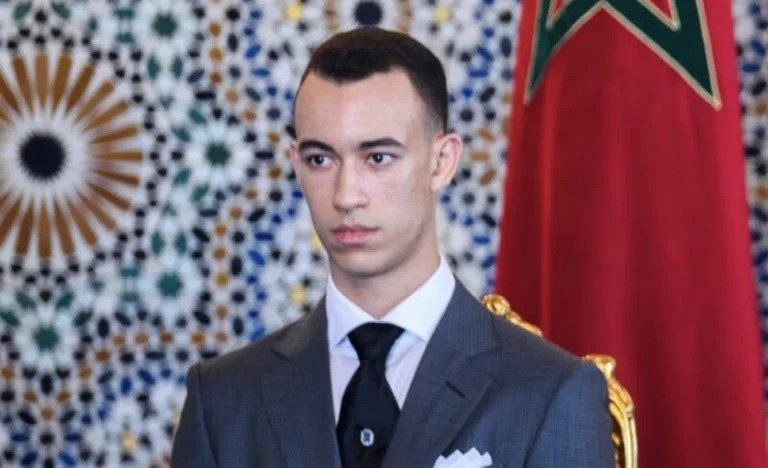
In a development that carries profound implications for Morocco’s political future and dynastic continuity, Crown Prince Moulay El Hassan has assumed a pivotal military coordination role, marking a decisive step in his gradual preparation for the throne. As reported on Saturday by Business Insider Africa, the young royal’s appointment to a senior position within the Royal Armed Forces not only elevates his institutional authority but also underscores a carefully orchestrated transition within one of Africa’s most enduring monarchies.
The Moroccan royal court formally announced earlier this month that the 23-year-old heir has been designated as “coordinator of the offices and services of the general staff of the Royal Armed Forces,” a title imbued with both symbolic resonance and substantive operational significance. According to the Business Insider Africa report, the role places Prince Moulay El Hassan at the nexus of Morocco’s defense architecture, granting him access to intelligence briefings, oversight of military modernization initiatives, and participation in strategic security deliberations.
This appointment is widely interpreted as a deliberate echo of the trajectory followed by his father, King Mohammed VI, who was similarly entrusted with a comparable military role in 1985 under the reign of King Hassan II. That earlier transition proved to be a defining moment in the grooming of Mohammed VI, who would later ascend to the throne and preside over a period of economic reform and relative political stability. In this context, as the Business Insider Africa report emphasized, the parallel is neither incidental nor symbolic alone; it reflects a dynastic strategy rooted in continuity, preparation, and institutional immersion.
The timing of the appointment has also drawn considerable attention. King Mohammed VI, long regarded as one of Africa’s wealthiest monarchs, has in recent months reduced his public engagements due to recurring health concerns. Moroccan state media has acknowledged episodes of lower back pain that necessitated a period of “functional rest,” a development that has inevitably intensified scrutiny of succession dynamics within the kingdom. While there has been no official indication of an imminent transition of power, the elevation of the crown prince’s responsibilities suggests a measured effort to ensure institutional readiness.
Beyond the military sphere, Prince Moulay El Hassan’s public profile has expanded markedly in recent years, reflecting a broader strategy to familiarize both domestic and international audiences with the future monarch. As Business Insider Africa has reported, the crown prince has increasingly assumed a visible role in national ceremonies, diplomatic engagements, and high-profile development projects, signaling his emergence as a central figure in Morocco’s evolving political landscape.
In December 2025, the prince presided over the opening ceremony of the Africa Cup of Nations, an event that showcased Morocco’s growing prominence on the continental stage. During the same period, he inaugurated the Prince Moulay Abdellah Stadium in Rabat, further cementing his association with major national initiatives. These appearances, while ceremonial in nature, serve a deeper purpose: they position the crown prince as a unifying figure capable of embodying both tradition and modernity.
Earlier this year, he also oversaw the inauguration of the Mohammed VI Tower, a 55-story skyscraper in Rabat with an estimated cost of $700 million. As the Business Insider Africa report noted, the project stands as a symbol of Morocco’s ambitious development agenda and its aspiration to assert itself as a regional economic hub. By associating the crown prince with such landmark achievements, the monarchy is effectively aligning his image with progress, innovation, and national pride.
Diplomatically, Prince Moulay El Hassan has begun to represent Morocco in engagements with foreign dignitaries, Gulf royals, military officials, and international investors. His presence at these meetings reflects a deliberate effort to cultivate relationships that will be essential to his future role as sovereign. Most recently, he presided over a commemorative luncheon in Rabat marking the 70th anniversary of Morocco’s Royal Armed Forces, acting on the direct instructions of King Mohammed VI. Such responsibilities, as highlighted by Business Insider Africa, indicate a gradual but unmistakable transfer of ceremonial and representational duties.
The prince’s preparation for leadership has been equally methodical in the educational sphere. He attended the Royal College in Rabat, an elite institution designed to educate members of the royal family alongside selected students from influential Moroccan backgrounds. This environment not only provided him with a rigorous academic foundation but also facilitated the cultivation of networks that are likely to prove invaluable in his future governance.
Yet, the crown prince’s ascent occurs against a backdrop of significant socio-economic challenges. Morocco, while widely recognized as one of Africa’s wealthiest and fastest-modernizing monarchies, has not been immune to internal pressures. As Business Insider Africa has reported, the country witnessed a wave of youth-led demonstrations in 2025, driven by concerns over rising living costs, unemployment, economic inequality, and public spending priorities.
These protests, many of which were organized through digital platforms by groups such as “GenZ 212”—a reference to Morocco’s international dialing code—represented some of the most significant public demonstrations since the 2011 Arab Spring and the 2016 Rif protests. The emergence of such movements underscores a generational shift in expectations, with younger Moroccans increasingly demanding economic opportunity, transparency, and accountability.
In this context, Prince Moulay El Hassan’s growing prominence can be seen as part of a broader effort by the monarchy to adapt to changing societal dynamics. By presenting a youthful, globally educated heir who is actively engaged in both domestic and international affairs, the royal court seeks to bridge the gap between tradition and modernity. As the Business Insider Africa report observed, the prince’s image has been carefully curated to emphasize stability, diplomacy, and forward-looking governance.
This balancing act is particularly critical for a monarchy that traces its lineage back more than 400 years to the Alaouite dynasty. The preservation of this historical continuity, while simultaneously addressing contemporary challenges, requires a nuanced approach—one that combines institutional strength with adaptive leadership. The crown prince’s immersion in military, diplomatic, and developmental spheres suggests a comprehensive strategy aimed at equipping him for this multifaceted role.
At the same time, the evolving regional and global landscape adds an additional layer of complexity. Morocco’s strategic position, both geographically and politically, necessitates a leader capable of navigating a wide array of external pressures, from regional security concerns to economic competition and diplomatic alignment. Prince Moulay El Hassan’s early exposure to these dynamics, as facilitated by his new role and expanding responsibilities, is likely to prove instrumental in shaping his leadership style.
As the report noted, it becomes increasingly evident that the crown prince’s ascent is not a sudden or isolated phenomenon, but rather the culmination of a carefully calibrated process. Each appointment, public appearance, and diplomatic engagement contributes to a broader narrative of preparation—one that seeks to ensure a seamless transition when the time ultimately arrives.
In the final analysis, the appointment of Prince Moulay El Hassan to a senior military coordination role represents far more than an administrative decision. It is a signal of intent, a marker of continuity, and a testament to the enduring adaptability of Morocco’s monarchical system. As the kingdom navigates the complexities of the 21st century, the emergence of its young heir as an increasingly central figure offers both reassurance and anticipation.
The path to the throne, while not yet immediate, is becoming ever more clearly defined. And as the Business Insider Africa report underscored, the steps being taken today will shape not only the future of the Moroccan monarchy but also the trajectory of the nation itself.



