



|
Getting your Trinity Audio player ready...
|
A Regal Farewell Across America: King Charles III Concludes Landmark U.S. Tour with Ceremony, Celebration, and Statesmanship
By: Fern Sidman
In a sequence of events that blended ceremonial gravitas with public warmth and cultural symbolism, King Charles III and Queen Camilla concluded their four-day state visit to the United States on Thursday with a series of carefully orchestrated engagements that underscored both the enduring ties between the two nations and the monarch’s longstanding personal commitments to environmental stewardship and civic engagement. Their departure, marked by a formal farewell at Joint Base Andrews, brought to a close a tour that was at once diplomatic, ceremonial, and deeply human in its scope.
As detailed extensively in a report by CNN, the royal couple’s final day in the United States was emblematic of the visit as a whole: a carefully calibrated blend of solemn tribute, public interaction, and symbolic gestures designed to reinforce shared values and historical continuity. The day began with a poignant ceremony at Arlington National Cemetery, where the King and Queen laid a wreath at the Tomb of the Unknown Soldier. The act, steeped in tradition, served as a solemn acknowledgment of the sacrifices made by American service members and a reaffirmation of the transatlantic alliance forged through shared history and mutual sacrifice.
The scene at Arlington was one of quiet dignity. Against the backdrop of the cemetery’s rolling landscape, the royal couple moved with deliberate composure, their gestures measured and respectful. The laying of the wreath, a ritual observed by visiting dignitaries for generations, carried particular resonance given the historical ties between the United Kingdom and the United States. It was a moment that transcended protocol, offering a visual representation of remembrance and unity.
From this solemn setting, the tone shifted as the royal entourage made its way to Front Royal, Virginia, where the atmosphere was markedly more celebratory. There, the King and Queen participated in an “America 250” block party, an event designed to commemorate the approaching semiquincentennial of the United States. According to the CNN report, the couple was greeted with enthusiastic cheers and a sea of waving flags as their motorcade entered the town’s bustling streets.
The reception was nothing short of exuberant. Spectators lined the sidewalks, many holding aloft their mobile devices to capture the moment, while others waved British flags in a gesture of transatlantic camaraderie. King Charles, visible through the vehicle window, acknowledged the crowd with a wave before stepping out alongside Queen Camilla to the strains of a live band. The scene was a vivid illustration of the enduring fascination with the British monarchy and the capacity of such visits to galvanize public interest.
Moving through the densely packed streets, the King and Queen engaged directly with attendees, pausing to shake hands and exchange brief conversations. Queen Camilla, in particular, devoted time to interacting with children, her demeanor approachable and attentive. Meanwhile, King Charles joined Abigail Spanberger and other local officials in a gazebo overlooking the festivities, offering a vantage point from which to observe the celebration before descending to mingle among the picnic tables and community displays.
The event itself was a tapestry of small-town Americana. Musical performances, including traditional clog dancing accompanied by banjo rhythms, provided a lively backdrop as the royal couple continued their engagements. The King greeted veterans and performers alike, demonstrating a willingness to engage with individuals from diverse walks of life. The presence of Front Royal Mayor Lori Athey Cockrell further underscored the local significance of the occasion, as the town embraced its role as host to a moment of international visibility.
Beyond the festivities, the royal visit included a series of engagements that reflected King Charles’s longstanding dedication to environmental conservation. At Shenandoah National Park, the monarch participated in activities that were both symbolic and substantive. Among these was the swearing-in of young “Junior Rangers,” a ceremony that highlighted the importance of fostering environmental awareness among the next generation. Accompanied by a canine “Bark Ranger” named Bailey, the event combined education with ceremony, reinforcing the park’s mission to engage youth in conservation efforts.
The King’s itinerary at Shenandoah extended beyond ceremonial duties. He met with representatives from the U.S. Fish and Wildlife Service to discuss regional conservation initiatives, reflecting his enduring interest in ecological sustainability. The engagement provided an opportunity for dialogue on issues ranging from habitat preservation to biodiversity, areas in which King Charles has long been an advocate.
A particularly evocative moment occurred when the King stood overlooking the Shenandoah Valley, participating in a symbolic presentation of a stone linking the park to Balmoral, his Scottish residence. The gesture, while modest in scale, carried a deeper significance, representing the interconnectedness of natural landscapes across continents and the shared responsibility to preserve them.
The visit also included an encounter with leaders of the Monacan Indian Nation, including Chief Robert Gray Shields. This engagement underscored the importance of recognizing and honoring the cultural heritage of Indigenous communities, adding another layer of depth to the royal itinerary. By incorporating such meetings, the visit transcended traditional diplomatic engagements, embracing a broader spectrum of cultural and historical acknowledgment.
Queen Camilla’s independent engagements were equally noteworthy. Her visit to Smitten Farm in Fauquier County highlighted the enduring transatlantic connections within the equestrian world. As reported by CNN, the stop provided an opportunity to explore the shared heritage of horse racing, a sport with deep roots in both the United Kingdom and the United States. Every American thoroughbred, it is often noted, traces its lineage to seventeenth-century England, while iconic events such as the Kentucky Derby draw inspiration from the Derby at Epsom Downs.
At the farm, the Queen engaged with breeders and caretakers, observing the care of newborn foals and retired racehorses. The focus on retraining horses for second careers after their racing days have ended reflected a broader commitment to animal welfare, an issue that has long been associated with the royal household. Her meeting with philanthropist Jacqueline Mars further underscored this commitment, particularly through the discussion of a veterinary scholarship program linking the Royal Veterinary College in London with the University of Pennsylvania.
These engagements served to highlight the interconnected nature of cultural and professional exchanges between the two nations. By emphasizing shared traditions and collaborative initiatives, the visit reinforced the notion that the relationship between the United Kingdom and the United States extends beyond political alliances to encompass a rich tapestry of social and cultural ties.
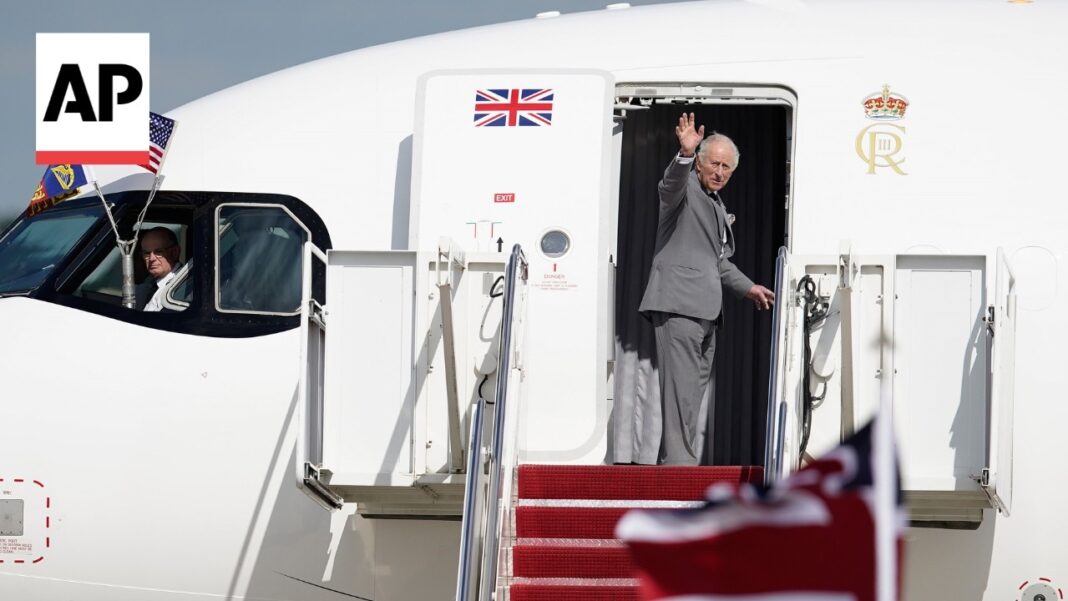
The culmination of the visit came with a formal departure ceremony at Joint Base Andrews. There, the royal couple was bid farewell with the precision and pageantry characteristic of such occasions. Escorted by U.S. Chief of Protocol Monica Crowley and accompanied by Sir Christian Turner, the British Ambassador to the United States, King Charles and Queen Camilla proceeded past lines of military personnel in a display of mutual respect and ceremonial dignity.
As their aircraft prepared for departure, the significance of the visit became evident. Over the course of four days, the royal couple had traversed multiple states, engaging with leaders, communities, and institutions. Their itinerary, as chronicled by CNN, encompassed a wide range of activities, from high-level meetings with Donald Trump to grassroots interactions in small-town settings.
The journey now continues to Bermuda, where King Charles will undertake his first visit as sovereign to the British Overseas Territory. Yet the legacy of the United States tour is likely to endure, serving as a testament to the enduring strength of the transatlantic relationship.
In an era marked by geopolitical uncertainty and shifting alliances, such visits carry a significance that extends beyond symbolism. They provide an opportunity to reaffirm shared values, to celebrate common heritage, and to engage directly with the people who form the foundation of these relationships. Through a combination of ceremony, conversation, and cultural exchange, King Charles III and Queen Camilla have offered a compelling reminder of the enduring connections that bind nations together.
As the royal aircraft departed American soil, it left behind not only a series of memorable moments but also a renewed sense of connection—an affirmation that, despite the complexities of the modern world, the bonds between the United Kingdom and the United States remain resilient, dynamic, and deeply rooted in history.
