



|
Getting your Trinity Audio player ready...
|
Jared Evan
(TJV NWS) Republican lawmakers are increasingly voicing concern over the trajectory of the U.S. conflict with Iran as a key 60-day war powers deadline approaches, exposing divisions within the party and raising questions about congressional authority, according to reporting highlighted by Zero Hedge and supported by public statements and additional reporting.
As Zero Hedge pointed out, the looming deadline—triggered under the War Powers Resolution—has prompted renewed debate in Washington about whether Congress must formally authorize continued military operations.
Several Republican senators have publicly acknowledged the significance of the moment. Sen. John Curtis described the approaching threshold as consequential, stating, “It’s a big deal… there are a number of us having discussions about what that day means.”
Meanwhile, Sen. Susan Collins emphasized the constitutional implications, saying, “Sixty days is a trigger that requires Congress to act.”
Other lawmakers signaled a mix of caution and continued support for the broader mission. Rep. Don Bacon noted the slowdown in active combat but urged deliberation, saying, “It merits good discussion… in the end, I want us to finish the job.”
Sen. Josh Hawley suggested the administration should begin scaling back operations, expressing hope officials would “notify us that they’re drawing down offensive operations.”
Concerns about executive overreach have also surfaced. Sen. Lisa Murkowski warned the White House directly, saying, “You’ve got to talk to us,” adding that failure to consult Congress could result in “a change in the situation” on Capitol Hill.
Sen. Thom Tillis, by contrast, indicated the conflict could stretch on, predicting it is “weeks or months away from resolution,” and suggesting Congress consider formally authorizing the war for a longer period.
Behind the scenes, unease appears to be spreading more broadly within Republican ranks. One unnamed GOP senator cited in the reporting said colleagues are increasingly uneasy, noting that lawmakers are crossing “some sort of threshold” into discomfort and that there is “restlessness” within the conference.
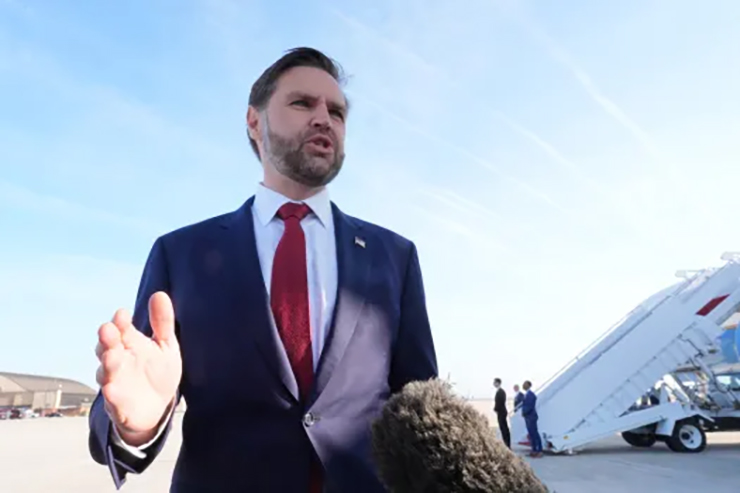
Vice President JD Vance has also emerged as a key figure reflecting internal tensions. While publicly aligned with the administration, he has expressed skepticism about aspects of the war effort. According to reporting cited in the broader coverage, Vance has “repeatedly questioned” whether the Pentagon is providing an accurate picture of the conflict and has raised concerns about U.S. weapons stockpiles.
Vance’s past statements underscore his cautious approach to military engagement. “This is not our war,” he previously said, reflecting a longstanding skepticism toward foreign interventions. More recently, he has framed his stance more carefully, saying during the conflict that his approach is to “pray that we are on God’s side,” rather than asserting certainty about the war’s moral footing.
At the same time, Vance has maintained that officials should support presidential decisions once made, stating, “when the president… makes a decision, it’s your job to help make that decision as effective and successful as possible.”
Economic pressures are adding to the political strain. Rising oil prices linked to the conflict have heightened concerns among Republicans about potential electoral fallout, particularly as midterm elections approach. Zero Hedge, citing broader reporting, noted that energy markets have already reacted sharply, increasing the stakes of a prolonged conflict.
With the 60-day deadline imminent, lawmakers now face a pivotal decision: whether to assert congressional authority over the war or allow operations to continue under executive direction. The outcome is likely to shape not only U.S. policy toward Iran but also the balance of war powers in Washington amid a conflict that shows signs of extending well beyond its initial timeline.
