



|
Getting your Trinity Audio player ready...
|
Mamdani-Endorsed Candidate Falls Short in Manhattan City Council Special Election
By: Julie Herndon
In a closely contested and politically revealing special election that has reverberated across New York City’s Democratic landscape, Carl Wilson emerged victorious over Lindsey Boylan, delivering a significant blow to the political ambitions of Mayor Zohran Mamdani and underscored the enduring strength of traditional party structures. As extensively detailed on Tuesday in The New York Times, the outcome of the Manhattan City Council race has been widely interpreted as both a referendum on the mayor’s influence and a vivid illustration of ideological divisions within the city’s dominant political party.
With preliminary ranked-choice voting results showing Wilson leading with 43% to Boylan’s 25%, the contest ultimately concluded with Boylan conceding defeat, effectively clearing the path for Wilson to assume office. While no candidate initially secured the required 50% majority, the ranked-choice tabulation process confirmed what had already become apparent: Wilson’s advantage was insurmountable. The New York Times report characterized the race as a proxy battle between competing factions of the Democratic Party, elevating what might otherwise have been a routine local election into a broader political confrontation.
The election was held to fill a vacancy left by former Council member Erik Bottcher, whose elevation to the state Senate earlier in the year created an opening in one of Manhattan’s most politically significant districts. What followed was not merely a campaign for a municipal seat, but a clash of competing visions for the future of the Democratic Party in New York City.
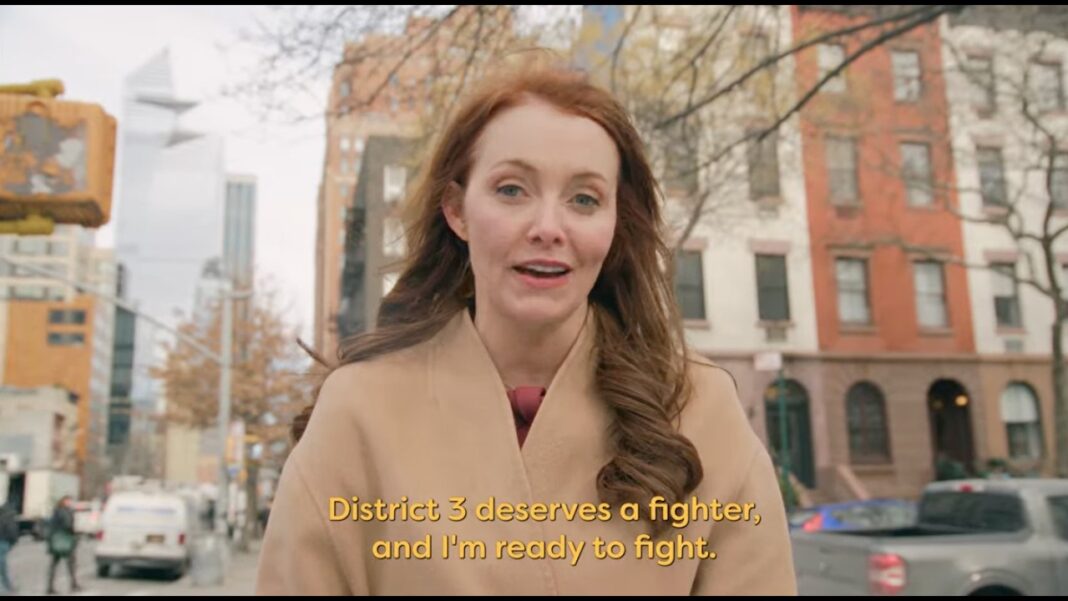
Boylan, a former aide to ex-Governor Andrew Cuomo and a figure who gained national attention through her public allegations of misconduct against him, entered the race with the backing of progressive organizations and key allies of Mayor Mamdani. Her candidacy was framed as part of a broader effort to extend the influence of the mayor’s political coalition into Manhattan, a borough historically shaped by entrenched party networks and institutional alliances.
Wilson, by contrast, was supported by a coalition that included local Democratic clubs, labor unions, and influential party figures. His campaign benefited from substantial organizational infrastructure and financial backing, enabling him to mount a formidable challenge that ultimately proved decisive.
At the heart of the election’s significance lies the question of Mayor Mamdani’s political reach. Since assuming office, Mamdani has sought to consolidate a coalition rooted in progressive activism and grassroots engagement. His endorsement of Boylan was widely viewed as a test of whether that coalition could expand beyond its traditional base.
The results suggest that such expansion remains elusive. As The New York Times report observed, the outcome represents a setback for the mayor’s preferred candidate and raises questions about the extent to which his influence can shape electoral outcomes in districts where established power structures remain deeply entrenched.
This dynamic was particularly evident in Manhattan, where long standing political organizations continue to play a central role in candidate selection and voter mobilization. Wilson’s victory demonstrates that, despite the growing prominence of progressive movements, traditional mechanisms of political power retain significant efficacy.
The election also highlighted the ongoing ideological struggle within the Democratic Party. The New York Times described the contest as a proxy fight between Mayor Mamdani and City Council Speaker Julie Menin, whose competing endorsements underscored the broader divisions at play.
Menin’s support for Wilson aligned with a more centrist and institutionally oriented faction of the party, while Mamdani’s backing of Boylan reflected a commitment to progressive reform and outsider candidacies. The clash between these perspectives has become a defining feature of contemporary Democratic politics, both in New York City and nationally.
The implications of this divide extend beyond the immediate outcome of the election. They shape policy priorities, influence legislative dynamics, and determine the direction of future campaigns. In this context, the Manhattan race serves as a microcosm of a larger struggle over the identity and trajectory of the Democratic Party.
The election was conducted under New York City’s ranked-choice voting system, which allows voters to rank candidates in order of preference. This system is designed to ensure that the eventual winner commands a majority of support, even in a crowded field.
In this case, no candidate achieved an outright majority in the initial count, necessitating a series of tabulations in which lower performing candidates were eliminated and their votes redistributed. While this process can sometimes produce unexpected outcomes, Wilson’s lead proved sufficiently robust to withstand the successive rounds of counting.
The New York Times report noted that the use of ranked-choice voting added an additional layer of complexity to the contest, but ultimately did not alter its fundamental trajectory. Wilson’s broad base of support enabled him to maintain a decisive advantage throughout the process.
The contrasting strategies employed by the two campaigns offer further insight into the factors that shaped the election. Wilson’s campaign emphasized stability, experience, and alignment with established Democratic priorities. By securing endorsements from influential organizations and leveraging existing networks, he was able to build a coalition that extended across multiple constituencies.
Boylan’s campaign, on the other hand, sought to harness the energy of progressive activism. Her messaging focused on issues such as equity, reform, and accountability, resonating with segments of the electorate that have become increasingly vocal in recent years.
However, as The New York Times reported, the ability to translate such enthusiasm into electoral success remains contingent on a range of factors, including organizational capacity, voter turnout, and the dynamics of local politics. In this instance, Wilson’s advantages in these areas proved decisive.
The outcome of the Manhattan special election is likely to have significant implications for future political contests in New York City. For Mayor Mamdani and his allies, it represents a moment of reflection and recalibration, highlighting the challenges associated with expanding a political coalition into new territories.
For the Democratic establishment, the result serves as a reaffirmation of its enduring relevance. Despite the rise of progressive movements, the structures and relationships that have historically defined the party continue to exert considerable influence.
The forthcoming Democratic primary in June will provide another opportunity for these dynamics to play out. Both Wilson and Boylan are expected to participate, setting the stage for a rematch that will further test the strength of their respective coalitions.
Beyond its immediate context, the election contributes to a broader narrative about the evolution of urban politics in the United States. Cities such as New York are often seen as laboratories for political innovation, where new ideas and movements can gain traction.
At the same time, they are also arenas in which longstanding institutions and traditions continue to shape outcomes. The interplay between these forces creates a dynamic and often unpredictable political environment, in which victories and setbacks alike carry lessons for the future.
As The New York Times report emphasized, understanding these dynamics requires a nuanced appreciation of both structural factors and individual agency. The Manhattan race exemplifies this complexity, illustrating how local contests can reflect and influence broader trends.
The victory of Carl Wilson in the Manhattan City Council special election marks a pivotal moment in New York City politics. As reported by The New York Times, the outcome underscores the resilience of traditional Democratic power centers while highlighting the challenges faced by emerging political movements.
For Mayor Zohran Mamdani, the result represents a clear indication that his influence, while significant, is not absolute. For the Democratic Party as a whole, it serves as a reminder of the ongoing tension between competing visions and the importance of navigating these differences with strategic acumen.
As the city moves toward the next phase of its electoral cycle, the lessons of this contest will undoubtedly inform the strategies and decisions of candidates and voters alike. In the ever evolving landscape of New York politics, the balance between continuity and change remains as consequential as ever.
