



|
Getting your Trinity Audio player ready...
|
By: Abe Wertenheim
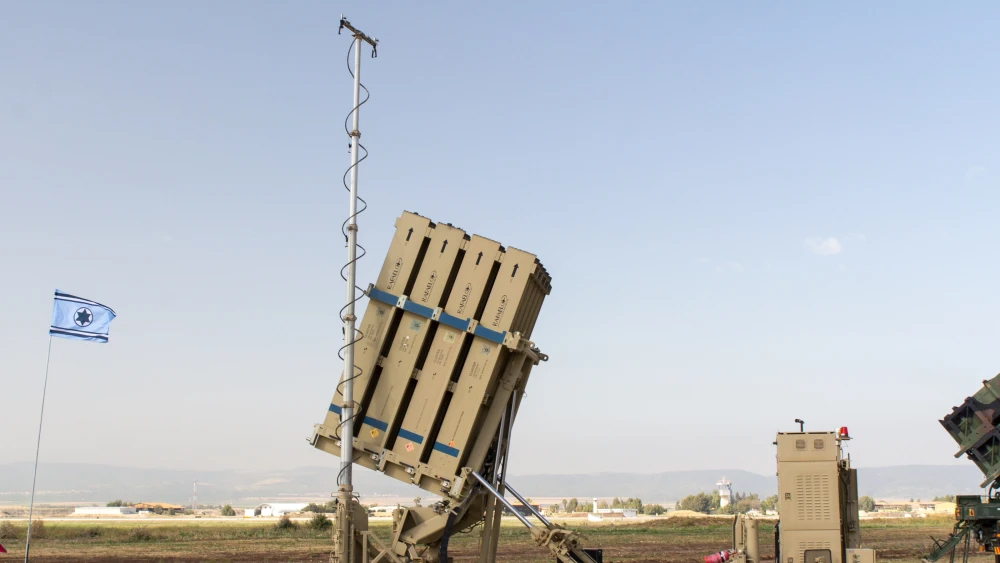
In a development that signals a profound evolution in regional security dynamics, Israel has, for the first time in its history, deployed its renowned Iron Dome air defense system beyond its borders, dispatching both the sophisticated battery and accompanying personnel to the United Arab Emirates amid escalating hostilities with Iran. The unprecedented move, reported on Sunday by Axios, underscores not only the intensifying threat posed by Iranian missile and drone campaigns but also the deepening strategic alignment between Israel and key Gulf states.
The decision, according to senior Israeli officials cited by Axios, was personally authorized by Benjamin Netanyahu following a direct conversation with Mohammed bin Zayed Al Nahyan. That exchange, described as urgent and consequential, catalyzed a rapid operational response aimed at bolstering the defensive capabilities of a nation that has increasingly found itself on the front lines of a broader regional confrontation.
Israel’s Iron Dome system has long been regarded as one of the most effective short-range missile defense platforms in existence, credited with intercepting thousands of incoming projectiles and saving countless lives. However, until now, its deployment had been strictly confined to Israeli territory. The decision to extend this protective umbrella to another sovereign state represents a watershed moment in Israeli defense policy.
As Axios emphasized in its reporting, this marks the first instance in which Israel has transferred an operational Iron Dome battery to a foreign nation during an active conflict. The move reflects a recalibration of strategic priorities, one that recognizes the increasingly interconnected nature of regional security and the necessity of collective defense mechanisms in the face of shared threats.
The deployment also carries symbolic weight, signaling a level of trust and cooperation between Israel and the United Arab Emirates that would have been inconceivable only a decade ago. It is a tangible manifestation of the evolving geopolitical landscape that has emerged in the wake of normalization agreements and shifting alliances.
The urgency of the situation is underscored by the sheer magnitude of the Iranian offensive directed at the United Arab Emirates. According to figures cited by Axios, Iran launched more than 550 ballistic and cruise missiles alongside over 2,200 drones targeting Emirati territory. These numbers, corroborated by the UAE Ministry of Defense, represent an unprecedented barrage, exceeding the volume of attacks directed at any other country in the region.
The International Institute for Strategic Studies, a respected British analytical body, further contextualized the scale of the assault, noting that the UAE endured more Iranian projectiles than all other Gulf Cooperation Council states combined. The damage inflicted was not only extensive but also varied, affecting critical infrastructure and high-profile civilian sites.
Among the locations struck were globally recognized landmarks such as the Burj Al Arab luxury hotel, the International Financial Center, and Dubai International Airport. Industrial facilities, including an oil hub and an aluminum plant, also sustained damage, highlighting the multifaceted nature of the aggression and its potential to disrupt both economic activity and public confidence.
The targeting of the United Arab Emirates was not incidental but rather a calculated component of Iran’s broader strategy. As Axios reported, analysts believe that Tehran sought to exert pressure on the United States by destabilizing a key financial and logistical hub within the global economy.
The UAE’s status as a major center for finance, trade, and shipping renders it particularly vulnerable to such tactics. Disruptions to its infrastructure reverberate far beyond its borders, affecting supply chains, energy markets, and international commerce. By focusing its attacks on the UAE, Iran aimed to amplify the economic and geopolitical consequences of the conflict.
This strategy underscores the evolving nature of modern warfare, in which economic disruption and psychological impact are as significant as direct military engagements. The deployment of the Iron Dome system, therefore, serves not only as a defensive measure but also as a counter to this broader strategic calculus.
The crisis has also served as a crucible for alliances, revealing the depth and reliability of partnerships in times of crisis. As the Axios report highlighted, Emirati officials have expressed a renewed appreciation for the support provided by both Israel and the United States.
Tareq al-Otaiba, a former official within the UAE’s National Security Council, articulated this sentiment in an analysis cited by Axios, noting that the assistance extended by these allies encompassed not only military aid but also intelligence sharing and diplomatic backing. Such multifaceted support has been instrumental in mitigating the impact of the Iranian attacks and reinforcing the resilience of Emirati defenses.
Another Emirati official, also quoted by Axios, described the experience as an “eye-opening moment,” emphasizing the clarity it provided regarding the nation’s true allies. This candid assessment reflects a broader recalibration of regional relationships, one in which pragmatic considerations increasingly outweigh historical animosities.
The integration of the Iron Dome system into the UAE’s defense architecture necessitates a high degree of coordination between Israeli and Emirati forces. The deployment includes not only the physical hardware but also trained personnel capable of operating and maintaining the system under combat conditions.
This level of cooperation represents a significant advancement in military interoperability, enabling the two nations to share expertise, synchronize defense protocols, and respond more effectively to evolving threats. It also sets a precedent for future collaborations, potentially paving the way for a more integrated regional defense framework.
Axios has noted that the success of this deployment could influence similar initiatives in other allied nations, particularly those facing comparable threats from missile and drone attacks. The Iron Dome’s proven effectiveness makes it an attractive option for countries seeking to enhance their defensive capabilities in an increasingly volatile environment.
The deployment of the Iron Dome system to the United Arab Emirates marks a pivotal moment in the evolution of Middle Eastern security arrangements. It reflects a convergence of interests among nations that, while historically divided, now find common cause in confrontation shared threats.
This development also underscores the importance of adaptability in contemporary defense strategies. As threats become more complex and interconnected, so too must the responses designed to counter them. The willingness of Israel to extend its defensive capabilities beyond its borders demonstrates a recognition of this reality and a commitment to collective security.
