



|
Getting your Trinity Audio player ready...
|
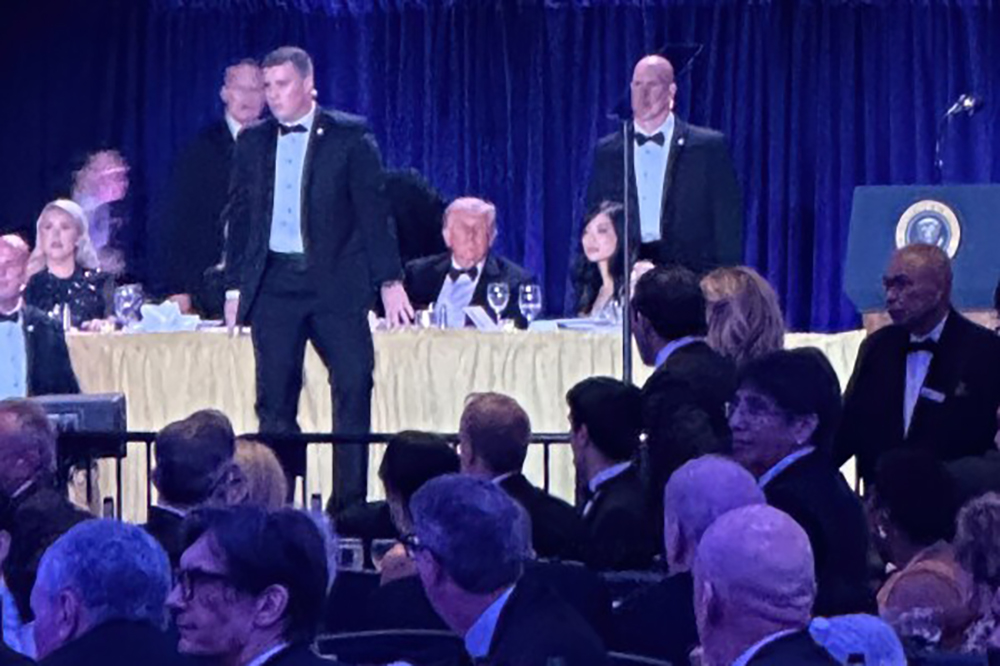
The United States finds itself navigating an era of profound political turbulence, one in which the boundaries between rhetoric and reality have become increasingly porous. The recent assassination attempt targeting President Donald Trump at the White House Correspondents’ Dinner has reignited a deeply unsettling question: to what extent does the language of political discourse shape, embolden, or even catalyze acts of violence?
This is not a question that lends itself to simplistic or partisan answers. It is instead a matter that demands intellectual rigor, moral clarity, and a willingness to confront uncomfortable truths across the political spectrum.
Modern political discourse has undergone a marked transformation. What was once framed in the language of disagreement and debate has increasingly devolved into a lexicon of existential threat. Public figures, commentators, and activists now routinely deploy terms such as “fascist,” “dictator,” and “authoritarian” to describe President Trump and other opponents.
Statements attributed to prominent officials illustrate this trend. Figures such as Hakeem Jeffries, Josh Shapiro, Alex Padilla, Elizabeth Warren, Adam Schiff, Ed Markey, and J. B. Pritzker have, at various moments, employed language that portrayed Trump in stark and often alarming terms.
Such malicious rhetoric contributes to an atmosphere in which political conflict is perceived not merely as a contest of ideas but as a struggle for survival. When political leaders characterize Trump and their other adversaries as existential dangers, the psychological effect on the broader public can be profound. It risks fostering a mindset in which extreme responses appear, to some individuals, as justified or even necessary.
The contemporary media ecosystem plays a decisive role in amplifying and disseminating these narratives. Television networks, digital platforms, and social media channels ensure that provocative statements are not only heard but repeated, dissected, and magnified.
Mainstream media outlets, along with influential commentators, often frame political developments in ways that heighten tension and polarization. At the same time, alt-right media figures—including personalities such as Tucker Carlson, Candace Owens, Megyn Kelly, and Steve Bannon—have cultivated large audiences by offering sharply critical, and at times incendiary, perspectives of their own.
The result is a fragmented informational landscape in which competing narratives often reinforce existing beliefs rather than challenge them. In such an environment, nuance is frequently sacrificed in favor of emotional resonance, and complex realities are reduced to stark binaries.
It would be a grave analytical error to suggest that political rhetoric alone directly causes acts of violence. Human behavior is shaped by a constellation of factors, including personal psychology, social environment, and individual circumstances. However, it is equally untenable to ignore the role that rhetoric plays in shaping the context within which such assassination attempts on the life of President Trump can take place.
Violence does not emerge in a vacuum. It is often preceded by a process of ideological escalation, in which language serves to dehumanize, delegitimize, or demonize President Trump and other such perceived adversaries. When individuals internalize narratives that portray political figures like President Trump as a tyrant or an existential threat, the threshold for justifying extreme action may be lowered.
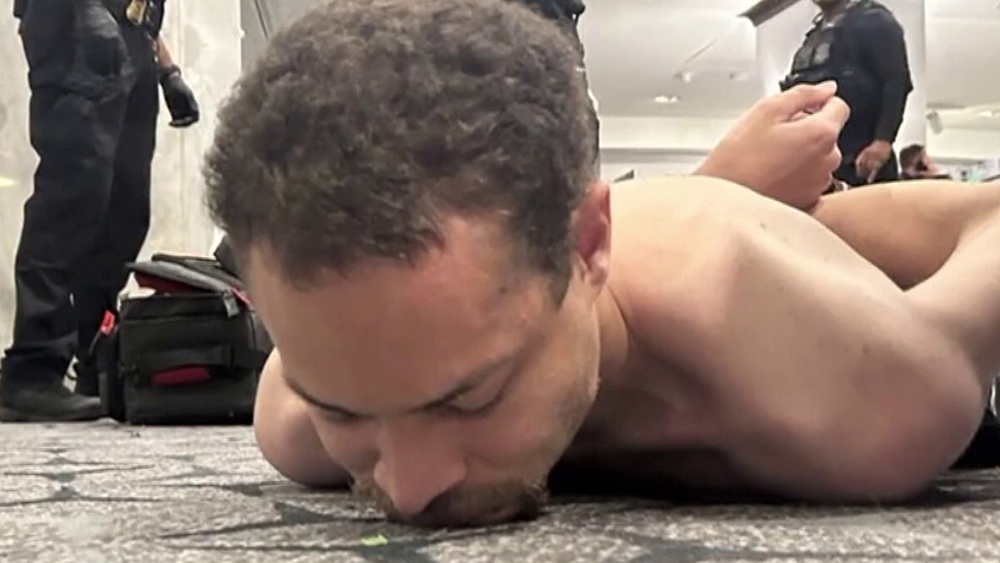
The attempted assassination at the White House Correspondents’ Dinner underscores the urgency of this issue. While the motives of the individual involved remain subject to investigation, the broader environment in which the shooting occurred cannot be divorced from the pervasive climate of hostility and suspicion that targets President Trump each day.
One of the most troubling aspects of the current discourse is the tendency toward selective accountability. Political actors frequently condemn violence when it aligns with their narrative, yet remain conspicuously silent or equivocal when it challenges their own rhetoric.
This inconsistency undermines the credibility of public discourse and contributes to a cycle of mutual recrimination. It also obscures the fundamental principle that political violence, regardless of its source or target, is unequivocally unacceptable.
The temptation to assign blame exclusively to one side of the political spectrum must be resisted. While it is important to critically examine the language used by political opponents, it is equally essential to acknowledge the broader ecosystem of rhetoric that spans ideological boundaries.
The complexities of political behavior further complicate the narrative. For example, figures such as New York City Mayor Zohran Mamdani have been reported to express sharply critical views of President Trump while simultaneously engaging with his administration on matters of governance.
Such duality reflects the multifaceted nature of political leadership, where ideological opposition coexists with pragmatic necessity. However, it also highlights the potential dissonance between public rhetoric and private conduct, raising questions about the sincerity and impact of political messaging.
At its core, the issue of political violence is one of leadership. Public officials, media figures, and influencers wield significant power in shaping the tone and direction of national discourse. With that power comes a corresponding responsibility to exercise restraint, precision, and integrity in their language.
This does not imply the suppression of criticism or the abandonment of robust debate. On the contrary, a healthy democracy depends on the free exchange of ideas and the vigorous contestation of policy. However, there is a critical distinction between critique and vilification, between disagreement and demonization. In the case of President Trump, this is a crucial lesson to be heard by his media attackers and the Democrats in Congress.
Leaders must recognize that their words carry weight beyond their immediate context. They resonate with audiences, influence perceptions, and, in some cases, contribute to the emotional and psychological climate in which actions are taken.
Addressing the issue of political violence directed towards President Trump requires a commitment to intellectual honesty. It demands that all sides acknowledge the ways in which their own rhetoric may contribute to the problem, rather than deflecting blame onto others.
This includes recognizing the role of hyperbolic language, the dangers of conspiracy narratives, and the impact of sustained negativity on public consciousness. It also involves a willingness to engage in self-reflection and to recalibrate messaging in light of its potential consequences.
The United States stands at a critical juncture. The escalation of political rhetoric and the occurrence of violent incidents such as the third assassination attempt on the life of President Trump represent a dangerous convergence that threatens the stability of democratic institutions.
