



|
Getting your Trinity Audio player ready...
|
Trump Nominates Dr. Nicole Saphier for Surgeon General After Previous Nominee’s Confirmation Implodes
By: Ariella Haviv
In a dramatic recalibration of his public health leadership strategy, President Donald Trump has nominated Dr. Nicole Saphier to serve as the next Surgeon General of the United States, stepping in after the implosion of his previous nominee’s confirmation process. The decision, which has already reverberated through Washington’s political and medical circles, underscores both the administration’s renewed emphasis on communicative clarity in public health and the intensifying scrutiny surrounding federal health appointments.
According to a report on Thursday by USA Today, the nomination of Dr. Saphier signals a notable shift toward a candidate with both clinical credentials and a prominent public media presence. A seasoned breast radiologist, Saphier has built her reputation at the intersection of medical practice, academic scholarship, and public communication. She currently serves as the director of breast imaging at Memorial Sloan Kettering Cancer Center–Monmouth and holds an academic appointment as an associate professor at Weill Cornell Medical College, where her focus centers on breast and oncologic imaging.
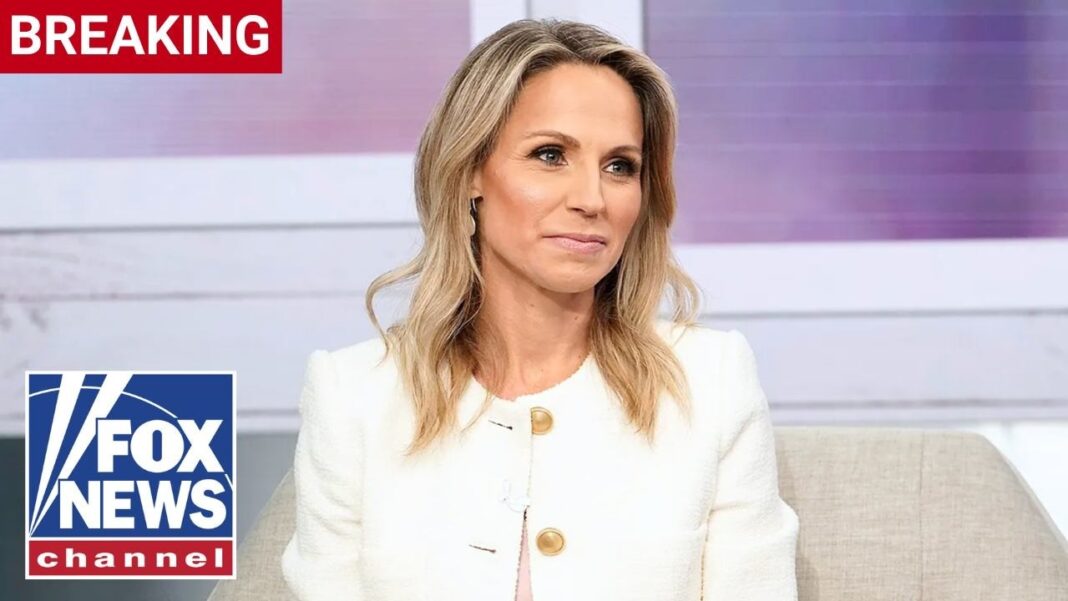
Her professional résumé is complemented by a visible role in media, having contributed as a medical analyst for Fox News since 2018. This dual presence—both in clinical environments and in the national media spotlight—appears to have played a decisive role in her selection. President Trump, in a statement posted on Truth Social, praised Saphier as a “STAR physician” whose career has been defined by guiding patients through the daunting terrain of cancer diagnosis and treatment. He further emphasized her advocacy for early detection and prevention, hallmarks of modern oncologic strategy.
Yet perhaps more revealing than her clinical accomplishments was the president’s emphasis on her communication skills. Trump characterized Saphier as an “INCREDIBLE COMMUNICATOR,” underscoring a priority that has increasingly defined the Surgeon General’s role in recent decades: translating complex medical realities into language accessible to the general public. In an era marked by widespread misinformation and polarized public health debates, the ability to distill intricate scientific concepts into clear, persuasive messaging has become as critical as medical expertise itself.
The abrupt pivot to Saphier follows the unraveling of the nomination of Dr. Casey Means, a candidate whose path to confirmation became mired in controversy. Means, a Stanford-educated physician, represented a markedly different profile. At 38 years old, she had diverged from traditional medical practice after not completing her surgical residency, instead forging a career in functional medicine and wellness advocacy. Her medical license had lapsed into inactive status during this transition, a factor that raised significant concerns among lawmakers tasked with evaluating her qualifications.
As detailed in coverage by USA Today, Means’ nomination encountered formidable resistance within the Senate Health, Education, Labor and Pensions Committee. Central to the opposition were questions about her clinical experience and her stance on vaccines—an issue that remains deeply contentious within American public discourse. During confirmation hearings, Senator Bill Cassidy, himself a physician, subjected Means to pointed questioning regarding her views. Cassidy’s skepticism, particularly concerning her reluctance to offer unequivocal support for established vaccination protocols, proved to be a critical obstacle.
Means’ professional trajectory, which included a pivot toward wellness influencing, further complicated her candidacy. While she had garnered a following advocating for holistic approaches to chronic disease, critics argued that her departure from conventional medical pathways left gaps in her qualifications for a role as consequential as Surgeon General. Her alignment with the “Make America Healthy Again” initiative—closely associated with Health and Human Services Secretary Robert F. Kennedy Jr.—also positioned her within a broader ideological movement that has drawn both support and scrutiny.
Adding another layer of complexity was Means’ familial connection to Calley Means, an entrepreneur and adviser to Kennedy. Together, the siblings have been vocal proponents of addressing chronic disease through systemic reform, a platform that resonated with certain segments of the administration but failed to secure sufficient backing within the Senate.
Ultimately, Means’ nomination never advanced to a full Senate vote. The inability to secure the support of key Republican members on the committee effectively halted her path forward, illustrating the enduring importance of bipartisan—or at least intra-party—consensus in confirming high-level federal appointments. In the wake of this setback, President Trump publicly criticized Senator Cassidy, accusing him of obstructing the nomination. The episode exposed fissures within the Republican Party, particularly on issues at the intersection of public health and political ideology.
Against this backdrop, the selection of Dr. Saphier appears to represent a recalibration toward a candidate perceived as more conventionally qualified and politically viable. Her active medical license, ongoing clinical practice, and academic affiliations offer a stark contrast to the unconventional profile that defined Means’ candidacy. Moreover, her experience in communicating medical information to a broad audience aligns with the administration’s apparent emphasis on public engagement.
The role of Surgeon General, often described as “the nation’s doctor,” carries both symbolic and practical significance. While the position does not wield direct policymaking authority, it serves as a powerful platform for shaping public health narratives and influencing behavior. From issuing advisories on smoking and mental health to addressing emergent crises such as pandemics, the Surgeon General occupies a unique space at the confluence of science, policy, and public trust.
In recent years, that trust has been tested by a confluence of factors, including the proliferation of misinformation, political polarization, and evolving scientific understanding. As USA Today has repeatedly noted in its coverage of health leadership, the credibility and communication skills of the Surgeon General are critical to navigating these challenges. The ability to command public confidence while adhering to scientific rigor is not merely desirable—it is essential.
Dr. Saphier’s nomination, therefore, arrives at a moment when the stakes for public health leadership are exceptionally high. Her background in oncology, a field that demands both technical precision and empathetic patient interaction, may equip her with the tools necessary to address complex health issues with clarity and compassion. At the same time, her media presence suggests a readiness to engage with the public in a direct and accessible manner.
Whether these attributes will translate into a successful confirmation process remains to be seen. While her credentials are less controversial than those of her predecessor, the political environment surrounding health appointments remains highly charged. Senators are likely to scrutinize not only her medical expertise but also her public statements and positions on contentious issues.
The broader implications of this nomination extend beyond the individual candidate. It reflects an ongoing negotiation between differing visions of health leadership—one rooted in traditional medical pathways and another that embraces alternative approaches and public advocacy. The resolution of this tension will shape not only the future of the Surgeon General’s office but also the direction of national health discourse.
As the confirmation process unfolds, observers will be watching closely to see whether Dr. Saphier can bridge these divides and secure the support necessary to assume one of the nation’s most visible health roles. For now, her nomination stands as a pivotal moment in an evolving narrative—one that, as chronicled by USA Today, encapsulates the complex interplay of medicine, media, and politics in contemporary America.
