




|
Getting your Trinity Audio player ready...
|
A Political Juggernaut Ascends: Anthony Constantino’s Commanding Surge Redefines the NY-21 Congressional Race
By: Fern Sidman
In a political season defined by volatility, shifting allegiances, and the relentless recalibration of voter sentiment, one candidacy has emerged not merely as competitive but as profoundly dominant. Anthony Constantino, the entrepreneurial force behind Sticker Mule and a figure of growing prominence within the populist wing of the Republican Party, has surged to a commanding and historic lead in the race for New York’s 21st Congressional District. His ascent, underscored by a remarkable 51-point advantage among MAGA-aligned Republicans, represents not only a triumph of campaign strategy but a resounding affirmation of his resonance with a deeply engaged electorate.
The scale of Constantino’s lead is, by any conventional political metric, extraordinary. According to polling conducted by GrayHouse—a firm with established ties to congressional-level research, including work for Elise Stefanik—Constantino’s margin expanded dramatically following a high-profile endorsement from President Donald Trump. Prior to the endorsement, Constantino already maintained a formidable 30-point lead. Yet in the wake of Trump’s imprimatur, that advantage widened by an additional 21 points, culminating in a staggering 51-point gulf between him and his sole primary opponent.
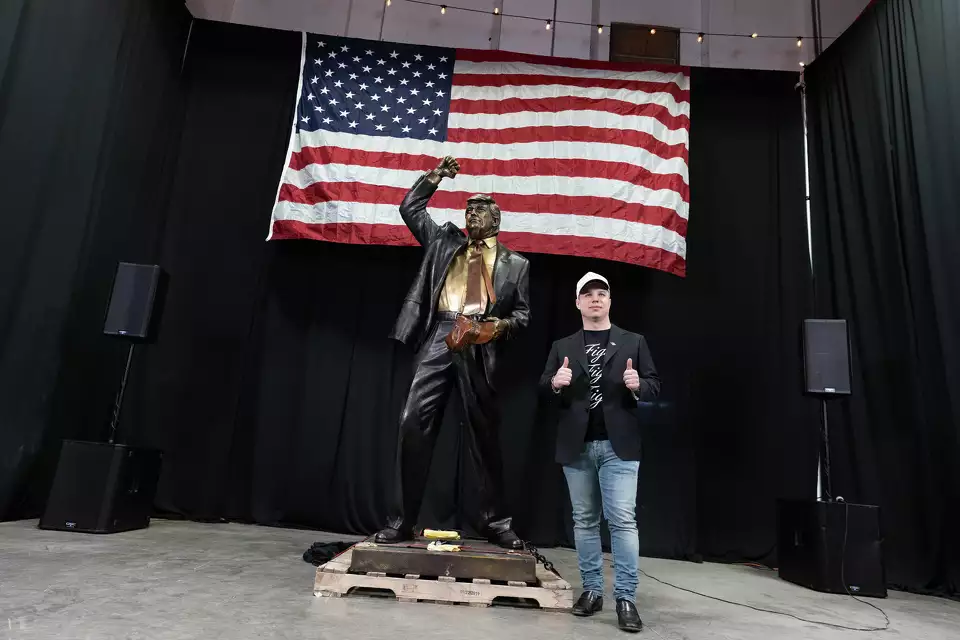
Such a decisive margin is not merely indicative of electoral strength; it signals a consolidation of political identity. Within the MAGA movement—a coalition defined by its emphasis on economic nationalism, institutional skepticism, and unwavering loyalty to Trump—Constantino has emerged as a standard-bearer whose candidacy embodies both ideological alignment and personal authenticity. His rise reflects a broader trend in contemporary American politics, wherein voters increasingly gravitate toward candidates who project independence from traditional power structures while demonstrating tangible success outside the political arena.
At the heart of Constantino’s appeal lies his entrepreneurial pedigree. As the chief executive officer of Sticker Mule, he has cultivated a reputation as a self-made innovator, one who has navigated the complexities of modern commerce with both ingenuity and resolve. His business acumen is not presented merely as a credential but as a testament to his capacity for leadership under pressure—a quality that resonates deeply with constituents seeking pragmatic solutions to entrenched challenges.
Campaign manager Lenny Roudik has emphasized that Constantino’s momentum predates any external endorsement, attributing his early lead to a groundswell of grassroots support. “Constantino was already leading by 30 points before the endorsement,” Roudik noted, underscoring the organic nature of the campaign’s success. According to Roudik, the campaign’s trajectory reflects a deliberate strategy: to secure the trust and enthusiasm of local voters before seeking national validation. In this formulation, the endorsement from President Trump is not the genesis of Constantino’s rise but rather its amplification—a recognition of a movement already in motion.
Central to this narrative is Constantino’s unwavering support for Trump during periods of intense political contention. His advocacy extended beyond rhetorical alignment, encompassing tangible actions that demonstrated both loyalty and conviction. By leveraging his company’s platform—reaching millions of customers—Constantino positioned himself as a vocal proponent of Trump’s re-election efforts, even in the face of organized boycotts and external pressure. This willingness to confront adversity head-on has become a defining feature of his public persona, reinforcing his image as a candidate unafraid to challenge prevailing currents.
Equally significant is Constantino’s approach to campaign financing, which sets him apart in an era often characterized by the outsized influence of major donors. Eschewing traditional fundraising mechanisms, he has committed $7.6 million of his own resources to his congressional bid. This act of self-funding is not merely a logistical choice but a philosophical statement—one rooted in a profound skepticism of external influence. Constantino has articulated this position with clarity, drawing parallels between investor dynamics in business and donor relationships in politics. In both realms, he argues, financial dependence can compromise autonomy.
“I never wanted investors in business because they try to control you,” Constantino has stated. “Big political donors try to control you too, so I am averse to accepting money from anyone.” This stance has resonated with voters who view political independence as a prerequisite for effective representation. By eliminating the need to court donors, Constantino positions himself as accountable solely to his constituents—a “nobody’s man but yours,” as his campaign has framed it.
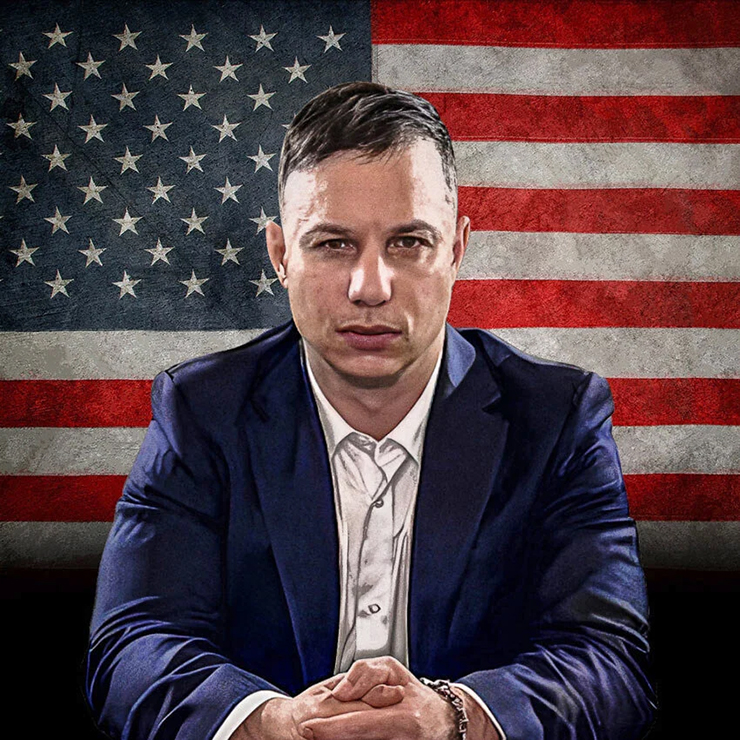
Beyond questions of funding and electoral strategy, Constantino has articulated a clear set of priorities that he intends to pursue if elected to Congress. Foremost among these is a commitment to combating corruption, a theme that has gained increasing traction within the broader political discourse. Echoing sentiments expressed by President Trump—who has characterized New York State as emblematic of systemic dysfunction—Constantino has pledged to confront corruption at both the local and national levels.
This commitment is not confined to policy statements but is integrated into his public identity. He has been observed wearing apparel emblazoned with Trump’s critique of New York, a symbolic gesture that underscores his alignment with the former president’s assessment while signaling his determination to effect change. For Constantino, the fight against corruption is not an abstract ideal but a central mission—one that he frames as essential to restoring public trust in government institutions.
The contours of Constantino’s candidacy are further enriched by elements of personal narrative that distinguish him from conventional political figures. Among these is his foray into professional boxing, a pursuit he undertook in celebration of his 40th birthday. Compiling a 2–1 record, including two victories by knockout, Constantino demonstrated a willingness to embrace physical and psychological challenges outside the realm of business and politics. While such an endeavor might appear tangential, it contributes to a broader portrait of resilience and determination—qualities that his supporters argue are directly transferable to the political arena.
His decision to display a “Vote for Trump” sign atop his tallest factory building serves as another emblematic gesture, blending personal conviction with public visibility. By integrating his political beliefs into the physical landscape of his enterprise, Constantino has blurred the boundaries between private endeavor and civic engagement, reinforcing the authenticity that underpins his appeal.
The implications of Constantino’s rise extend beyond the confines of a single congressional district. His candidacy encapsulates a broader reconfiguration of political identity within the Republican Party, one that prioritizes outsider credentials, financial independence, and unwavering alignment with the MAGA movement. In this context, his commanding lead is not merely a reflection of individual popularity but a manifestation of a shifting ideological landscape.
Critics may question the durability of such a lead or the broader applicability of his approach, yet the current data suggests a level of support that is both deep and expansive. A 51-point margin is not easily dismissed; it represents a convergence of factors—strategic acumen, personal narrative, and ideological alignment—that together create a formidable electoral force.
As the campaign progresses, the focus will inevitably turn to the general election and the challenges that lie beyond the primary. Yet for now, Constantino’s position appears unassailable, his candidacy buoyed by a combination of grassroots enthusiasm and high-profile endorsement. In an environment where political fortunes can shift with startling speed—his sustained dominance stands as a testament to the strength of his connection with voters.
Ultimately, Anthony Constantino’s campaign is more than a bid for office; it is a statement about the kind of leadership that resonates in contemporary America. It is a narrative of independence, resilience, and unapologetic conviction—a narrative that, at least for the moment, has captured the imagination of a significant segment of the electorate. Should his trajectory continue, it may well redefine not only the contours of the NY-21 race but also the broader parameters of political success in the years to come.
