
















|
Getting your Trinity Audio player ready...
|
The New School faces backlash after retaining a professor tied to a violent anti-Israel protest while a student senate move against Hillel fuels concerns about antisemitism and campus safety.
By: David Avrushmi
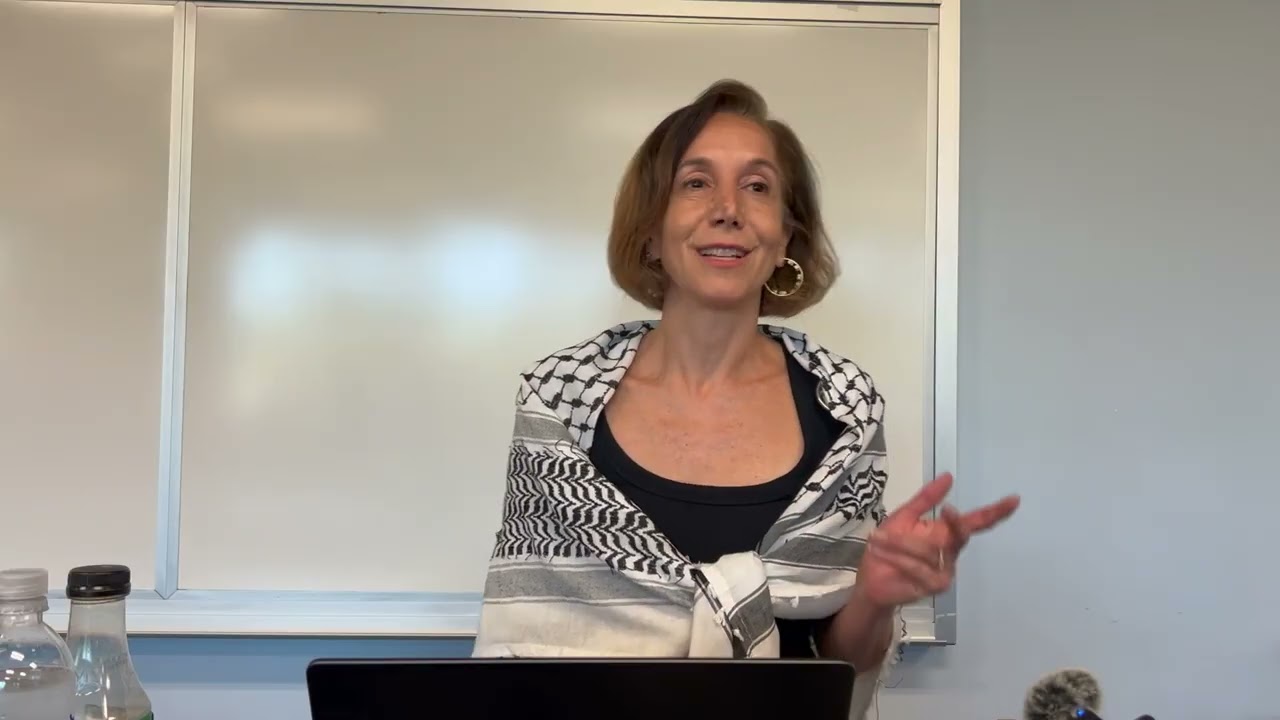
The New School in New York City is confronting intensifying scrutiny as a dual controversy involving a faculty member linked to a violent anti-Israel protest and a student senate move targeting a Jewish campus organization raises urgent questions about antisemitism, institutional consistency, and the limits of academic freedom.
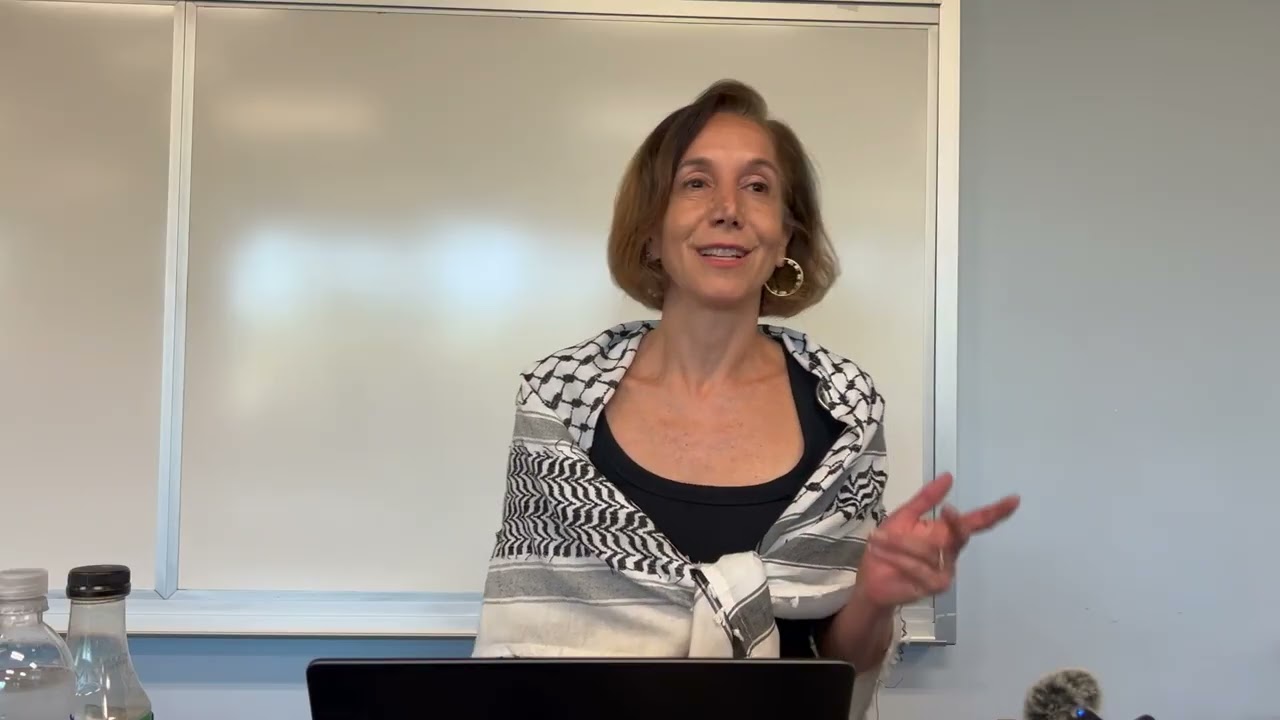
As reported on Saturday by The New York Post, the controversy centers on Corinna Mullin, a political science professor whose activism has drawn national attention, and on a separate but related dispute over funding for the university’s Hillel chapter. Together, these developments have transformed the campus into a focal point in the broader national debate over how universities handle political activism, Jewish student life, and rising tensions surrounding Israel.
Mullin first became a prominent figure in April 2024, when she played a leading role in an encampment protest at the City College of New York in Harlem. According to The New York Post report, the protest escalated dramatically, culminating in a fire at a campus science building that caused approximately $3,000,000 in damage. Mullin was arrested in connection with the demonstration.
The incident marked a pivotal moment in the escalation of campus protests tied to Middle East politics, as institutions across the country grappled with increasingly confrontational tactics. Mullin’s involvement placed her at the center of a movement that critics say has blurred the line between protest and disruption.
She later became associated with the so-called “fired four,” a group of adjunct professors within the City University of New York system who claimed they were dismissed in the summer of 2025 due to their pro-Palestinian advocacy. According to The New York Post report, Mullin and two colleagues were reinstated in January, though her role at CUNY following reinstatement remains unclear.
Despite her arrest and the controversy surrounding her activism, Mullin has remained on the faculty at The New School. She taught “Middle East in the World” in Fall 2025 and is scheduled to teach “Decolonizing International Law” in September.
Her continued presence has sparked criticism from those who argue that universities must draw clearer lines when faculty involvement in political activism intersects with alleged unlawful conduct or rhetoric perceived as extreme.
As detailed in The New York Post report, Mullin has described Arab nations normalizing relations with Israel as committing “high treason,” a statement that has further fueled debate about her role as an educator. Additionally, she has reportedly been linked to the Samidoun network, which the U.S. State Department has identified as a front organization for the Popular Front for the Liberation of Palestine, a designated terrorist organization.
Mullin did not respond to requests for comment, according to The New York Post.
The New School has attempted to manage the controversy by reiterating its commitment to inclusivity while refraining from direct commentary on Mullin’s conduct.
A university spokesperson told The New York Post that all students, “regardless of background,” are “welcome, valued and respected” on campus. At the same time, the institution acknowledged it is “looking carefully at how this situation unfolded” and evaluating “what further actions the university needs to take.”
This response reflects the broader dilemma facing higher education institutions nationwide: how to uphold principles of academic freedom while ensuring a campus environment that is safe and inclusive for all students.
Critics argue that such statements lack credibility when not accompanied by decisive action, particularly in cases where faculty conduct is seen as contributing to a hostile atmosphere.
The controversy surrounding Mullin has been compounded by a separate dispute involving The New School’s Hillel chapter, which has further heightened concerns about antisemitism on campus.
On May 1, the student senate voted to end funding for Hillel, claiming that the organization’s participation in programs involving volunteer work on Israeli military bases connected it to “grave violations of international law,” according to The New York Post report.
University officials quickly responded, stating that the student senate did not have the authority to enforce such a measure and calling the move “unacceptable.”
Hillel representatives and supporters have framed the vote as an attack on Jewish identity rather than a legitimate policy disagreement.
Michael Valdes, a graduating MFA student and Hillel member who previously served on the student senate, strongly rejected the claims used to justify the funding decision.
“The idea that student money is somehow funding foreign military operations is simply incorrect,” Valdes told The New York Post.
He clarified that Hillel’s Israel-related programs are funded through private donations, not student fees, directly challenging the premise of the senate’s argument.
Valdes also warned about the broader implications for campus discourse.
“People are entitled to their opinion about Israel, the war and international politics,” he said. “But political disagreement cannot become the justification for excluding a student club from campus life.”
His remarks highlight a growing concern among Jewish students that criticism of Israel is being used to justify actions that disproportionately impact Jewish organizations.
The developments at The New School reflect a broader pattern unfolding across American universities, where debates over Israel and the Middle East have increasingly intersected with questions of identity, inclusion, and institutional responsibility.
As The New York Post has reported, campuses nationwide have seen a surge in protests, encampments, and disputes involving student groups and faculty. In many cases, these incidents have been accompanied by allegations of antisemitism, prompting concern among Jewish students and advocacy organizations.
The New School’s handling of the Mullin case and the Hillel funding controversy is therefore being closely watched as a potential bellwether for how other institutions may respond to similar challenges.
At the core of the controversy is a question of consistency. Can a university credibly claim to prioritize the safety and inclusion of Jewish students while retaining faculty members whose actions and affiliations are viewed by some as contributing to a hostile environment?
For critics, the answer remains uncertain. They argue that institutional credibility depends not only on stated commitments but on the willingness to enforce those commitments in practice.
Supporters of Mullin counter that academic institutions must protect the right of faculty to engage in political expression, even when it is controversial or unpopular.
This tension reflects a broader societal struggle to define the limits of acceptable discourse in an increasingly polarized environment.
Despite the controversy, Hillel has made clear that it intends to maintain its presence on campus.
“We will continue to be at this campus,” Valdes said in remarks to the student senate, as reported by The New York Post.
The organization has not been forced to cancel events, in part because only a small portion of its funding is derived from student fees.
Meanwhile, The New School faces growing pressure to clarify its position and take concrete steps to address the concerns raised by students, faculty, and the broader community.
The unfolding situation at The New School represents a defining moment in the ongoing national debate over campus culture, free speech, and the treatment of Jewish students.
For many, the issue is deeply personal, touching on fundamental questions of identity, safety, and belonging. For institutions, it poses a complex challenge: how to reconcile competing values without compromising core principles.
As The New York Post report emphasized, the stakes extend far beyond a single campus. The outcome of this controversy may help shape the future of how universities across the country navigate the increasingly fraught intersection of activism, accountability, and inclusion.
In an era marked by division and heightened sensitivities, the choices made now will likely have lasting implications—not only for The New School, but for the broader landscape of American higher education.



