





























Bank of Israel Purchases $801 Million in Foreign Currency as Shekel Swings Intensify
By: Jerome Brookshire
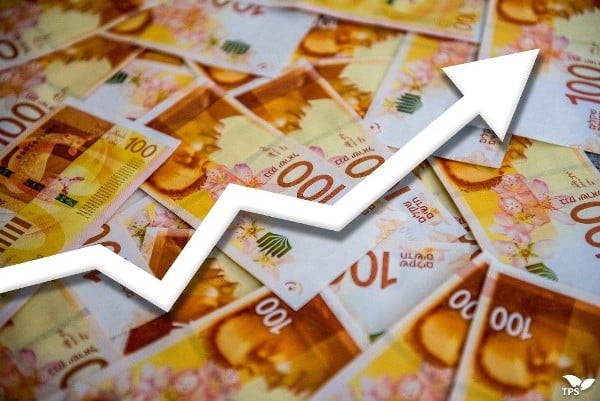
Israel’s economic resilience and financial strength were underscored once again in May as the Bank of Israel reported substantial foreign-currency purchases designed to stabilize markets amid an extraordinary appreciation of the shekel, while the country’s foreign exchange reserves climbed to an unprecedented record level.
The developments, detailed in the Bank of Israel’s monthly reserves report and highlighted in a report by the Tazpit Press Service (TPS), reflect both the remarkable strength of Israel’s economy and the challenges that can accompany a rapidly appreciating national currency in an increasingly interconnected global financial system.
According to data cited by TPS, the Bank of Israel purchased approximately $801 million in foreign currency during May through a series of targeted interventions intended to address what officials described as irregular and potentially disorderly trading activity in the foreign exchange market.
The intervention occurred as the Israeli shekel reached levels not seen in decades, demonstrating the continued confidence of international investors in Israel’s economic fundamentals despite regional security challenges and global market volatility.
The Bank emphasized that its actions were not intended to defend any particular exchange-rate target. Instead, officials stated that the purchases were conducted on an “ad hoc basis” to preserve orderly market functioning and ensure stability during periods of unusual trading conditions.
That distinction is significant. Central banks frequently intervene in currency markets for various reasons. Some seek to maintain fixed exchange-rate bands or defend predetermined currency levels. The Bank of Israel, however, stressed that its actions were motivated by concerns regarding market functioning rather than a desire to establish a specific value for the shekel.
TPS reported that the intervention followed a dramatic strengthening of the Israeli currency against the United States dollar. At one point, the shekel appreciated to approximately NIS 2.80 per dollar, marking its strongest level in approximately 33 years.
Although the currency subsequently retreated to roughly NIS 2.94 per dollar, the appreciation nevertheless reflected a remarkable period of strength for Israel’s financial markets. For many economists, the shekel’s performance serves as a powerful indicator of investor confidence in Israel’s long-term economic prospects.
Despite geopolitical uncertainty, military tensions, and fluctuating global conditions, international investors continue to view Israel as a center of innovation, entrepreneurship, technological advancement, and financial stability. The TPS report noted that many market participants initially believed the central bank had remained largely absent from the foreign-exchange market throughout much of May.
However, subsequent disclosures revealed that significant intervention had indeed taken place. The revelation surprised some analysts who had attributed the currency’s movements primarily to market forces.
Instead, the data demonstrated that the Bank of Israel had quietly taken action to mitigate excessive volatility while maintaining its broader commitment to market-driven exchange rates. The intervention occurred against a backdrop of substantial gains in Israel’s foreign exchange reserves.
According to figures cited by TPS, reserves reached a record $238.681 billion at the conclusion of May. That figure represents one of the largest reserve holdings in Israel’s history and provides a powerful testament to the country’s financial strength.
The increase amounted to approximately $2.95 billion compared with the previous month. The expansion was driven by multiple factors. The largest contributor was a revaluation gain of approximately $2.68 billion on existing reserve assets.
The Bank’s foreign-currency purchases also contributed to the increase, while government foreign-currency activities partially offset those gains. Even after accounting for those offsets, the overall reserve position continued to strengthen significantly.
The scale of Israel’s reserves carries considerable strategic importance. According to the TPS report, the reserve holdings now equal approximately 37.2 percent of Israel’s gross domestic product. Such a substantial reserve cushion provides policymakers with important tools for responding to financial disruptions, currency volatility, international economic shocks, or periods of market uncertainty.
In practical terms, large foreign-currency reserves enhance confidence among investors, strengthen perceptions of financial stability, and provide flexibility in the event of unforeseen crises. For a nation operating in a complex geopolitical environment, such financial resilience represents a significant strategic asset.
The strength of the shekel itself reflects a combination of domestic and international factors. Israel’s economy has long benefited from a highly diversified economic structure anchored by advanced technology industries, scientific innovation, cybersecurity leadership, medical research, and robust entrepreneurial activity.
Foreign investment continues to flow into Israeli companies despite periodic regional instability. Global investors frequently view Israel as a hub of innovation capable of generating long-term growth and value creation.
That confidence often translates into demand for Israeli assets and, by extension, demand for the shekel. TPS reported that broader global market dynamics also played a role in recent currency fluctuations.
Movements on Wall Street, including periods of equity-market weakness, prompted institutional investors to rebalance portfolios and adjust currency exposures. Such rebalancing can significantly influence foreign-exchange markets, particularly in smaller but highly sophisticated economies like Israel.
Institutional investors frequently alter hedging strategies in response to global market conditions, creating substantial flows between currencies. Those adjustments can amplify exchange-rate movements even when domestic economic fundamentals remain unchanged.
The Bank of Israel’s intervention therefore occurred within a broader international context rather than solely as a response to local developments. Financial markets today operate as deeply interconnected systems in which decisions made in New York, London, Tokyo, or Frankfurt can have immediate consequences for currencies and asset prices around the world.
Israel’s integration into global capital markets means it participates fully in those dynamics. At the same time, domestic considerations have generated debate regarding the consequences of a strong shekel. TPS reported that some business leaders have expressed concern that rapid currency appreciation may place pressure on exporters and technology firms that derive substantial portions of their revenues from international markets.
A stronger currency can reduce the competitiveness of exported goods and services by making them more expensive in foreign markets. Technology companies, which often generate revenues in dollars while maintaining significant expenses in shekels, may also face challenges when exchange rates move sharply. Critics of current monetary policies have therefore argued that authorities should do more to moderate currency appreciation. Others contend that a strong shekel reflects underlying economic success and should not be viewed primarily as a problem.
From this perspective, currency strength serves as evidence of investor confidence, economic productivity, and financial credibility. The Bank of Israel has generally sought to balance these competing considerations.
By intervening only when unusual market conditions arise, officials aim to preserve market efficiency while avoiding excessive distortions. The TPS report noted that the central bank has remained deliberately cautious regarding disclosure of operational details.
Officials declined to provide precise information concerning the timing of individual interventions beyond what was included in the monthly report. This approach is consistent with the practices of many central banks, which often seek to avoid revealing tactical information that could influence future market behavior.
The Bank reiterated that intervention occurs only when trading conditions become irregular or disorderly. That principle has become a cornerstone of its foreign-exchange strategy. Rather than attempting to manage daily market fluctuations, policymakers generally reserve intervention for periods when volatility threatens market functioning or confidence.
The broader significance of the latest data extends beyond currency markets alone. The record reserve levels and the shekel’s historic strength highlight the durability of Israel’s economy during a period marked by extraordinary global uncertainty. Many advanced economies continue grappling with inflation pressures, slowing growth, geopolitical tensions, and financial-market volatility.
Against that backdrop, Israel’s ability to maintain strong reserves, attract investment, and support a resilient currency represents a notable achievement. The TPS report emphasized that the figures illustrate the confidence international markets continue to place in Israel’s economic future.
Investors appear willing to commit capital despite regional challenges because they recognize the country’s unique combination of innovation, institutional stability, entrepreneurial culture, and technological leadership. That confidence has become one of Israel’s defining economic strengths.
As policymakers continue monitoring global developments and domestic market conditions, the Bank of Israel’s actions in May demonstrate a careful balancing act between allowing market forces to operate freely and ensuring that temporary distortions do not undermine financial stability. The combination of targeted intervention, record reserves, and a historically strong currency paints a picture of an economy that remains fundamentally robust and globally competitive.
According to the TPS report, the latest figures reinforce a central reality that has become increasingly evident over recent decades: Israel’s economy continues to exhibit extraordinary resilience, adaptability, and strength, even amid challenging international circumstances. With reserves at record highs and investor confidence remaining substantial, the country enters the coming months from a position of considerable financial stability and strategic economic advantage.



