

























Reserve Soldier Killed in Deadly Terror Shooting Rampage at Tzur Natan in Central Israel
By: Fern Sidman
Israeli authorities have cleared for publication the identity of the victim killed in a deadly shooting attack on Sunday morning that unfolded across multiple communities along the sensitive seamline area separating the Samaria and Sharon regions, an incident that left one Israeli reserve soldier dead and five additional people wounded before security forces tracked down and eliminated the assailant.
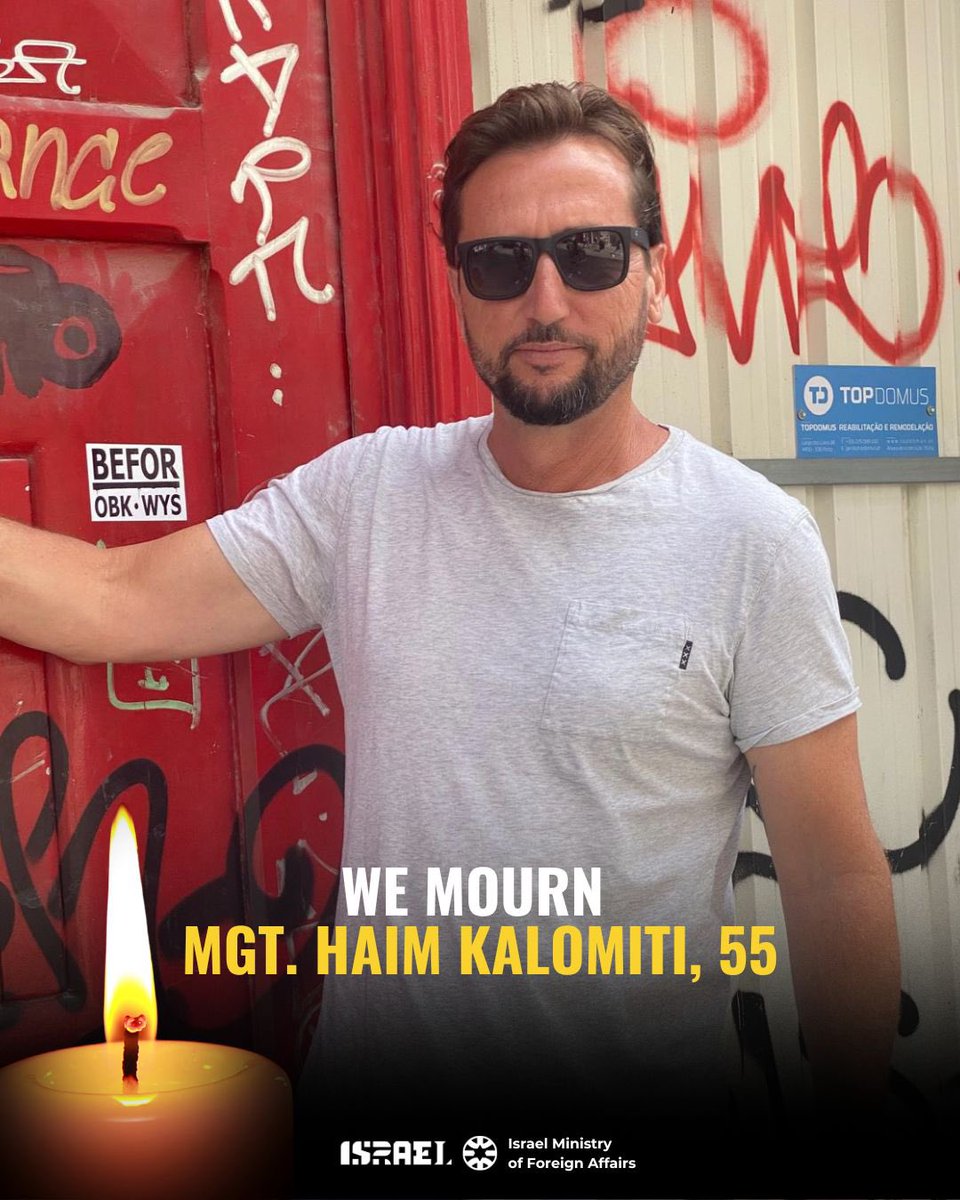
According to information reported by Israel National News, the victim was identified as Master Sergeant (Res.) Haim Kalomiti, 55, a resident of Tzur Natan who served as a regional defense soldier in the 8881st Battalion of the Ephraim Brigade. His death has sent shockwaves through communities situated along the security-sensitive corridor, where residents have long lived under the shadow of terrorism and security threats.
The attack, which unfolded over a relatively short period of time but stretched across several locations, demonstrated both the mobility of the attacker and the challenges facing local security personnel tasked with defending civilian communities scattered throughout the region.
Israel National News reported that investigators have pieced together a detailed timeline of the attack, revealing a calculated and rapidly evolving shooting spree that began shortly after the assailant departed his home and proceeded through multiple civilian targets before culminating in a deadly confrontation with Israeli security forces.
According to the investigation, the attacker was identified as Amer Yassin, an Arab Israeli citizen from Tayibe.
Security officials determined that the assailant left his residence at approximately 10:30 a.m. while driving a stolen Israeli vehicle. Investigators believe the theft of the vehicle was intended to facilitate rapid movement between targets and potentially complicate efforts by security personnel to identify and intercept him before additional attacks could be carried out.
Israel National News reported that approximately 10 minutes after leaving his home, the attacker arrived at a gas station located near the Kochav Yair-Tzur Yigal area.
There, according to investigators, he opened fire on civilians.
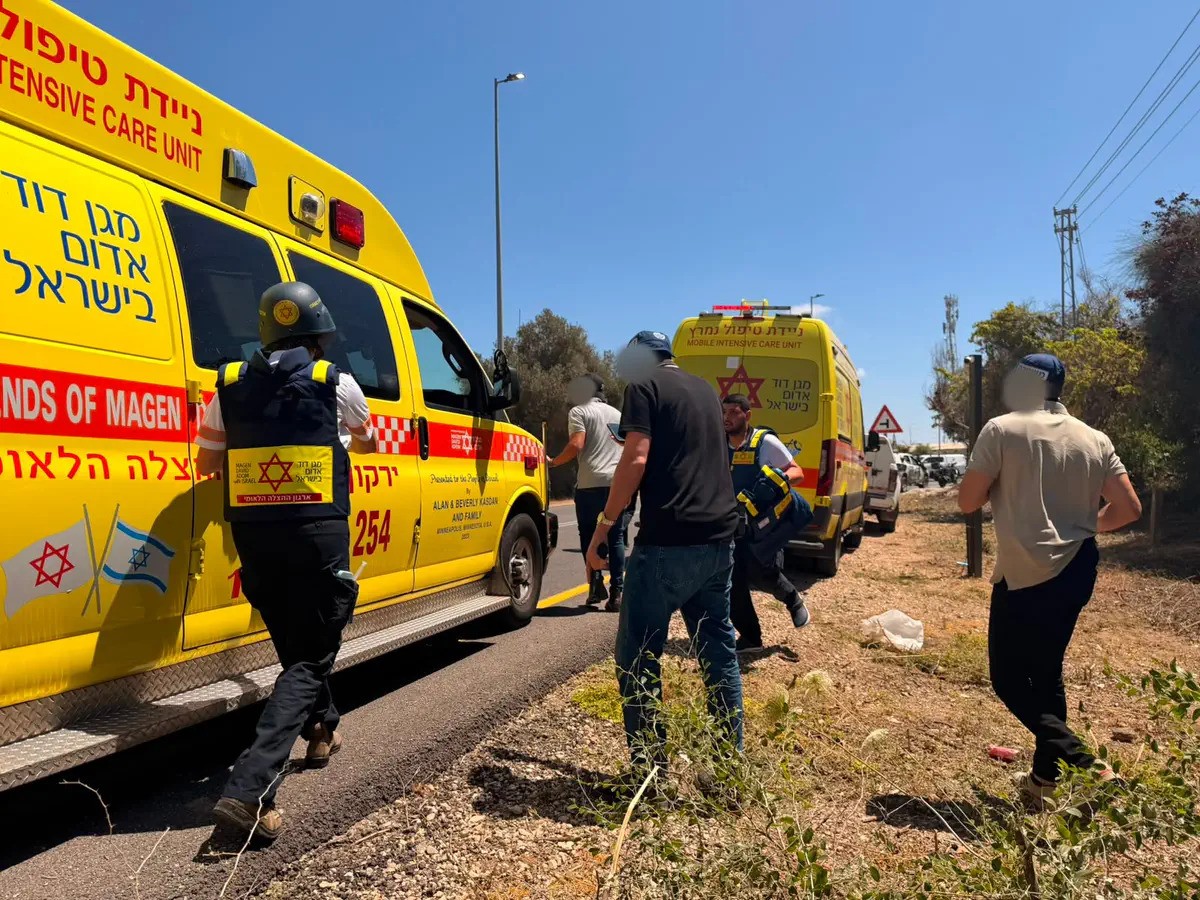
The sudden attack caught individuals in the vicinity by surprise and resulted in two people being wounded. Emergency responders and security personnel were immediately dispatched to the scene, but the attacker had already fled and was moving toward additional targets.
Authorities believe the attack at the gas station represented only the opening stage of a broader shooting spree. Rather than remaining in the area, the attacker continued driving and made his way toward Tzur Yitzhak, where he again opened fire.
According to findings cited by Israel National News, the assailant targeted the community’s guard booth, a critical component of local security infrastructure designed to protect residents from potential threats.
The attack wounded a security guard stationed at the site. The strike against the guard post highlighted the apparent intent to target not only civilians but also those responsible for defending local communities.
Despite the injury sustained by the guard, security alerts were rapidly disseminated throughout neighboring towns, prompting heightened vigilance across the region. The attacker then continued his movement through the area, proceeding toward Tzur Natan.
Investigators reported that he once again targeted a community guard position, firing at the guard booth before continuing onward. The pattern suggested a deliberate effort to attack security installations while simultaneously creating widespread fear and disruption throughout multiple communities.
Israel National News reported that during this phase of the attack, the assailant encountered Master Sergeant (Res.) Haim Kalomiti. According to investigators, Kalomiti was seated in his vehicle when he became the target of gunfire. The attacker opened fire and fatally wounded him. Kalomiti’s death transformed the incident from a multi-site shooting attack into a fatal act of terrorism that would reverberate across the country.
As details emerged regarding his service record, tributes began pouring in from military colleagues, local residents, and security officials. Kalomiti was not merely a civilian caught in the wrong place at the wrong time. He served as a regional defense soldier in the Ephraim Brigade’s 8881st Battalion, a role involving the protection of local communities and the maintenance of security readiness in an area frequently exposed to terrorist threats. His service reflected the broader framework of reserve and regional defense forces that play an essential role in safeguarding vulnerable communities throughout Israel.
Israel National News noted that the attack continued even after Kalomiti was killed. The assailant proceeded toward the community of Sla’it, where he launched yet another attack against a security installation.
Upon arriving at the community’s guard booth, he opened fire. This time, however, he encountered immediate armed resistance. The security coordinator of Sla’it responded to the attack and engaged the assailant in a firefight. During the exchange of gunfire, the security coordinator sustained severe injuries.
Despite being seriously wounded, his actions are believed to have played a decisive role in preventing additional casualties. By returning fire and confronting the attacker directly, he forced the assailant to abandon the position and flee the area.
Israel National News reported that the security coordinator’s intervention may have prevented the attacker from entering the community or carrying out further attacks against residents. Security officials subsequently launched an intensive manhunt involving multiple units.
Roadways were monitored, search teams were deployed, and aerial surveillance assets were reportedly utilized in an effort to locate the suspect before he could strike again. The pursuit quickly focused on an area situated between Tzur Natan and Tayibe.
As information from witnesses and surveillance systems was analyzed, security forces narrowed the search to fields near the Tayibe Quarries. There, according to Israel National News, Israeli security personnel ultimately located the suspect. A confrontation ensued, ending with the elimination of the attacker.
Authorities stated that the suspect was neutralized before he could carry out additional acts of violence. The conclusion of the pursuit brought an end to a deadly rampage that had spread across multiple communities and left a trail of victims in its wake.
In total, five individuals were wounded to varying degrees during the attack, in addition to the death of Master Sergeant (Res.) Kalomiti. Medical teams worked throughout the incident to treat the injured and transport them to hospitals for further care. The severity of the injuries ranged from moderate to critical, with particular concern focused on the condition of the security coordinator who confronted the attacker.
Israel National News reported that investigators continue to review every aspect of the incident, including the attacker’s movements, planning, acquisition of the stolen vehicle, and selection of targets. Security officials are seeking to determine whether the assailant acted entirely on his own or whether additional individuals may have had prior knowledge of his intentions.
The attack has also renewed attention on the security challenges facing communities located along the seamline area between Samaria and the Sharon region. These communities often rely upon a combination of military forces, police units, civilian security coordinators, and local defense personnel to respond rapidly to emerging threats. The events of the attack underscored both the vulnerabilities and resilience of that security structure.
While the attacker succeeded in carrying out multiple assaults across several locations, the response by local security personnel and national security forces ultimately prevented an even greater tragedy. The death of Master Sergeant (Res.) Haim Kalomiti has become the central symbol of the day’s violence. His service in the regional defense framework reflected a lifelong commitment to protecting his community and his country.
As Israel mourns his loss, residents throughout the region continue to grapple with the emotional and security consequences of an attack that unfolded with alarming speed and devastating consequences.
According to the Israel National News report, security officials remain committed to examining every element of the incident to strengthen future defensive measures and ensure that communities along the seamline remain protected against similar threats in the future.