



























By: Carl Schwartzbaum
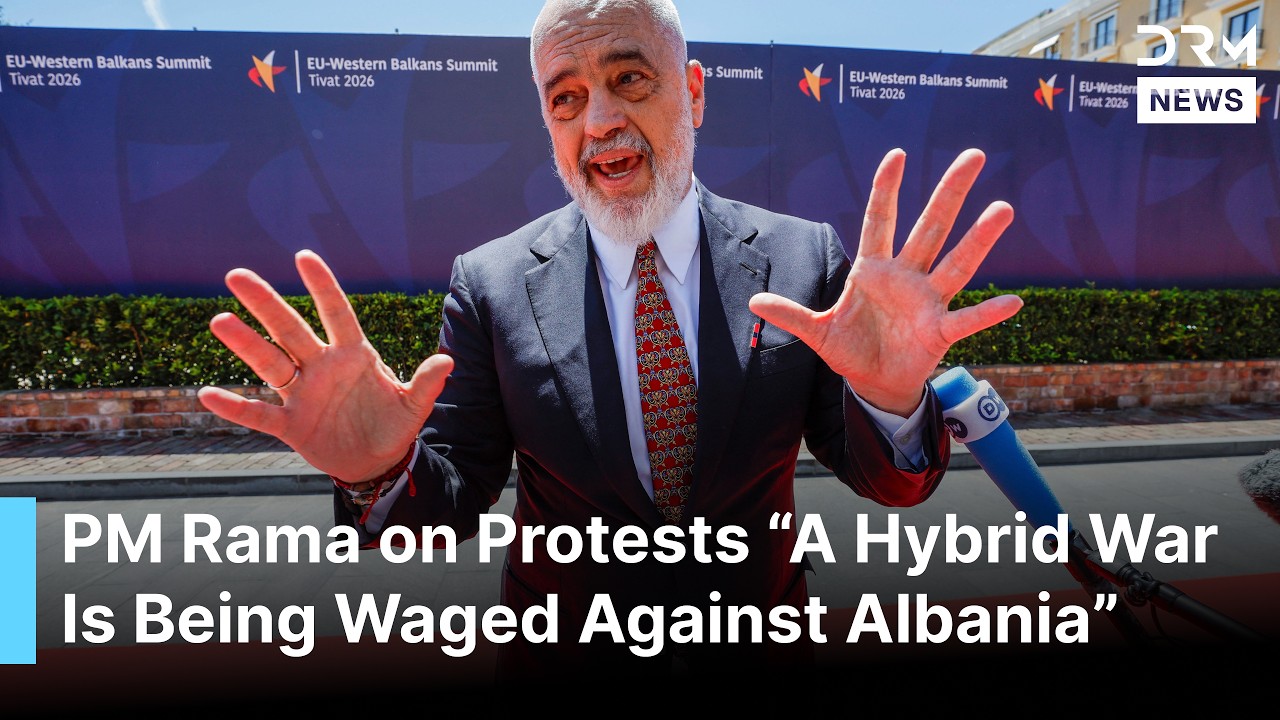
Albanian Prime Minister Edi Rama has sharply criticized recent protests targeting a major luxury development project associated with businessman Jared Kushner, alleging that the demonstrations have been manipulated by forces hostile to both Albania and Israel and are part of what he characterized as a broader “hybrid war” campaign designed to sow division and undermine the country’s interests.
According to a report on Sunday by The Jewish News Syndicate (JNS) Rama made the remarks during an interview with Euronews, where he addressed growing opposition to plans for an ambitious tourism and real-estate development on Albania’s Sazan Island. The project, backed by Kushner, the son-in-law of President Trump and a former senior White House adviser, has become the focus of mounting political controversy, environmental activism, and public debate within the Balkan nation.
Rama, a center-left leader who has maintained unusually warm relations with both Israel and President Trump despite prevailing political sentiments in much of Europe, argued that legitimate concerns raised by some citizens had been transformed into a broader campaign fueled by actors seeking to exploit public opinion through misinformation and politically charged narratives.
According to the JNS report, the Albanian prime minister suggested that a significant portion of the opposition surrounding the project extends beyond traditional environmental or development concerns and has become intertwined with narratives he believes are aimed at undermining Albania’s longstanding relationship with Israel.
Speaking during the interview, Rama contended that the concerns of what he described as “well-meaning people” had been weaponized by those seeking to create suspicion and controversy around the project.
As reported by JNS, he specifically rejected allegations suggesting that the development initiative was connected to secret political arrangements involving himself, Israeli Prime Minister Benjamin Netanyahu, and Kushner.
Rama characterized such claims as entirely unfounded and dismissed suggestions that the project was part of a hidden effort involving the relocation of Palestinians to Albanian territory. According to the JNS report, the Albanian leader described these allegations as pure fantasy and portrayed them as examples of how misinformation can be deployed to inflame public opinion.
The comments have drawn attention not only because of the controversy surrounding the development itself but also because of Rama’s invocation of the term “hybrid war,” a concept that has gained increasing prominence in geopolitical discourse over the past two decades.
The phrase generally refers to strategies that rely heavily on nonmilitary tools to achieve political or strategic objectives. Such tactics can include disinformation campaigns, psychological operations, cyber activities, propaganda efforts, and attempts to erode public trust in institutions.
The JNS report noted that the concept has frequently been associated with discussions regarding Russian influence operations and information warfare, particularly in relation to events in Europe and Ukraine prior to the full-scale Russian invasion in 2022.
Although Rama repeatedly referenced hostile actors seeking to influence public sentiment, he declined to identify specific individuals, organizations, or foreign entities he believed were responsible. His refusal to name alleged participants has fueled speculation while also leaving many questions unanswered regarding the precise nature of the threat he described.
At the center of the controversy is a proposed luxury tourism development on Sazan Island, an uninhabited island off Albania’s Adriatic coast. The project was recently unveiled by Kushner and Ivanka Trump, President Trump’s eldest daughter. According to the JNS report, the plans envision transforming the island into an upscale vacation destination that could attract international tourism and significant foreign investment.
Sazan Island occupies a unique place in Albanian history. For decades, it served as a military installation during the Communist era and remained largely inaccessible to the public. Its isolation helped preserve much of its natural environment, a factor that has become central to the current debate.
Environmental activists and left-wing political groups have voiced concerns that large-scale development could damage sensitive ecosystems and alter the island’s natural character. Opponents argue that preserving the island’s environmental integrity should take precedence over commercial development opportunities.
Supporters of the project, however, contend that carefully planned investment can coexist with environmental stewardship while generating economic growth and international attention for Albania. Rama has emerged as one of the project’s most vocal defenders. According to the JNS report, he has argued that the initiative represents a model for sustainable development rather than environmental degradation.
The prime minister maintained that responsible investment can enhance public access to nature while simultaneously improving conservation outcomes and stimulating economic activity. His defense of the project reflects a broader vision he has frequently articulated regarding Albania’s efforts to attract international investment and position itself as a modern European destination.
Yet the political debate surrounding the development has expanded well beyond questions of economics and environmental policy. JNS reported that Rama suggested certain narratives associated with the opposition campaign contain elements that he views as potentially antisemitic.
The prime minister pointed to what he described as unusual online activity accompanying the protests. According to remarks cited by JNS, Rama claimed that social media engagement surrounding the demonstrations significantly exceeded normal levels and appeared to involve large numbers of automated accounts and fake profiles.
He suggested that coordinated efforts may have been undertaken to amplify specific messages and create an artificial impression of widespread opposition. While he did not provide detailed evidence publicly supporting those assertions, Rama argued that the scale of the online activity raised concerns regarding manipulation and organized influence operations.
The prime minister linked those concerns to Albania’s historic relationship with the Jewish people. As reported by JNS, Rama emphasized that Albania has long prided itself on a national tradition of religious tolerance and the absence of widespread antisemitism. He warned against attempts to import divisive narratives that could undermine that legacy.
According to the JNS report, Rama expressed confidence in the overwhelmingly tolerant character of Albania’s Muslim-majority population, describing Albanian Muslims as strongly pro-European and deeply committed to coexistence. He argued that efforts to inject anti-Israel sentiment into the debate do not reflect the country’s values or historical experience.
To understand the significance of Rama’s comments, it is necessary to consider Albania’s remarkable history during World War II. JNS highlighted the country’s extraordinary record during the Holocaust, when Albanians helped rescue Jewish refugees despite the dangers posed by Axis occupation. During the war, Albania was occupied by Fascist Italy and later came under German control. Yet thousands of Jews found refuge there.
Historians have often pointed to the Albanian concept of honor and hospitality as a crucial factor in explaining why so many families risked their lives to protect Jewish neighbors and refugees. Approximately 2,000 Jews are believed to have been saved through the efforts of Albanian citizens. Many arrived from neighboring countries including Greece and Bulgaria, seeking refuge from persecution.
As the JNS report noted, Albania occupies a unique place in Holocaust history because it is widely regarded as perhaps the only Axis-occupied country that ended the war with a larger Jewish population than it had before the conflict began. That legacy remains a source of national pride and is frequently cited by Albanian leaders as evidence of the country’s commitment to tolerance and humanitarian values.
Rama’s decision to invoke that history underscores the degree to which he views the current controversy as extending beyond a dispute over real estate development. For him, the debate appears connected to broader questions involving national identity, Albania’s international relationships, and its historical commitment to religious coexistence.
The controversy also highlights the increasingly complex intersection of politics, investment, social media, environmental activism, and international relations. What began as a debate over a luxury tourism project has evolved into a broader discussion involving allegations of disinformation, questions about foreign influence, concerns regarding environmental preservation, and disputes over the role of Israel and Jewish figures in international business ventures.
As JNS reported, Rama remains firmly committed to advancing the project despite the criticism. Whether the opposition movement grows or diminishes in the coming months remains uncertain.
What is clear, however, is that the debate surrounding Sazan Island has become one of the most closely watched political controversies in Albania, drawing attention far beyond the country’s borders and placing issues of development, national identity, historical memory, and geopolitical influence squarely at the center of public discourse.



