




















|
Getting your Trinity Audio player ready...
|
By: Serita Romano
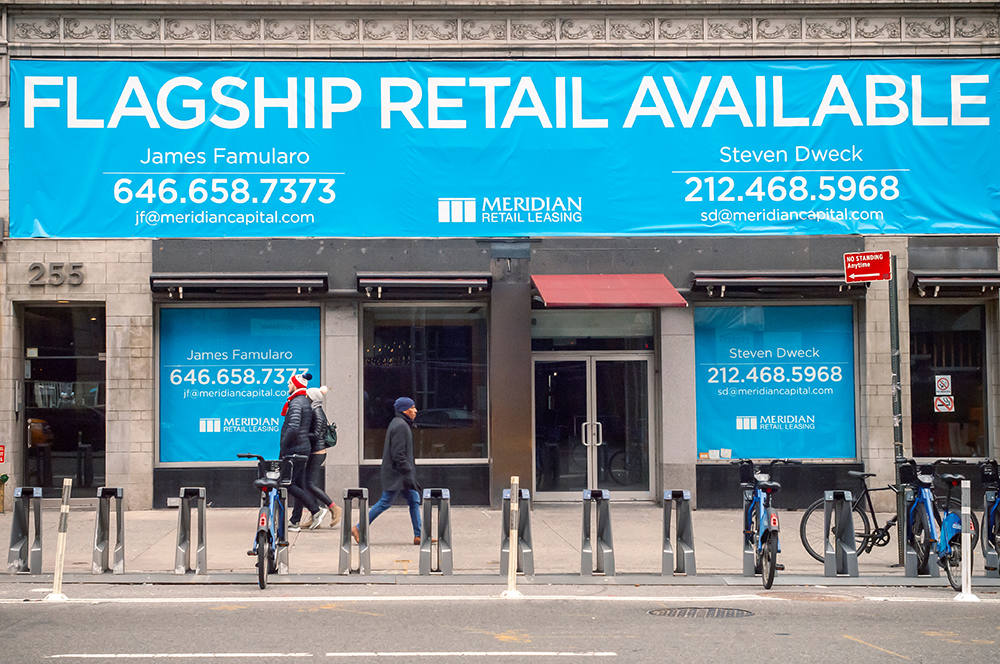
The amount of empty retail space in New York City has doubled during the last decade, according to an analysis by New York City Comptroller Scott Stringer.
Much-higher rents, bureaucracy and the rise of Amazon have all contributed, the report said.
The retail vacancy rate has increased overall in the last decade, even as the City has continued to grow through new development. Vacancy rates vary greatly across the city, said the report:
* In 2017, the city-wide retail vacancy rate was 5.8 percent, up from 4.0 percent in 2007.
* Vacant retail space in New York City increased by 5.2 million square feet over the last decade.
“Although Manhattan has neighborhoods with extensive empty retail space, retail vacancy rates are highest in outer borough neighborhoods with large retail spaces, such as malls – notably on Staten Island, where the vacancy rate is almost 11 percent,” Stringer’s report noted.
“The rise of internet retailing has changed the mix of retail space away from sellers of goods and toward service providers, including restaurants and bars. Nationally, Amazon sales alone rose from $14.8 billion in 2007 to $177.9 billion in 2017. In New York City, the number of retail outlets rose by nearly 20 percent over the same period – but the number of personal services establishments rose by nearly 50 percent, and bars and restaurants by 65 percent,” it said.
Online sales have been a significant driver of outer borough retail vacancy in particular. Regression analysis shows Amazon sales are positively, and statistically significantly, associated with retail vacancy, driving vacant retail square footage in New York City higher by nearly one percentage point between 2007 and 2017.
In addition, retail rents rose by 22 percent on average citywide between 2007 and 2017. “In some parts of the City, the rate of growth was much more rapid. Average rents doubled over the period in some neighborhoods, such as Soho (zip code 10012), while falling in others – for example in the Financial District.
Regression analysis shows rising retail rents are a significant driver of retail vacancy. Controlling for other factors, a one percent increase in average retail rents is associated with 0.33 percent increase in vacant retail square footage.”
Property taxes paid by retail tenants as part of their rent “are also an increasing burden, doubling over the last ten years to over $2.2 billion in 2017, and accounting for a rising share of total retail rent burdens. In 2007, retail tenants paid $1.1 billion in property taxes, equal to about 20 percent of total retail rents paid. The $2.2 billion in property taxes paid by retail tenants in 2017 accounted for 23 percent of total retail rents paid.”



